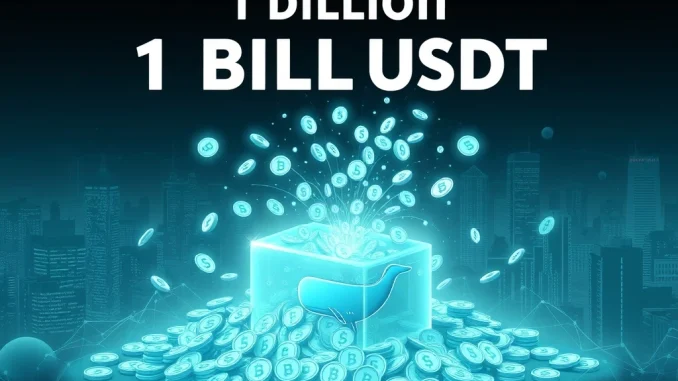
The cryptocurrency world is abuzz once again with a significant development reported by Whale Alert: a massive 1 billion USDT has been minted at the Tether Treasury. This isn’t just a number; it’s a financial earthquake that sends ripples across the entire crypto market. For anyone deeply invested in or simply curious about the volatile yet fascinating world of digital assets, an event like this begs a crucial question: What does this enormous USDT minted event truly signify, and why should you be paying attention?
Understanding the Massive 1 Billion USDT Minted Event
When we talk about USDT minted, we’re referring to the creation of new Tether tokens, the world’s largest stablecoin by market capitalization. USDT is designed to maintain a stable value, pegged 1:1 with the U.S. dollar. This stability makes it a cornerstone of the crypto ecosystem, serving as a vital bridge between traditional fiat currencies and the volatile world of cryptocurrencies. Traders use it to lock in profits, move funds between exchanges quickly, and as a safe haven during market downturns without converting back to fiat.
The recent report by Whale Alert, a popular blockchain tracking service, highlighted the issuance of 1,000,000,000 USDT. To put that into perspective, that’s one billion U.S. dollars’ worth of stablecoin entering circulation. Such a large sum is rarely a random occurrence; it typically indicates a significant underlying demand for stablecoins within the market. This demand can stem from various sources, including institutional investors looking to deploy capital, large traders preparing for market moves, or even the need for increased liquidity on exchanges.
Historically, large mints of USDT have often been observed prior to significant price movements in major cryptocurrencies like Bitcoin and Ethereum. While correlation does not always imply causation, the logic is straightforward: more stablecoins in circulation mean more potential buying power ready to be deployed into volatile assets. This influx of liquidity can act as fuel for upward price trajectories, making these minting events a closely watched indicator by market analysts and participants alike.
Diving Deep into the Tether Treasury: The Stablecoin Powerhouse
At the heart of every USDT minted event lies the Tether Treasury. This is not a physical vault filled with cash, but rather the operational arm of Tether Limited responsible for the issuance and redemption of USDT tokens. Think of it as the central bank for Tether’s stablecoin. When new USDT is minted, it means that Tether has, in theory, received an equivalent amount of fiat currency (or other approved assets) as collateral, ensuring that each USDT token is backed.
The process generally works like this:
- Demand for USDT: Large institutions, crypto exchanges, or high-net-worth individuals deposit U.S. dollars into Tether’s bank accounts.
- Minting: Upon receiving these deposits, the Tether Treasury then ‘mints’ or creates an equivalent amount of new USDT tokens on the blockchain.
- Distribution: These newly minted tokens are then sent to the requesting entity’s crypto wallet, ready to be used for trading or other purposes within the crypto ecosystem.
- Redemption: Conversely, when users want to convert their USDT back to U.S. dollars, they send their USDT back to the Tether Treasury, which then ‘burns’ (destroys) the tokens and returns the fiat currency.
This mechanism is crucial for maintaining the 1:1 peg of USDT to the U.S. dollar. The transparency and auditability of Tether’s reserves have been a subject of debate and scrutiny over the years. However, Tether has made strides in recent times to provide more frequent and detailed attestations of its reserves, aiming to build greater trust and confidence in its operations. The fact that such a large amount of USDT was minted suggests that the demand for Tether’s stablecoin remains robust, reflecting its pivotal role in facilitating liquidity across global crypto markets.
What Does This Stablecoin Issuance Really Mean for Crypto?
The stablecoin issuance of 1 billion USDT is more than just a procedural update; it carries significant implications for the broader cryptocurrency landscape. Understanding these implications requires looking beyond the raw number and considering the potential motivations behind such a large injection of liquidity.
Here are some key interpretations:
- Increased Buying Power: The most common interpretation is that this new supply of USDT is poised to enter the market to purchase other cryptocurrencies. Traders often convert fiat to stablecoins before buying Bitcoin or altcoins, as it allows for quicker execution and avoids the complexities of direct fiat-to-crypto conversions on some platforms. A billion new USDT means a billion new potential dollars ready to buy crypto assets.
- Market Liquidity Boost: Exchanges thrive on liquidity. More USDT available means deeper order books, tighter spreads, and smoother trading for all participants. This can make it easier for large trades to execute without significantly moving the price, which is attractive to institutional players.
- Institutional Interest: Large stablecoin mints are often linked to institutional demand. Big players, including hedge funds, asset managers, and corporate treasuries, are increasingly exploring crypto. They typically prefer to enter the market via stablecoins due to regulatory clarity and operational efficiency. This mint could be a sign of significant institutional capital preparing to enter the space.
- OTC Desk Activity: Over-the-counter (OTC) desks facilitate large crypto trades that bypass public exchanges to minimize price impact. These desks often require substantial amounts of stablecoins to fulfill client orders. A 1 billion USDT mint could be a direct response to a large OTC order from a single or multiple clients.
While these are generally bullish signals, it’s also important to consider alternative scenarios. Sometimes, large mints are for internal rebalancing, moving funds between Tether’s own wallets or different blockchains, or even fulfilling existing demand that has been accumulating over time. However, the sheer size of this stablecoin issuance leans towards a more impactful market event.
Decoding the Crypto Market Impact: Is a Bull Run Imminent?
The question on everyone’s mind following a substantial USDT minted event is: what will be the crypto market impact? While no single event guarantees a specific market movement, the infusion of 1 billion USDT into the ecosystem is a significant data point that market participants closely analyze. The correlation between Tether mints and Bitcoin’s price has been a hot topic for years, with some studies suggesting a causal link.
Consider the following potential scenarios for the crypto market impact:
- Potential for Upward Price Pressure: If the newly minted USDT is indeed used to purchase Bitcoin, Ethereum, and other altcoins, it would naturally increase demand and put upward pressure on prices. This could contribute to a bullish trend, especially if combined with other positive market catalysts.
- Enhanced Market Stability: Paradoxically, while fueling potential rallies, stablecoins also contribute to market stability. By providing a liquid, dollar-pegged asset, they reduce the need for traders to exit the crypto ecosystem entirely during volatile periods, keeping capital within the digital asset space.
- Indicator of Capital Inflow: Regardless of immediate price action, a large mint signals that new capital is flowing into the crypto ecosystem. This indicates growing confidence and interest from various types of investors, which is fundamentally positive for the long-term health and growth of the market.
- Impact on DeFi and Lending: USDT is a crucial asset in decentralized finance (DeFi) protocols and crypto lending platforms. An increased supply of USDT can lead to lower borrowing rates for stablecoins, making it cheaper for users to leverage their positions or engage in yield farming, potentially boosting activity in these sectors.
However, it’s crucial to exercise caution. The market is complex, influenced by a myriad of factors including macroeconomic conditions, regulatory news, technological advancements, and overall market sentiment. A large mint is one piece of the puzzle, not the entire picture. Investors should always conduct their own research and consider multiple indicators before making decisions.
Whale Alert: Your Digital Eye on Significant Crypto Movements
The initial report of this massive USDT minted event came from Whale Alert, a popular and highly respected blockchain transaction tracker. But what exactly is Whale Alert, and why is it so important for understanding crypto market dynamics?
Whale Alert is an automated system that monitors large cryptocurrency transactions across various blockchains. It acts as a vigilant watchdog, notifying the crypto community in real-time about significant movements of digital assets, especially those involving ‘whales’ – individuals or entities holding vast amounts of cryptocurrency. These large transactions, often exceeding millions or even billions of dollars, can signal potential market shifts, as they often precede major buying or selling activity.
The importance of Whale Alert cannot be overstated:
- Transparency: It brings a layer of transparency to otherwise opaque blockchain movements. By making large transactions public, it allows the community to gain insights into where significant capital is flowing.
- Market Insight: For traders and analysts, Whale Alert provides crucial real-time data. A large transfer from an exchange to a cold wallet might suggest an accumulation, while a large transfer to an exchange could indicate an intent to sell. In the case of USDT mints, it directly signals an increase in stablecoin supply.
- Early Warning System: While not a crystal ball, Whale Alert can serve as an early warning system for potential volatility. Unusual large movements can prompt traders to investigate further and adjust their strategies.
- Combating Manipulation: By highlighting large, potentially market-moving transactions, Whale Alert contributes to a more informed market, making it harder for large players to manipulate prices without detection.
In this instance, Whale Alert‘s report of the 1 billion USDT minted at the Tether Treasury immediately brought this significant event to the forefront, allowing analysts and investors worldwide to assess its potential crypto market impact and implications for future price action.
Navigating the Stablecoin Landscape: Opportunities and Challenges
The prominence of stablecoins like USDT highlights both the opportunities and challenges within the cryptocurrency space. On one hand, they offer unparalleled efficiency for global value transfer, hedging against volatility, and facilitating complex DeFi operations. They are the liquidity backbone of many exchanges and a critical component for institutional adoption.
However, stablecoins, particularly centralized ones like Tether, also face scrutiny:
- Transparency Concerns: The backing of stablecoins has historically been a point of contention. While Tether has improved its reporting, ongoing debates about the composition and auditability of its reserves persist.
- Centralization Risk: A single entity controls the issuance and redemption of USDT. This centralization introduces a single point of failure and regulatory risk, unlike decentralized cryptocurrencies.
- Regulatory Scrutiny: Governments worldwide are increasingly focusing on stablecoin regulation, given their potential to impact financial stability. Future regulations could significantly alter the operational landscape for Tether and other stablecoin issuers.
Despite these challenges, the utility and demand for stablecoins continue to grow, making them indispensable for the current structure of the crypto market.
Beyond the Mint: Actionable Insights for the Savvy Investor
For investors, a 1 billion USDT minted event is a signal, not a definitive prediction. Here are some actionable insights to consider:
- Monitor Exchange Inflows/Outflows: After a large mint, observe if significant amounts of USDT move from Tether’s treasury to exchanges. This could indicate an intent to trade.
- Watch Bitcoin and Ethereum Price Action: See if large buy orders emerge on major exchanges shortly after the USDT becomes available. This can confirm the ‘buying power’ hypothesis.
- Check Funding Rates and Open Interest: In futures markets, increasing funding rates (especially positive ones) and rising open interest can indicate growing bullish sentiment and leverage, which might be fueled by new stablecoin liquidity.
- Diversify and Manage Risk: Never put all your eggs in one basket. While a mint can be bullish, market conditions can change rapidly. Maintain a diversified portfolio and use risk management strategies like stop-losses.
- Stay Informed: Follow reliable crypto news sources, on-chain analytics platforms, and reputable analysts to get a holistic view of the market.
The Future of Stablecoins and Market Transparency
The continuous growth and increasing volume of USDT minted highlight the evolving maturity of the cryptocurrency market. Stablecoins are no longer just a niche product; they are a critical piece of the global financial infrastructure, bridging traditional finance with the digital economy. As this sector expands, the focus on transparency, regulatory compliance, and robust backing will only intensify.
The role of services like Whale Alert will remain crucial in providing the public with real-time insights into these large financial movements, fostering a more informed and potentially fairer market. While the Tether Treasury continues its operations, the broader crypto market impact of its actions will undoubtedly continue to be a dominant topic of discussion and analysis.
Conclusion
The recent 1 billion USDT minted by the Tether Treasury, as reported by Whale Alert, is a significant event that warrants attention from anyone involved in the crypto space. While it doesn’t guarantee an immediate bull run, it strongly suggests a surge in demand for stablecoins, signaling potential new capital inflows and increased liquidity across the market. This stablecoin issuance underscores Tether’s continued dominance and its pivotal role in facilitating large-scale transactions within the crypto ecosystem. As the crypto market impact of such events continues to unfold, staying informed and understanding the underlying mechanics will be key to navigating the opportunities and challenges ahead.
Frequently Asked Questions (FAQs)
Q1: What is USDT and why is it important?
A1: USDT (Tether) is a stablecoin pegged to the U.S. dollar, meaning its value is intended to remain stable at $1. It’s crucial for the crypto market as it provides liquidity, allows traders to move funds quickly between exchanges, and acts as a safe haven during market volatility without converting back to fiat currency.
Q2: Why does Tether mint new USDT?
A2: Tether mints new USDT primarily to meet demand from institutions, exchanges, and large investors who deposit fiat currency (like USD) with Tether. These new tokens are then issued as an equivalent amount of USDT, ready to be deployed into the crypto market for trading or other purposes.
Q3: Does a large USDT mint always mean the crypto market will go up?
A3: Not necessarily, but it’s often seen as a bullish indicator. A large USDT minted amount suggests an increase in buying power and liquidity entering the market, which can precede upward price movements for cryptocurrencies like Bitcoin and Ethereum. However, market dynamics are complex, and other factors also play a significant role.
Q4: What is the Tether Treasury’s role?
A4: The Tether Treasury is the operational entity responsible for issuing and redeeming USDT tokens. It manages the reserves that back USDT, ensuring that for every token minted, there is an equivalent amount of collateral held, theoretically maintaining the 1:1 peg to the U.S. dollar.
Q5: How reliable is Whale Alert for crypto news?
A5: Whale Alert is a highly reliable and widely used blockchain tracking service that reports large cryptocurrency transactions in real-time. It provides valuable transparency and insights into significant fund movements, making it a key tool for traders and analysts to monitor potential market shifts.
Q6: What are the main challenges or criticisms associated with Tether?
A6: The main challenges for Tether have historically revolved around transparency regarding its reserves and the centralization of its operations. While Tether has increased its efforts to provide regular attestations of its backing, debates about the full auditability and composition of its reserves, as well as potential regulatory scrutiny, continue to be points of discussion.