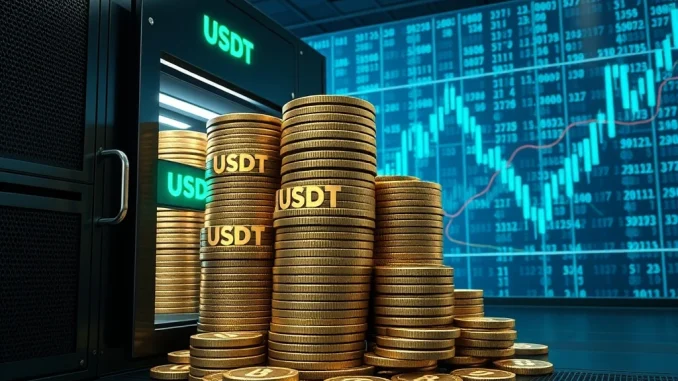
A significant event recently captured the attention of the cryptocurrency world. Whale Alert, a prominent blockchain tracking service, reported a massive USDT minted transaction. Specifically, 1,000 million USDT, equivalent to one billion US dollars, entered circulation from the Tether Treasury. This substantial issuance immediately sparked discussions and analyses across the digital asset landscape. Market participants are now closely observing the potential ramifications of this considerable injection of stablecoin liquidity.
Tether Treasury’s Role in Stablecoin Supply
The Tether Treasury serves as the central issuance point for Tether USDT, the world’s largest stablecoin by market capitalization. Tether is designed to maintain a stable value, typically pegged 1:1 with the US dollar. When new USDT is minted, it indicates an increase in the total circulating stablecoin supply. This process is crucial for facilitating various activities within the crypto ecosystem. For instance, traders often use stablecoins to enter and exit positions quickly without converting back to traditional fiat currency.
Furthermore, new mints often suggest growing demand for USDT. This demand can stem from several sources. Investors might be looking to acquire more stablecoins to participate in decentralized finance (DeFi) protocols. Alternatively, they might be preparing for potential trading opportunities on cryptocurrency exchanges. The transparency of these minting events, reported by services like Whale Alert, allows the community to monitor the flow of significant capital within the blockchain.
Understanding the Mechanics of Tether USDT Issuance
When new Tether USDT is minted, it does not automatically imply that new fiat money has entered Tether’s reserves. Instead, it signifies that Tether has received an equivalent amount of fiat currency or other assets from institutional clients. These clients then receive newly minted USDT in return. This process underpins the stablecoin’s peg to the US dollar. Tether states that each USDT token is backed by its reserves, which include cash, cash equivalents, and other assets.
The latest USDT minted event occurred on the Tron blockchain. Tether frequently utilizes multiple blockchain networks for its token issuance, including Ethereum, Tron, Solana, and others. This multi-chain strategy enhances accessibility and reduces transaction costs for users. Consequently, the choice of blockchain for a specific minting event can sometimes offer insights into where the immediate demand for USDT is originating.
Impact on Stablecoin Supply and Crypto Market Dynamics
The addition of one billion USDT minted significantly boosts the overall stablecoin supply. A larger stablecoin supply can have several profound effects on the broader cryptocurrency market. Firstly, it often translates to increased liquidity across exchanges. More liquidity generally means tighter bid-ask spreads and easier execution of large trades. This can benefit both individual traders and institutional investors.
Secondly, a surge in stablecoin supply might signal an influx of capital into the crypto space. Many investors convert fiat into stablecoins before deploying it into volatile assets like Bitcoin or Ethereum. Therefore, a substantial mint could be a precursor to increased buying pressure for other cryptocurrencies. Conversely, it could also indicate a desire among investors to hold a stable asset during periods of market uncertainty. The interpretation depends heavily on prevailing market sentiment and trends.
Assessing the Crypto Market Impact
The immediate crypto market impact of a large USDT minted event is a subject of ongoing debate. Some analysts view large mints as bullish indicators. They argue that new USDT will inevitably flow into other digital assets, driving up prices. However, others suggest that such mints could also reflect a defensive posture by investors. They might be parking funds in stablecoins to weather potential volatility or to capitalize on future dips.
Historically, significant USDT mints have sometimes preceded upward movements in Bitcoin and altcoin prices. This correlation is not always direct or immediate. Various other factors, including macroeconomic conditions, regulatory news, and technological developments, also influence market trends. Therefore, while a billion USDT mint is noteworthy, it represents just one piece of a complex puzzle in forecasting market movements. Investors must consider the broader context when evaluating its potential effects.
Addressing Concerns and Criticisms Surrounding Tether USDT
Despite its widespread adoption, Tether USDT has faced considerable scrutiny over the years. The primary concern revolves around the backing of its reserves. Critics often demand greater transparency and more frequent, comprehensive audits to verify that every USDT token is indeed fully backed by an equivalent dollar amount or other stable assets. Tether has made efforts to provide attestations regarding its reserves, but these have not always satisfied all critics.
Furthermore, some speculate that large USDT mints could be used to manipulate cryptocurrency prices. This claim lacks definitive proof and is vehemently denied by Tether. The company maintains that all minting operations are legitimate responses to market demand from verified customers. Regardless, the ongoing dialogue surrounding Tether’s operations underscores the importance of regulatory clarity and robust auditing standards for the stablecoin industry. This helps to build trust and ensure market integrity for all participants.
The Future Outlook for USDT and Stablecoins
The continuous growth of USDT minted supply highlights the increasing role of stablecoins in the global financial system. Stablecoins bridge the gap between traditional finance and the rapidly evolving world of digital assets. They offer stability, liquidity, and efficiency for cross-border transactions and crypto trading. As the cryptocurrency market matures, the demand for reliable stablecoin solutions like Tether USDT is likely to persist.
Looking ahead, the evolution of regulatory frameworks will play a critical role in shaping the future of stablecoins. Clear regulations could enhance investor confidence and encourage broader institutional adoption. Ultimately, the ability of stablecoins to maintain their peg and provide transparent backing will determine their long-term viability and continued dominance in the crypto landscape. Monitoring future minting events and Tether’s transparency efforts remains crucial for all market observers.
Frequently Asked Questions (FAQs)
Q1: What does it mean when 1 billion USDT is minted?
A: When 1 billion USDT is minted, it means that Tether has created new USDT tokens, typically in response to demand from institutional clients who have provided an equivalent amount of fiat currency or other assets. This increases the total circulating Tether USDT supply.
Q2: How does a large USDT mint affect the crypto market?
A: A large USDT mint can increase liquidity on exchanges, potentially leading to more trading activity. It might also signal new capital entering the crypto space, which could lead to increased buying pressure for other cryptocurrencies, thereby impacting the overall crypto market impact.
Q3: Where does the newly minted USDT come from?
A: Newly minted USDT originates from the Tether Treasury. These tokens are created on various blockchain networks (like Tron or Ethereum) and are issued to clients who have deposited funds with Tether.
Q4: Is Tether USDT fully backed by reserves?
A: Tether states that all Tether USDT tokens are fully backed by its reserves, which include a mix of cash, cash equivalents, corporate bonds, and other assets. The company provides regular attestations to demonstrate this backing, though some critics call for more comprehensive audits.
Q5: Why is monitoring the stablecoin supply important?
A: Monitoring the stablecoin supply provides insights into market liquidity, potential capital flows, and investor sentiment. Significant changes in supply, like a large USDT minted event, can indicate shifts in demand for stable assets or preparations for market movements.