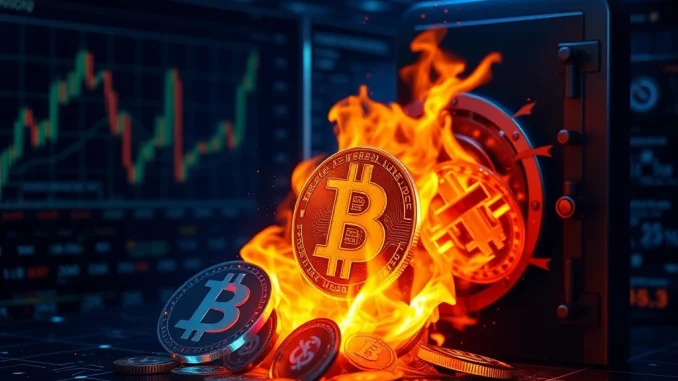
A significant event recently unfolded within the cryptocurrency ecosystem. Whale Alert, a widely recognized blockchain tracking service, reported a **massive USDC burn** of 209 million tokens. This substantial transaction occurred directly at the **USDC Treasury**. Consequently, it has drawn considerable attention from investors and analysts across the globe. Understanding this event is crucial for anyone monitoring the dynamic **stablecoin market** and the broader **cryptocurrency news** landscape.
Understanding the USDC Burn Mechanism and Circle USDC
To fully grasp the implications of such a large transaction, one must first understand **Circle USDC**. USDC stands for USD Coin. It functions as a prominent stablecoin, meticulously designed to maintain a 1:1 peg with the US dollar. Unlike the volatile nature of many cryptocurrencies, USDC offers a stable digital asset. This inherent stability makes it a popular choice for various financial activities, including trading, lending, and remittances.
Burning USDC does not imply destruction in a destructive sense. Instead, it signifies a process of redemption. When users decide to convert their USDC back into traditional fiat currency, such as US dollars, Circle initiates this redemption. As a result, the corresponding amount of USDC tokens is permanently removed from circulation. This crucial process ensures that the total supply of USDC remains consistently backed by an equivalent amount of reserves. Therefore, it underpins the stablecoin’s reliability and trust.
The **USDC Treasury** plays a central role in these operations. It serves as the primary hub for both minting new USDC tokens and burning existing ones. This transparent management is fundamental. It ensures the integrity and stability of the entire USDC ecosystem. Furthermore, it provides clarity to users and regulators alike.
The Pivotal Role of the USDC Treasury in Stablecoin Stability
The **USDC Treasury** is an absolutely vital component of the USDC infrastructure. Its core function involves executing the fundamental operations of the USDC ecosystem. Specifically, it meticulously manages the total circulating supply of USDC. This management directly influences the token’s ability to maintain its dollar peg, which is paramount for its utility.
Minting operations increase the supply of USDC. Conversely, burning operations decrease it. Both actions are responsive to prevailing market demand. For instance, if the demand for USDC decreases, users will typically redeem their tokens for fiat. Consequently, the Treasury efficiently burns these redeemed tokens. This action helps to maintain the critical 1:1 dollar peg. It prevents oversupply and ensures the stablecoin’s value remains constant.
A burn of this magnitude often signals significant redemptions. It indicates a substantial movement of funds out of USDC. This reallocation could involve transfers into other stablecoins, conversion back into fiat currency, or even investment into other volatile cryptocurrencies. The reasons are varied and complex, reflecting diverse market strategies.
Moreover, the transparency of the **USDC Treasury** operations is a cornerstone of its trustworthiness. Circle regularly publishes attestations. These reports verify that every USDC token in circulation is fully backed by reserves. This commitment to transparency builds confidence among users and institutions. It distinguishes USDC in the competitive **stablecoin market**.
Analyzing the Impact on the Broader Stablecoin Market
A 209 million **USDC burn** represents a considerable event. It translates into a notable reduction in the token’s circulating supply. While large burns are part of USDC’s operational cycle, this particular scale warrants close observation within the broader **stablecoin market**. Such an event can provide valuable insights into current market dynamics.
This substantial burn might reflect shifting investor sentiment. Perhaps some market participants are reallocating their digital assets. They might move funds into alternative stablecoins like Tether (USDT) or Dai (DAI). Alternatively, these funds could be moving back into traditional financial instruments. The precise destination of these funds requires further analysis.
Despite these movements, the overall health of the **stablecoin market** remains robust. Stablecoins continue to serve as a crucial bridge between traditional finance and the decentralized digital asset space. However, large-scale transactions like this are always monitored intently. They offer key indicators regarding market liquidity and overall investor confidence. Furthermore, they highlight the continuous rebalancing within the crypto economy.
Whale Alert’s Role in Cryptocurrency News Dissemination
Whale Alert performs a critical function within the crypto community. It acts as an independent blockchain tracking service. Its primary purpose is to report large cryptocurrency transactions in real-time. This includes major transfers, new token mints, and significant token burns. The service provides unparalleled visibility into on-chain activities.
For **cryptocurrency news** outlets and individual investors, Whale Alert is an invaluable resource. Its reports instantly highlight activities that possess the potential to influence market sentiment. Investors frequently leverage this information. They make more informed decisions based on these timely alerts. This enhances market transparency significantly.
The platform monitors a wide array of prominent blockchains. These include Bitcoin, Ethereum, and many others. Its alerts help to demystify large-scale crypto movements. Thus, Whale Alert plays a crucial role in fostering a more transparent and understandable digital asset landscape. It empowers users with data that might otherwise remain opaque.
Contextualizing Large USDC Redemptions in the Stablecoin Market
Several underlying factors can trigger large-scale USDC redemptions. Market volatility often serves as a common catalyst. During periods of heightened uncertainty, investors frequently seek to de-risk their portfolios. They convert more volatile crypto assets into stablecoins or, as seen with a burn, back into fiat currency. This move aims to preserve capital.
Regulatory developments also play a significant role. New or impending regulations related to stablecoins could influence their usage. Businesses and institutional investors might adjust their holdings accordingly. Such adjustments can lead to larger redemption volumes. Therefore, staying informed about regulatory shifts is paramount.
Competition within the **stablecoin market** is intensely fierce. Users constantly evaluate options. They might switch to stablecoins that offer better yields through DeFi protocols. They could also choose those with a perceived stronger regulatory compliance framework. This continuous evaluation drives asset reallocation and influences supply dynamics. Ultimately, a burn event, even a large one, signifies a natural market adjustment. It reflects the inherent dynamic nature of cryptocurrency investments. It does not inherently signal a problem or a crisis. Instead, it demonstrates the robust and functional mechanism of the stablecoin working precisely as intended.
The Future Trajectory of Circle USDC and the Stablecoin Market
**Circle USDC** continues to maintain its position as a dominant force. It commands a significant share of the global **stablecoin market**. Its unwavering commitment to regulatory compliance and transparency serves as a key differentiator. This commitment fosters trust among institutional and retail users alike.
The entire stablecoin ecosystem is undergoing rapid evolution. We anticipate a wave of new innovations and increasingly sophisticated regulatory frameworks. These developments will undoubtedly shape the future landscape of digital finance. USDC aims to remain at the forefront of this progression, adapting to new challenges and opportunities.
The ability to effectively manage token supply is paramount for any stablecoin. Large burn events, like the one recently reported, demonstrate this capability unequivocally. They reinforce confidence in the stablecoin’s underlying mechanism. This mechanism is designed for stability and long-term viability. As the broader crypto space matures, stablecoins will only grow in importance. They act as essential bridges between traditional financial systems and innovative digital assets. Their inherent stability provides a crucial anchor in an often-volatile market. Therefore, closely monitoring their supply dynamics, including significant burns, remains absolutely essential for all market participants.
Conclusion: A Glimpse into Stablecoin Dynamics
The recent **USDC burn** of 209 million tokens, accurately reported by Whale Alert, powerfully underscores the dynamic nature of the **stablecoin market**. It highlights the continuous and necessary adjustments made within the **USDC Treasury** to meticulously maintain the token’s crucial dollar peg. While significant in scale, such events are an integral part of the normal operational cycle for **Circle USDC**. They consistently reflect user redemptions and broader market rebalancing efforts. This specific event provides invaluable insights for all participants within the broader **cryptocurrency news** landscape. Furthermore, it reinforces the critical importance of transparency and robust, well-designed stablecoin mechanisms for the health of the entire digital economy.
Frequently Asked Questions (FAQs)
1. What does it mean when USDC is "burned"?
When USDC is "burned," it means a specific amount of tokens is permanently removed from circulation. This typically happens when users redeem their USDC for fiat currency, like US dollars. Circle, the issuer, takes the redeemed USDC out of the supply to maintain the 1:1 peg.
2. Who is Circle, and what is the USDC Treasury?
Circle is the financial technology company that issues USDC. The **USDC Treasury** refers to the blockchain address or smart contract controlled by Circle. This entity manages the minting of new USDC and the burning of existing USDC tokens to control the supply.
3. Why would such a large amount of USDC be burned?
A large **USDC burn** primarily indicates significant redemptions by users. This can occur due to various reasons, including investors moving funds out of stablecoins into other cryptocurrencies or fiat, shifting market sentiment, or institutional rebalancing of portfolios.
4. How does a USDC burn affect the stablecoin market?
A burn reduces the circulating supply of USDC. This action helps maintain its 1:1 peg to the US dollar by matching the supply with demand for redemption. While a large burn can signal shifts in investor preference, it generally reflects the stablecoin mechanism working as intended to preserve stability within the **stablecoin market**.
5. Is a USDC burn a negative event for the cryptocurrency market?
Not necessarily. A USDC burn is a normal operational procedure for stablecoins. It ensures the token remains fully backed and maintains its peg. While it indicates users are redeeming their tokens, it’s often a sign of a healthy, functioning stablecoin system adapting to market demand, rather than a negative event.
6. What is Whale Alert’s role in reporting these transactions?
Whale Alert is a blockchain tracking service. It monitors and reports large cryptocurrency transactions in real-time across various blockchains. Its role is to provide transparency and timely **cryptocurrency news** by alerting the community to significant movements, including large USDC burns, helping investors stay informed.