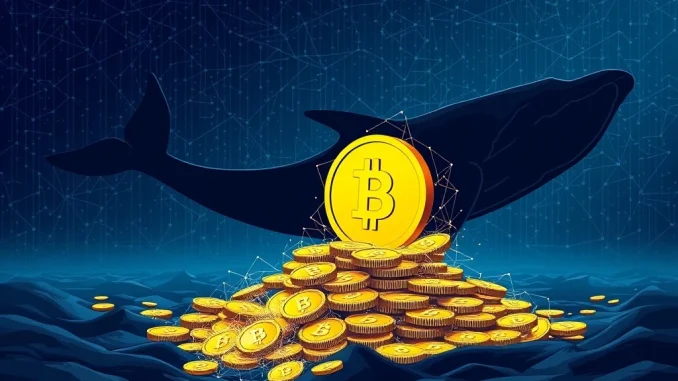
A recent development in the cryptocurrency world has captured significant attention. Whale Alert, a prominent blockchain tracking service, reported a monumental USDC transfer. Specifically, 698,990,107 USDC, valued at approximately $699 million, moved from the Binance exchange to an unknown wallet. This large crypto transfer immediately sparked widespread discussion among market observers and participants. Such a substantial movement of stablecoins often indicates significant behind-the-scenes activity within the digital asset ecosystem.
Understanding the Scale: What is a Binance Whale?
When we discuss a Binance whale, we refer to an individual or entity holding an exceptionally large amount of cryptocurrency. These whales possess enough digital assets to potentially influence market prices with their transactions. The recent transfer of nearly $700 million in USDC undoubtedly qualifies as a whale-level move. Furthermore, these large holders often include:
- Institutional investors managing vast portfolios.
- High-net-worth individuals making strategic allocations.
- Cryptocurrency exchanges rebalancing their reserves.
- Over-the-counter (OTC) desks facilitating private deals.
Their actions are closely monitored because they can signal shifts in market sentiment or upcoming trends. Consequently, the crypto community pays close attention to these massive movements, trying to decipher their potential implications. The anonymity of the receiving wallet adds a layer of intrigue, prompting further speculation about the nature of this transaction.
USDC: The Backbone of Crypto Liquidity and Stablecoin Movement
USDC, or USD Coin, is a stablecoin pegged 1:1 to the US dollar. It is a crucial component of the cryptocurrency market, facilitating seamless trading and providing stability in a volatile environment. The recent stablecoin movement highlights USDC’s role as a primary medium for large-value transfers. Unlike volatile cryptocurrencies such as Bitcoin or Ethereum, USDC’s stable value makes it ideal for:
- Executing large institutional trades without price slippage.
- Providing liquidity for decentralized finance (DeFi) protocols.
- Acting as a safe haven during market downturns.
- Enabling cross-border remittances efficiently.
Therefore, a substantial USDC transfer, especially one originating from a major exchange like Binance, signifies significant financial activity. It underscores the growing importance of stablecoins in the broader financial landscape. The transparency of blockchain technology allows services like Whale Alert to track these movements, even when the identities of the participants remain private.
Deciphering the Movement: Why Such Large Crypto Transfers Occur
A large crypto transfer of this magnitude can stem from several common reasons. Understanding these possibilities helps contextualize the recent $699 million USDC movement. Firstly, institutional over-the-counter (OTC) deals frequently involve such sums. Large buyers or sellers prefer to execute trades privately to avoid impacting public exchange order books. This ensures better pricing and less market disruption. Secondly, exchanges themselves often move funds for internal purposes. This might include:
- Rebalancing cold storage wallets for enhanced security.
- Preparing for large withdrawals or deposits by institutional clients.
- Auditing or consolidating their reserves across different addresses.
Thirdly, a whale might be preparing for a significant investment or divestment. This could involve allocating funds to a new project, purchasing a substantial amount of another asset, or simply moving funds to a private wallet for long-term holding. Finally, treasury management by large crypto companies or protocols also accounts for such transfers. They might be shifting operational funds or reallocating capital.
The Role of Binance in Major Stablecoin Movement
Binance stands as the world’s largest cryptocurrency exchange by trading volume. Consequently, it acts as a central hub for significant stablecoin movement. Millions of users and institutions rely on Binance for trading, staking, and managing their digital assets. Therefore, a transfer of this size originating from Binance is not entirely unprecedented, given its massive liquidity pools. However, the sheer volume still warrants attention. Binance’s infrastructure supports these large-scale transactions, ensuring efficiency and security for its users. The exchange plays a critical role in facilitating global crypto liquidity, making it a frequent origin point for major transfers reported by on-chain trackers.
Implications for the Cryptocurrency Transaction Landscape
Every major cryptocurrency transaction of this scale sends ripples through the market. While a USDC transfer does not directly affect the supply or price of volatile assets, it can influence market sentiment. For instance, some observers might interpret it as a sign of an impending large purchase of other cryptocurrencies. Conversely, it could indicate a large sale that has already occurred, with the funds being moved to a more secure or private location. Furthermore, such movements highlight the increasing institutional adoption of digital assets. Large financial entities are actively engaging with the crypto ecosystem, necessitating the transfer of substantial capital. This ongoing trend validates the growing maturity of the crypto market, attracting more traditional finance participants.
Monitoring Whales: The Role of On-Chain Analytics
Services like Whale Alert provide invaluable insights into blockchain activity. They aggregate and report large transactions across various cryptocurrencies and blockchains. This transparency is a cornerstone of the crypto world, allowing anyone to verify transactions and track funds, even if the identities behind the wallets remain pseudonymous. On-chain analytics tools help market participants:
- Identify potential market trends.
- Assess liquidity shifts.
- Track the flow of capital between exchanges and private wallets.
- Understand the behavior of major market players.
While the exact purpose of this particular USDC transfer remains unknown, its public disclosure by Whale Alert ensures market awareness. This level of transparency is unique to blockchain technology, offering a stark contrast to traditional financial systems where such massive movements might remain entirely private.
Potential Scenarios and Market Reactions
The movement of such a substantial amount of USDC can lead to various speculative scenarios. One common theory suggests that the funds are moving to cold storage for long-term holding, indicating a bullish outlook by the whale. Another possibility is that these funds are being prepared for an over-the-counter (OTC) deal, where a large block of crypto assets is bought or sold directly, bypassing public exchanges. This minimizes market impact for significant trades. Furthermore, the transfer could be related to a large institutional client of Binance rebalancing their portfolio or moving assets to a different custodian. Market reactions often include increased scrutiny on the recipient wallet’s future activities, as any subsequent moves could reveal the whale’s intentions. The sheer size of the transfer ensures it remains a talking point, fueling ongoing discussions about market dynamics and the influence of large holders.
The $699 million USDC transfer from Binance to an unknown wallet underscores the significant activity occurring within the cryptocurrency space. It highlights the crucial role of stablecoins like USDC in facilitating large-scale financial movements. While the exact purpose remains undisclosed, such transactions are integral to the evolving landscape of digital finance. They reflect the growing involvement of large players and the increasing sophistication of the crypto market. Monitoring these USDC transfer events provides valuable insights into the flow of capital and potential market shifts, reinforcing the transparency offered by blockchain technology.
Frequently Asked Questions (FAQs)
Q1: What is USDC and why is it used for large transfers?
USDC (USD Coin) is a stablecoin pegged 1:1 to the US dollar. It is used for large transfers because its stable value minimizes price volatility risk. This makes it ideal for institutional transactions, OTC deals, and moving significant capital without market disruption, unlike more volatile cryptocurrencies.
Q2: What does ‘unknown wallet’ mean in a cryptocurrency transaction?
An ‘unknown wallet’ refers to a blockchain address whose owner has not been publicly identified. While the transaction itself is transparently recorded on the blockchain, the identity of the individual or entity controlling the wallet remains pseudonymous. This is a common feature of blockchain technology.
Q3: Why do ‘whales’ move such large amounts of cryptocurrency?
Whales move large amounts of cryptocurrency for various reasons. These include rebalancing exchange reserves, facilitating over-the-counter (OTC) deals, moving funds to cold storage for security, or preparing for significant investments or divestments. Their movements often reflect strategic financial decisions.
Q4: How does a large USDC transfer impact the crypto market?
A large USDC transfer does not directly impact the price of volatile cryptocurrencies, as USDC is stable. However, it can influence market sentiment. It might signal an upcoming large purchase or sale of other assets, or simply indicate significant institutional activity, contributing to overall market confidence or speculation.
Q5: What is Whale Alert and why is it important?
Whale Alert is a blockchain tracking service that monitors and reports large cryptocurrency transactions across various networks. It is important because it provides transparency into the movements of significant capital, helping market participants track ‘whale’ activity, understand liquidity flows, and gain insights into potential market shifts.
Q6: Is it safe to send such a large cryptocurrency transaction?
Yes, the underlying blockchain technology is designed for secure and immutable transactions, even for large sums. However, the safety depends on the user’s practices, such as using secure wallets, strong passwords, and two-factor authentication. Reputable exchanges like Binance also employ robust security measures to protect user funds during transfers.