For cryptocurrency enthusiasts and traditional investors alike, understanding the trajectory of the U.S. Dollar is paramount. Its strength or weakness often sends ripple effects across global markets, influencing everything from commodity prices to the attractiveness of digital assets. Recently, Bank of America (BofA) delivered a significant update, forecasting a period of modest USD Depreciation. This isn’t a prediction of a dramatic collapse, but rather a calculated rebalancing, driven by a complex interplay of monetary policy shifts and evolving global economic conditions. So, what does this mean for your portfolio, and why is the world’s reserve currency expected to take a slight step back?
BofA Forecast: Unpacking the Modest Shift for the Dollar
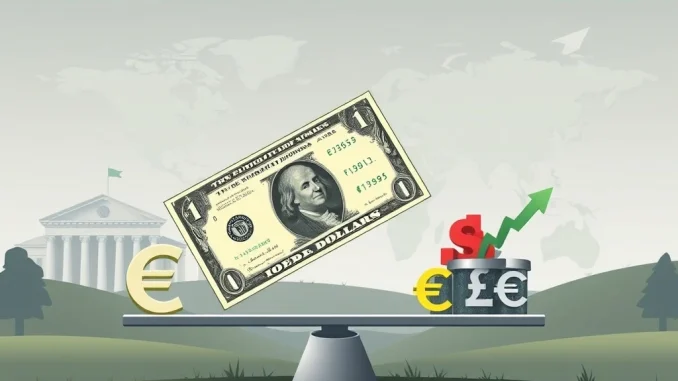
Bank of America’s outlook suggests a measured decline in the U.S. Dollar’s value against a basket of major global currencies. This BofA Forecast isn’t based on a single factor, but rather a confluence of economic indicators and strategic considerations. At its core, the prediction signals a potential easing of the greenback’s long-standing dominance, moving towards a more diversified global currency landscape.
Key drivers underpinning this forecast include:
- Federal Reserve’s Policy Plateau: The era of aggressive interest rate hikes by the U.S. Federal Reserve appears to be nearing its end, reducing the yield advantage that has historically drawn capital into U.S. assets.
- Moderating U.S. Inflation: Signs of cooling inflation domestically diminish the urgency for further tightening, further eroding the dollar’s competitive edge.
- Easing Safe-Haven Demand: As global economic anxieties potentially subside, the need for the dollar as a safe-haven asset may lessen, diverting capital flows elsewhere.
These dynamics, coupled with a broader re-evaluation of global capital flows, are setting the stage for a subtle yet significant shift in the dollar’s valuation.
Why the Federal Reserve’s Pause Matters for Global Currencies
The Federal Reserve‘s monetary policy is arguably the single most influential factor affecting the U.S. Dollar. For an extended period, the Fed’s aggressive rate hikes aimed at taming inflation made U.S. assets highly attractive, bolstering the dollar’s value. However, BofA’s analysis suggests this tightening cycle is reaching its zenith. When the Fed pauses or signals an end to rate increases, it narrows the interest rate differential between the U.S. and other major economies.
Consider the impact:
- Reduced Yield Advantage: Higher interest rates in the U.S. traditionally offer better returns for investors, attracting foreign capital. A pause diminishes this appeal.
- Shifting Capital Flows: As the yield advantage shrinks, investors may look for higher returns in other economies, leading to capital outflow from the U.S. and weakening the dollar.
- Impact on Borrowing Costs: For countries and corporations holding dollar-denominated debt, a weaker dollar could mean lower repayment costs, potentially stimulating their economies.
This anticipated plateau in Fed policy is a cornerstone of BofA’s USD Depreciation outlook, signaling a more balanced playing field for global currencies.
Navigating Divergent Global Policies and Their Ripple Effects
Beyond the Federal Reserve, the landscape of Global Policies among central banks is becoming increasingly fragmented. While the Fed considers a pause, institutions like the European Central Bank (ECB) and the Bank of Japan (BoJ) are navigating their own unique inflation and growth challenges. This divergence in monetary policy trajectories is a crucial element contributing to the dollar’s anticipated rebalancing.
Here’s how these divergent policies play out:
| Central Bank | Current Stance (Illustrative) | Potential Impact on Dollar |
|---|---|---|
| Federal Reserve (U.S.) | Nearing peak/pause in hikes | Reduces dollar’s yield appeal |
| European Central Bank (Eurozone) | Continuing to address inflation | Euro potentially strengthens against dollar |
| Bank of Japan (Japan) | Gradually shifting from ultra-loose policy | Yen potentially strengthens against dollar |
This fragmented policy landscape means that while the U.S. economy’s robust performance has been notable, other major economies stabilizing or recovering could alter capital flow dynamics, making other currencies more attractive relative to the dollar.
Understanding USD Depreciation: Beyond the Headlines
While the BofA Forecast points to USD Depreciation, it’s crucial to understand the nuances. This isn’t a prediction of the dollar’s collapse, nor does it signal an immediate end to its role as the world’s primary reserve currency. Instead, it highlights a gradual rebalancing influenced by several structural challenges and emerging trends.
Structural factors contributing to this long-term outlook include:
- Persistent U.S. Fiscal Deficits: While not an immediate threat, rising national debt could erode long-term investor confidence if not managed effectively.
- Emergence of Alternatives: The slow but steady development of alternative payment systems and Central Bank Digital Currencies (CBDCs) globally could gradually offer non-dollar denominated transaction options, though de-dollarization trends remain speculative.
- Geopolitical Risks: Prolonged global instability could complicate the dollar’s role as a safe-haven asset, as its reliability is tested under various geopolitical pressures.
These elements suggest that while the dollar’s foundational strength remains, its dominance may face subtle erosion over time, leading to a more multipolar currency environment.
What Does This Mean for Your Crypto Investments?
The anticipated USD Depreciation has multifaceted implications for investors, particularly those in the digital asset space. The Crypto Impact can be complex, but generally, a weaker dollar can be seen as a bullish signal for certain assets.
Here’s how it breaks down:
- Commodities: A weaker dollar typically makes dollar-denominated commodities like oil and gold cheaper for non-U.S. holders, potentially boosting demand and prices. Cryptocurrencies, often viewed as ‘digital gold,’ could see similar benefits as an alternative store of value or inflation hedge.
- Emerging Markets: Many emerging economies service dollar-denominated debt. A weaker dollar reduces their debt burden, potentially improving economic conditions and enhancing their appeal for foreign investment. This could indirectly benefit crypto adoption in these regions.
- Inflation Hedge Narrative: If dollar weakness is perceived as a result of inflationary pressures or concerns about traditional fiat currencies, it could bolster crypto’s attractiveness as an inflation hedge or an alternative to traditional finance.
- Stablecoin Dynamics: It’s important to remember that the crypto market heavily relies on U.S. dollar-pegged stablecoins like USDT. While a weaker dollar might push some towards non-pegged cryptocurrencies, the vast liquidity and trading pairs tied to stablecoins mean crypto’s day-to-day liquidity remains deeply tethered to dollar strength.
For international investors, repatriating foreign assets in a weaker dollar environment could yield higher returns. This underscores the need for strategic diversification and close monitoring of macroeconomic indicators, central bank communications, and global trade dynamics.
Conclusion: A Balanced Outlook for the Dollar’s Future
Bank of America’s forecast for modest USD Depreciation is a crucial insight for navigating the evolving global financial landscape. It highlights a period of rebalancing rather than a dramatic shift, driven by the Federal Reserve‘s policy decisions and the increasing divergence in Global Policies. While structural challenges and emerging alternatives like CBDCs present long-term considerations, the U.S. Dollar’s foundational role as the primary global reserve currency, supported by robust financial markets and the rule of law, is unlikely to wane rapidly.
The BofA Forecast emphasizes the importance of strategic diversification for investors. For those in the crypto space, understanding the nuances of the dollar’s trajectory and its potential Crypto Impact will be key to mitigating risks and capitalizing on emerging opportunities in this transitional economic phase. A balanced approach to currency exposure and asset allocation remains critical as the global economy continues its dynamic dance.
Frequently Asked Questions (FAQs)
Q1: What does ‘modest USD depreciation’ mean?
A1: Modest USD depreciation means that Bank of America expects the U.S. Dollar to gradually lose a small amount of its value against other major global currencies. It implies a rebalancing of its strength rather than a sharp decline or collapse.
Q2: Why is the Federal Reserve’s policy pause a key factor in USD depreciation?
A2: The Federal Reserve’s pause in interest rate hikes reduces the yield advantage that U.S. assets offer to foreign investors. When U.S. interest rates are no longer significantly higher than those in other major economies, the incentive for capital to flow into the U.S. decreases, leading to a weaker dollar.
Q3: How do divergent global policies contribute to the dollar’s outlook?
A3: Central banks worldwide are pursuing different monetary policies based on their unique economic conditions. If other central banks (like the ECB or BoJ) continue tightening or signal a shift while the Fed pauses, their respective currencies may strengthen relative to the dollar, contributing to USD depreciation.
Q4: What are the potential implications of a weaker dollar for commodities and emerging markets?
A4: A weaker dollar generally makes dollar-denominated commodities (like oil and gold) cheaper for international buyers, potentially increasing demand. For emerging markets, a weaker dollar can reduce the cost of servicing their dollar-denominated debt, freeing up capital and potentially boosting economic growth and investment appeal.
Q5: How might USD depreciation affect the cryptocurrency market?
A5: A weaker dollar could enhance crypto’s appeal as an inflation hedge or an alternative store of value. However, the strong reliance of the crypto market on U.S. dollar-pegged stablecoins means that crypto liquidity remains closely tied to the dollar’s overall strength and stability, creating a complex relationship.