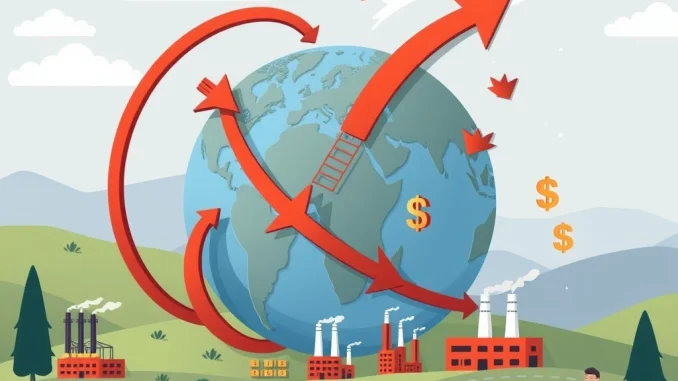
In an increasingly interconnected world, shifts in international trade policy can send ripples across economies, affecting everything from manufacturing hubs to household budgets. For those monitoring market dynamics, including the volatile cryptocurrency landscape, understanding these macro-economic forces is crucial. A pivotal moment in recent history was the strategic recalibration of **US Trade Policy**, which introduced significant tariffs and aimed to reshape global commerce. This article delves into the specifics of these changes and their enduring consequences.
Understanding the Shift in US Trade Policy
On July 27, 2020, then-President Donald Trump outlined a new direction for US trade, moving away from multilateral agreements towards a focus on bilateral negotiations and the strategic deployment of tariffs. This approach, centered on leveraging economic pressure, aimed to secure favorable terms and prioritize domestic industry protection. The administration’s goal was clear: address trade imbalances, reduce deficits, and bolster American manufacturing, framing tariffs as essential tools to compel renegotiations and safeguard national security interests.
This marked a significant departure from previous frameworks, emphasizing an ‘America First’ philosophy. While proponents argued this approach enhanced national security and fair trade practices, detractors pointed to potential unintended consequences, including reduced investment and diplomatic friction. The flexibility of tailored negotiations allowed for addressing sector-specific concerns like agricultural access and intellectual property protections, but also drew criticism for prioritizing short-term gains over long-term global cooperation.
The Imposition of EU Export Tariffs: What it Means
A key outcome of this policy shift was the U.S.-EU agreement, which included a substantial 15% tariff on most **EU Export Tariffs**. This broad measure impacted a wide range of goods, from high-value automobiles to essential pharmaceuticals. The intention behind these tariffs was to level the playing field for American industries, making imported goods more expensive and thus encouraging consumers and businesses to opt for domestically produced alternatives.
However, the ripple effects were complex. For European exporters, the 15% tariff meant either absorbing the increased cost, which cut into profit margins, or passing it on to U.S. consumers, potentially leading to higher prices. This also created a competitive disadvantage for EU products in the American market, forcing companies to re-evaluate their strategies and potentially seek new markets or adjust their production processes.
Analyzing the Steel Aluminum Tariffs and Their Ripple Effect
Beyond the broader EU export tariffs, a particularly impactful measure was the imposition of a 50% tariff on **Steel Aluminum Tariffs**. This drastic increase aimed to protect and revitalize American steel and aluminum industries, deemed critical for national security. The argument was that foreign subsidies and unfair trade practices had depressed domestic production, making these tariffs necessary to ensure the viability of American manufacturers.
The consequences of these specific tariffs were immediate and far-reaching:
- Increased Costs for U.S. Manufacturers: While intended to protect, these tariffs also raised the cost of raw materials for U.S. companies that relied on imported steel and aluminum, such as automakers and construction firms.
- Retaliatory Measures: Trading partners, including the EU, often responded with their own retaliatory tariffs on U.S. exports, creating a tit-for-tat trade war that harmed American exporters in sectors like agriculture and manufacturing.
- Supply Chain Adjustments: Companies had to scramble to find alternative, often more expensive, sources for these materials, or consider relocating production.
How Tariffs Impact the Global Supply Chain
One of the most significant consequences of these tariff policies was the disruption to the **Global Supply Chain**. Modern manufacturing and commerce rely on complex, interconnected networks of suppliers, producers, and distributors spanning multiple countries. Tariffs introduce friction into this system, forcing businesses to re-evaluate their sourcing strategies.
Consider the following impacts:
- Diversification Efforts: Companies were encouraged, or forced, to diversify their supply chains, seeking out new suppliers in different countries to mitigate the risk of tariff-induced cost increases or trade barriers.
- Increased Lead Times and Costs: Rerouting supply chains is not instantaneous. It often leads to longer lead times for products and increased logistical costs, which eventually filter down to the end consumer.
- Uncertainty and Investment: The unpredictable nature of tariff policies created an environment of uncertainty, deterring long-term investment in certain regions and encouraging a more cautious approach to international expansion.
Navigating Rising Consumer Prices: A Direct Consequence?
Ultimately, the burden of tariffs often falls on the end-user. As import taxes increase, businesses typically pass these higher costs onto consumers in the form of rising **Consumer Prices**. This can reduce purchasing power and lead to inflation, impacting household budgets and overall economic stability.
For instance, the increased cost of imported steel and aluminum could translate to higher prices for cars, appliances, and construction materials. Similarly, tariffs on EU exports like automobiles meant that American consumers might pay more for their preferred European car models. This direct impact on consumer spending became a significant point of criticism for the tariff strategy, as it could dampen economic growth and reduce living standards.
Actionable Insights for Businesses and Consumers
The period of significant trade policy shifts underscored the need for adaptive strategies for all stakeholders:
For Businesses:
- Diversify Supply Chains: Reduce reliance on single countries or regions for critical components and materials.
- Monitor Policy Shifts: Stay informed about ongoing trade negotiations and potential tariff changes to anticipate impacts.
- Engage with Policymakers: Advocate for policies that support stable and predictable trade environments.
- Invest in Domestic Production: For some, the tariffs might have made domestic production more viable, encouraging reshoring initiatives.
For Consumers:
- Research Before Buying: Be aware that imported goods, especially those subject to tariffs, might carry higher price tags.
- Consider Alternatives: Explore domestically produced or tariff-exempt alternatives to manage costs.
- Understand Economic Impacts: Recognize how trade policies can influence inflation and the overall cost of living.
A Lasting Impression on Global Trade
The legacy of these trade maneuvers continues to be a focal point in discussions about globalization and economic nationalism. While the administration claimed success in securing agreements like the U.S.-Mexico-Canada Agreement (USMCA) and a Phase One deal with China, the broader strategy’s effectiveness remains debated. The interplay between economic nationalism and global interdependence continues to influence trade policy, with profound implications for industries, markets, and international relations.
For businesses, adapting to a dynamic trade environment is no longer an option but a necessity. For consumers, understanding the forces that shape product availability and pricing is crucial. As global economies continue to evolve, the lessons learned from this period of intense trade policy shifts will undoubtedly inform future strategies, shaping the very fabric of international commerce.
Frequently Asked Questions (FAQs)
Q1: What was the primary goal of the U.S. trade policy shift under President Trump?
The primary goal was to reshape global commerce by emphasizing bilateral negotiations and the strategic use of tariffs. This aimed to address trade imbalances, reduce deficits, bolster American manufacturing, and protect domestic industries from perceived unfair foreign practices.
Q2: How did the 15% EU Export Tariffs impact European businesses and American consumers?
The 15% EU Export Tariffs forced European exporters to either absorb increased costs or pass them on to American consumers, leading to higher prices for goods like automobiles and pharmaceuticals. This also reduced the competitiveness of EU products in the U.S. market.
Q3: What were the direct consequences of the 50% Steel Aluminum Tariffs?
The 50% Steel Aluminum Tariffs led to increased costs for U.S. manufacturers relying on imported materials, triggered retaliatory tariffs from trading partners on U.S. exports, and forced significant adjustments in global supply chains as companies sought alternative sources.
Q4: How did these tariffs affect the Global Supply Chain?
Tariffs significantly disrupted the Global Supply Chain by forcing companies to diversify their sourcing, leading to increased lead times and costs, and creating an environment of uncertainty that deterred long-term international investment.
Q5: Did these trade policies lead to higher Consumer Prices?
Yes, tariffs often lead to higher Consumer Prices. As import taxes increase, businesses typically pass these added costs onto the end-consumer, which can reduce purchasing power and contribute to inflation.
Q6: What lessons can businesses learn from this period of trade policy shifts?
Businesses learned the importance of diversifying supply chains, closely monitoring policy shifts, engaging with policymakers, and considering investments in domestic production to mitigate risks and adapt to unpredictable trade environments.