In a surprising turn of events, the U.S. has decided to spare Brazil from a steep 50% tariff hike on key exports like Embraer jets and orange juice. This last-minute exemption has provided much-needed relief to Brazilian businesses and traders, but what does it mean for the future of U.S.-Brazil trade relations?
U.S. Tariffs and Brazil’s Key Exports
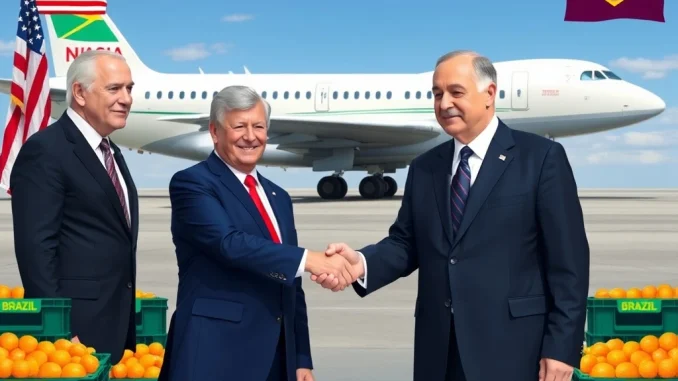
The U.S. announced exemptions for Embraer passenger jets and orange juice, keeping the duty at 10% instead of the threatened 50% increase. This decision came with limited prior consultation, highlighting the tense dynamics between the two nations.
- Embraer jets: A major export to the U.S., crucial for Brazil’s aerospace industry.
- Orange juice: Brazil is the world’s largest exporter, and tariffs could have disrupted global supply chains.
- Excluded sectors: Coffee and beef were not granted exemptions, leaving these industries vulnerable.
Brazil’s Sovereignty and Trade Challenges
President Lula da Silva celebrated the exemption as a win for Brazil’s sovereignty, but challenges remain. The U.S. has been pressuring Brazil on judicial matters, and the exemption’s timing—just hours after sanctions by Justice Alexandre de Moraes—raises questions about future tensions.
Economic and Political Implications
The Central Bank’s decision to hold the Selic rate reflects caution amid rising inflation and potential new tariffs. Meanwhile, the upcoming trial of Jair Bolsonaro could further strain U.S.-Brazil relations.
| Sector | Impact |
|---|---|
| Embraer | Stock rose 11% post-announcement |
| Orange Juice | Relief for exporters, but long-term uncertainty |
What’s Next for U.S.-Brazil Trade?
While the exemption is a temporary win, Brazil faces the challenge of securing a long-term trade agreement with the U.S., its second-largest export market. The role of Brazilian business leaders in negotiating the exemption underscores the importance of private-sector diplomacy.
FAQs
Why did the U.S. exempt Brazil from the 50% tariff hike?
The exemption was reportedly coordinated through direct outreach from Brazilian business leaders, including Embraer executives, rather than formal diplomatic channels.
Which Brazilian exports were not exempted from the tariff hike?
Coffee and beef were not included in the exemptions, leaving these sectors at risk of higher tariffs.
How did the market react to the news?
Embraer’s stock rose by 11%, reflecting investor optimism about the exemption.
What are the long-term implications for U.S.-Brazil relations?
The exemption eases immediate tensions, but underlying issues like judicial independence and trade deficits remain unresolved.