The landscape of digital assets is constantly evolving, making clear regulatory frameworks essential. Therefore, a recent development has captured significant attention across the cryptocurrency world. The US Senate Banking Committee recently concluded a pivotal roundtable discussion with key cryptocurrency leaders, marking a crucial step towards clearer guidelines for the industry. This meeting underscores Washington’s growing recognition of digital assets’ impact on the economy and financial markets.
US Senate Banking Committee Convenes with Industry Giants
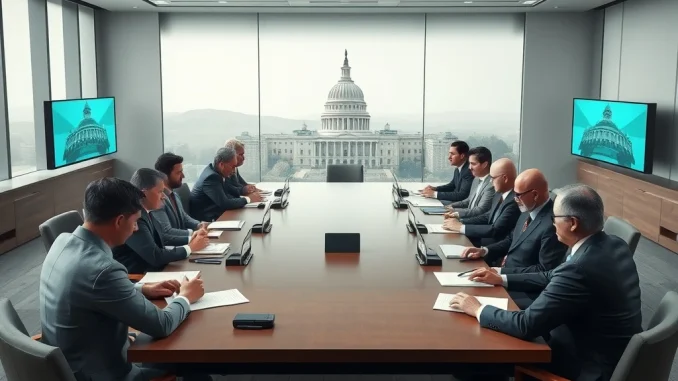
According to Eleanor Terrett, host of Crypto in America, the leadership of the US Senate Banking Committee held a significant 90-minute meeting. This important discussion included prominent figures from the cryptocurrency industry. Indeed, the gathering aimed to address the complex challenges surrounding digital assets and their integration into the existing financial system. The Committee seeks to foster innovation while ensuring robust consumer protection.
Attendees at this high-profile event represented a broad spectrum of the crypto ecosystem. For example, Cardano founder Charles Hoskinson participated. Officials from Ripple, a16z, Kraken, Coinbase, Multicoin Capital, Paradigm, and Circle also joined the discussion. These entities collectively represent significant influence and expertise within the blockchain and digital asset sectors. Their presence signals a concerted effort to bridge the gap between policymakers and innovators.
Key Discussions: Improving Digital Asset Legislation
The primary focus of the roundtable centered on improving proposed digital asset legislation. Currently, the United States lacks a comprehensive and unified regulatory framework for cryptocurrencies. This absence creates uncertainty for businesses and investors alike. Therefore, lawmakers are actively seeking input to craft effective and forward-thinking laws. Participants exchanged views on various aspects of market structure, including trading platforms, custody solutions, and stablecoin regulation.
Industry leaders provided valuable insights into the operational realities of digital asset markets. They highlighted the need for regulation that supports innovation, rather than stifles it. Furthermore, discussions likely covered critical topics such as:
- Consumer Protection: Safeguarding users from fraud and market manipulation.
- Market Integrity: Ensuring fair and transparent trading practices.
- Innovation: Creating an environment where new technologies can thrive.
- Clarity: Defining roles for various regulatory bodies, like the SEC and CFTC.
Such direct engagement is vital for developing practical and enforceable regulations. It allows policymakers to understand the nuances of this rapidly evolving sector.
Navigating the Path to Effective Crypto Regulation
The journey towards clear crypto regulation in the United States has been long and complex. Various proposals have emerged from different legislative bodies, but none have yet achieved widespread consensus. This roundtable signifies a renewed effort by the Senate Banking Committee to drive progress. They are seeking to consolidate different perspectives into a cohesive legislative strategy. This collaborative approach is essential for creating a stable regulatory environment.
Committee members expressed their commitment to understanding the intricacies of digital assets. They acknowledged the need for a balanced approach. This approach must protect investors while simultaneously fostering technological advancement. Industry representatives, in turn, stressed the importance of clear rules of the road. Clear guidelines enable businesses to operate with confidence and attract further investment. Without clear rules, the industry faces significant hurdles.
The Role of Blockchain Policy in Economic Growth
Effective blockchain policy holds immense potential for driving economic growth and technological leadership. The United States aims to remain at the forefront of financial innovation. Therefore, thoughtful regulation of blockchain technology and digital assets is paramount. This includes addressing issues related to data privacy, cybersecurity, and the environmental impact of certain cryptocurrencies. Policymakers recognize that a well-defined policy can unlock new economic opportunities.
Discussions during the roundtable likely touched upon how to integrate blockchain technology into traditional finance. They also explored how to harness its benefits for various sectors beyond finance. Furthermore, the participants considered the global implications of US regulatory decisions. International cooperation on crypto standards is increasingly important. A coherent US policy could set a precedent for other nations, fostering global regulatory harmony.
Insights from Cryptocurrency Leaders on Future Frameworks
The involvement of prominent cryptocurrency leaders like Charles Hoskinson, Ripple, and Coinbase representatives offers invaluable perspective. These individuals and organizations operate at the cutting edge of the industry. They possess firsthand experience with the challenges and opportunities presented by digital assets. Their input helps lawmakers avoid unintended consequences from new regulations. They can highlight practical implications of proposed rules.
For example, firms like Circle, known for their stablecoin USDC, can articulate the importance of clear stablecoin regulation. A16z and Paradigm, major venture capital firms, understand the investment landscape and the need for regulatory certainty. Kraken and Coinbase, leading exchanges, offer insights into market operations and consumer interaction. Their collective expertise provides a comprehensive view of the industry’s needs and concerns. This collaborative dialogue is fundamental to crafting effective and sustainable legislation.
Looking Ahead: What’s Next for Digital Asset Legislation?
The conclusion of this roundtable marks another step in a continuous dialogue. It does not signify the immediate passage of new legislation. However, it indicates a strong commitment from the US Senate Banking Committee to engage meaningfully with the industry. Future legislative efforts will likely incorporate the feedback gathered during this meeting. Stakeholders anticipate further proposals and potentially hearings as the process moves forward.
The cryptocurrency community eagerly awaits the next developments. Clearer regulatory guidance could unlock significant growth and mainstream adoption for digital assets. Conversely, overly restrictive or ill-conceived regulations could push innovation offshore. The stakes are high for all involved. This ongoing engagement between policymakers and industry leaders is crucial for shaping a robust and fair future for digital assets in the United States.
The commitment shown by the Senate Banking Committee to engage with cryptocurrency leaders is a positive sign. It demonstrates a willingness to understand and address the complexities of this rapidly evolving sector. By collaborating with industry experts, lawmakers can create balanced and effective digital asset legislation. This will ultimately benefit both consumers and innovators, solidifying the US position in the global digital economy.
Frequently Asked Questions (FAQs)
Q1: What was the main purpose of the US Senate Banking Committee roundtable?
A1: The primary purpose of the roundtable was to engage directly with prominent cryptocurrency leaders to gather input. This feedback aims to improve proposed digital asset legislation and establish a clearer regulatory framework for the industry in the United States.
Q2: Which prominent figures and organizations attended the meeting?
A2: Key attendees included Cardano founder Charles Hoskinson and representatives from major industry players such as Ripple, a16z, Kraken, Coinbase, Multicoin Capital, Paradigm, and Circle. These individuals and firms offer significant expertise in the digital asset space.
Q3: Why is clearer crypto regulation important for the industry?
A3: Clear crypto regulation provides certainty for businesses, fosters innovation, and protects consumers from fraud. It also encourages investment and helps integrate digital assets into the broader financial system, driving economic growth.
Q4: How does this meeting contribute to future blockchain policy?
A4: This roundtable provides direct industry insights to policymakers. This input helps shape more informed and effective blockchain policy. It ensures that future legislation considers the practical realities and potential of digital assets, balancing innovation with oversight.
Q5: What are the potential outcomes of such discussions for the US crypto market?
A5: Such discussions could lead to the development and passage of comprehensive digital asset legislation. This would provide regulatory clarity, potentially increasing institutional adoption and fostering a more stable and secure environment for cryptocurrency operations in the US.