
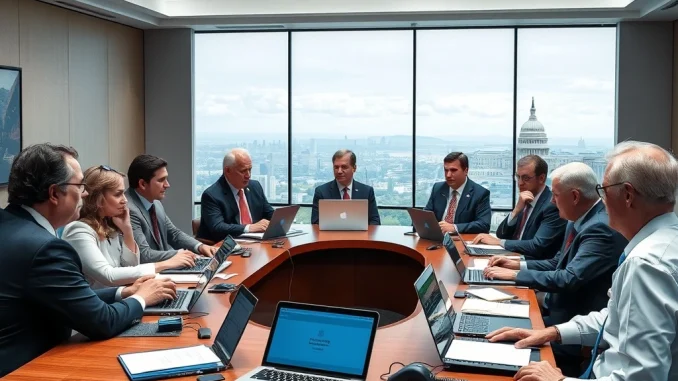
The landscape of cryptocurrency regulation in the United States is rapidly evolving. Recently, **US Senate Democrats** concluded a pivotal roundtable meeting with prominent **crypto leaders**, signaling a critical juncture for the industry. This engagement highlights a growing intent among lawmakers to address the burgeoning sector. However, the discussions were not without tension, as senators issued a stern warning to industry participants, urging them against partisan alignment. Furthermore, they underscored a significant breach of trust following the recent leak of a draft bill concerning **DeFi regulation**. Despite these challenges, the commitment to passing comprehensive **crypto legislation** remains firm, with senators emphasizing that the legislative process will move forward without undue delay.
US Senate Democrats Engage Crypto Leaders on Critical Legislation
A significant gathering recently brought together **US Senate Democrats** and key figures from the cryptocurrency industry. Crypto in America host Eleanor Terrett reported on the conclusion of this high-stakes roundtable. This meeting served as a crucial platform for dialogue between policymakers and innovators. Participants discussed various aspects of the digital asset landscape, including market stability, consumer protection, and technological innovation. Importantly, senators conveyed a clear message regarding the industry’s political neutrality. They cautioned **crypto leaders** against aligning too closely with any single political party, particularly the Republican Party. This warning suggests a desire for bipartisan cooperation in crafting future regulatory frameworks for **digital assets**.
The discussions at the roundtable covered a broad spectrum of topics. These included the potential benefits of blockchain technology and the inherent risks associated with unregulated markets. Senators expressed a keen interest in understanding the complexities of decentralized finance (DeFi) and other emerging crypto sectors. Moreover, they sought to gauge the industry’s readiness for increased oversight. The overarching goal appeared to be finding a balanced approach that fosters innovation while mitigating potential harms. Therefore, these conversations are vital for shaping the future regulatory environment.
The DeFi Regulation Leak and Eroding Trust
A significant point of contention during the roundtable was the recent leak of a draft bill focused on **DeFi regulation**. Senators directly addressed this issue, stating that the incident had severely broken trust between lawmakers and industry stakeholders. Leaks of legislative drafts can undermine the collaborative process. They can also create an atmosphere of suspicion. Consequently, senators stressed the importance of confidentiality and transparency in their engagement with the crypto sector. They expect a high level of integrity from all parties involved in policy discussions. This incident serves as a stark reminder of the delicate balance required in legislative endeavors.
The leaked draft bill, presumably detailing proposals for regulating decentralized finance, caused considerable concern within the crypto community. Such leaks can lead to speculation and uncertainty. They can also potentially influence market dynamics prematurely. For policymakers, maintaining trust is paramount, especially when dealing with a rapidly evolving and often misunderstood industry like cryptocurrency. The senators’ explicit mention of this trust breach indicates its profound impact on their perception of the industry’s conduct. Moving forward, rebuilding this trust will be a critical component of successful **crypto legislation** efforts. Furthermore, it highlights the need for secure and controlled information sharing channels.
Commitment to Expedited Crypto Legislation
Despite the challenges, **US Senate Democrats** reaffirmed their unwavering commitment to passing meaningful **crypto legislation**. They assured **crypto leaders** that the legislative process would not be slow. This commitment offers a beacon of hope for an industry eager for regulatory clarity. The senators acknowledged the need for a clear legal framework to allow the digital asset space to mature responsibly. Swift action could provide much-needed guidance for businesses and investors alike. This proactive stance contrasts with previous periods of regulatory ambiguity.
The push for expedited legislation reflects a growing recognition of cryptocurrency’s increasing integration into the global financial system. Delaying comprehensive regulation could leave consumers vulnerable and stifle innovation. Senators emphasized their dedication to crafting thoughtful and effective laws. These laws will aim to protect investors, prevent illicit activities, and foster a competitive environment. Ultimately, their goal is to establish a robust framework for **digital assets**. This framework will support economic growth and technological advancement within the United States. Therefore, the legislative timeline is now a key area of focus for all stakeholders.
Navigating the Future of Digital Assets in the US
The United States is at a critical juncture regarding the future of **digital assets**. The roundtable discussions underscored the complexity of regulating an innovative sector. Policymakers face the dual challenge of promoting technological advancement and safeguarding financial stability. Key areas for future legislation include:
- Defining various types of digital assets (e.g., securities, commodities).
- Establishing clear guidelines for stablecoins.
- Implementing robust consumer protection measures.
- Developing frameworks for decentralized autonomous organizations (DAOs).
These efforts will shape how cryptocurrencies and blockchain technology integrate into the mainstream economy. Consequently, a coherent strategy is essential for maintaining the US’s competitive edge in the global digital economy.
The ongoing dialogue between **US Senate Democrats** and **crypto leaders** is crucial for building consensus. Industry leaders must provide expert insights. Policymakers must listen and incorporate these perspectives into their legislative proposals. This collaborative approach can lead to more effective and adaptable regulations. The commitment to not delay **crypto legislation** is a positive sign. It suggests a proactive approach to what has often been a reactive regulatory environment. Ultimately, the success of these efforts will depend on sustained engagement and a shared vision for the future of **digital assets**.
In conclusion, the recent roundtable marked an important step forward in the US’s journey toward comprehensive cryptocurrency regulation. Despite the trust issues stemming from the **DeFi regulation** leak, **US Senate Democrats** expressed a firm resolve to pass **crypto legislation** swiftly. This commitment, coupled with warnings against partisan alignment, sets the stage for a dynamic period of policy development. All eyes will now be on Washington as lawmakers and **crypto leaders** work to define the future of **digital assets** in America.
Frequently Asked Questions (FAQs)
Q1: What was the primary outcome of the roundtable meeting?
A1: The primary outcome was a reaffirmed commitment by US Senate Democrats to pass comprehensive crypto legislation. They also warned crypto leaders against acting as an arm of the Republican Party and addressed a breach of trust due to a DeFi regulation draft bill leak.
Q2: Why were senators concerned about the DeFi regulation draft bill leak?
A2: Senators stated that the leak of the draft bill on decentralized finance (DeFi) regulation had broken trust between them and the crypto industry. Such leaks can undermine the legislative process and create an environment of suspicion.
Q3: Will the process of passing crypto legislation be slow?
A3: No, senators explicitly affirmed their commitment to passing crypto legislation and stated that the process would not be slow. This indicates a desire for expedited action on regulatory frameworks.
Q4: What specific warning did senators give to crypto leaders?
A4: Senators warned crypto leaders against acting as an arm of the Republican Party. This emphasizes a desire for political neutrality and bipartisan engagement in shaping future crypto policy.
Q5: What are the main challenges in regulating digital assets?
A5: Regulating digital assets involves defining various asset types, establishing clear stablecoin guidelines, ensuring consumer protection, and developing frameworks for new entities like DAOs. The challenge lies in fostering innovation while mitigating risks and maintaining financial stability.


