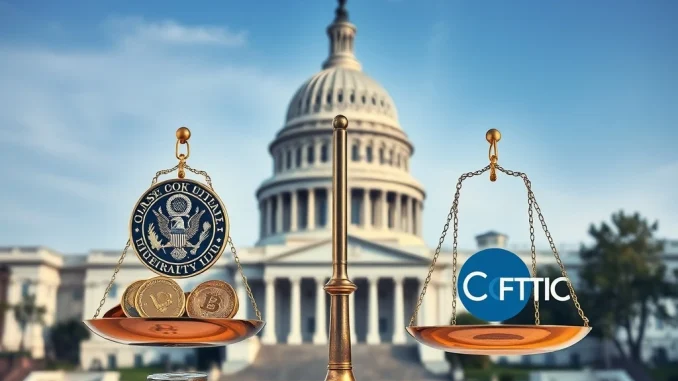
The cryptocurrency industry frequently navigates complex regulatory waters. Therefore, recent developments from the US Senate offer a beacon of hope for market participants. A revised draft of the Digital Asset Market Structure Act, known as CLARITY, has emerged. This bill seeks to provide much-needed legal distinctions for various digital asset activities. Crucially, it specifically excludes staking and airdrops from being classified as securities, a move that could significantly shape the future of digital finance.
Unpacking the US Senate Crypto Bill: A New Regulatory Horizon
The U.S. Senate Banking Committee recently unveiled a revised draft of the Digital Asset Market Structure Act (CLARITY). This legislative effort aims to establish a clear regulatory framework for digital assets. Eleanor Terrett, host of Crypto in America, initially reported on this significant development. The bill represents a concerted effort to move beyond the current ambiguous regulatory landscape. Consequently, it could foster greater innovation and stability within the digital asset ecosystem. Many stakeholders eagerly await its progress. This US Senate crypto bill proposes distinct rules for different types of crypto activities, reflecting a nuanced understanding of the sector.
Staking Definition and Airdrop Regulation: Key Exclusions
Perhaps the most impactful provisions of the new draft concern staking definition and airdrop regulation. Specifically, the bill states that neither staking nor airdrops will fall under the purview of securities laws. This distinction is vital for the crypto community. Staking involves locking up cryptocurrency to support a blockchain network. In return, participants earn rewards. If classified as a security, staking would face stringent regulatory hurdles. Similarly, airdrops, which distribute free tokens to wallet holders, have been a contentious area. The proposed exclusion provides significant relief. It removes a major cloud of uncertainty. Therefore, many developers and users can now operate with greater confidence. This clear stance on airdrops and staking definition could encourage wider adoption of these fundamental crypto mechanisms.
DePIN Exemption and Its Importance
Beyond staking and airdrops, the draft bill also introduces a DePIN exemption. Decentralized Physical Infrastructure Networks (DePIN) are poised to revolutionize various industries. These networks leverage blockchain technology to coordinate physical infrastructure. Examples include decentralized wireless networks or energy grids. Exempting DePINs from securities laws is a forward-thinking measure. It acknowledges their unique operational model. These projects often involve utility tokens rather than investment contracts. Therefore, applying traditional securities regulations could stifle their growth. This exemption demonstrates a recognition of novel blockchain applications. It fosters an environment where innovation can thrive. The US Senate crypto bill clearly aims to protect these emerging sectors.
Forging a Path for Regulatory Cooperation: SEC CFTC Committee
A critical procedural element within the bill involves the establishment of a joint advisory committee. This committee would comprise representatives from both the Securities and Exchange Commission (SEC) and the Commodity Futures Trading Commission (CFTC). The goal is to facilitate collaborative decision-making on crypto-related issues. Furthermore, it aims to resolve jurisdictional disputes. Historically, both agencies have asserted authority over different aspects of the crypto market. This has led to regulatory confusion. The proposed SEC CFTC committee offers a structured approach to inter-agency cooperation. Such a body could streamline regulatory processes. It would provide clearer guidance for market participants. Ultimately, this collaboration is essential for developing a coherent and effective regulatory framework. It aims to reduce the fragmentation currently plaguing the sector.
Retained Protections: Self-Custody and DeFi
Significantly, the new draft retains several key protections from its predecessor. These include robust safeguards for self-custody. Self-custody refers to users holding their own private keys. This gives them direct control over their digital assets. It bypasses third-party intermediaries. The bill recognizes the importance of this fundamental principle of decentralization. Moreover, it includes exemptions for Decentralized Finance (DeFi) protocols. DeFi platforms offer financial services without traditional banks. They operate on smart contracts. Protecting DeFi from overly burdensome regulations is crucial. These retained provisions underscore a commitment to supporting core tenets of the crypto space. They aim to balance innovation with necessary oversight. The US Senate crypto bill continues to prioritize user control and decentralized innovation.
Broader Implications for the Digital Asset Landscape
This revised draft bill carries substantial implications for the entire digital asset landscape. By providing clarity on staking and airdrops, it removes significant legal ambiguity. This could unlock new investment and development. Furthermore, the DePIN exemption encourages innovation in a rapidly expanding sector. The formation of an SEC CFTC committee signals a more unified regulatory approach. This could reduce the ‘regulation by enforcement’ often criticized by the industry. Consequently, greater legal certainty might attract more institutional capital. It could also encourage more mainstream adoption of cryptocurrencies. This legislative effort represents a potential turning point. It moves towards a more predictable and supportive regulatory environment for digital assets in the United States. The US Senate crypto bill is truly a landmark proposal.
The latest draft of the Digital Asset Market Structure Act marks a significant step forward. It addresses several long-standing concerns within the crypto industry. By clarifying the status of staking and airdrops, and by supporting emerging sectors like DePINs, the US Senate is signaling a nuanced approach to digital asset regulation. While the legislative process is often lengthy and subject to change, this draft offers a glimpse into a potentially more favorable regulatory future for cryptocurrencies in the United States. Its progression will be closely watched by stakeholders worldwide, eager for clarity and innovation.
Frequently Asked Questions (FAQs)
1. What is the Digital Asset Market Structure Act (CLARITY)?
The Digital Asset Market Structure Act, also known as CLARITY, is a draft bill from the U.S. Senate Banking Committee. It aims to establish a clear regulatory framework for digital assets in the United States, providing legal distinctions for various crypto activities.
2. Why is the exclusion of staking and airdrops from securities important?
Excluding staking and airdrops from securities definitions is crucial because it removes significant regulatory uncertainty. If classified as securities, these activities would face stringent rules, potentially stifling innovation and participation in fundamental blockchain mechanisms. This clarity allows developers and users to operate with greater confidence.
3. What are DePINs, and why are they exempted?
DePINs, or Decentralized Physical Infrastructure Networks, use blockchain to coordinate physical infrastructure like wireless networks or energy grids. Their exemption from securities laws acknowledges their unique utility-token-based operational model, preventing traditional regulations from hindering their innovative growth.
4. How will the joint SEC and CFTC advisory committee function?
The proposed joint advisory committee will consist of representatives from the SEC and CFTC. Its primary function is to facilitate collaborative decision-making on crypto-related issues and resolve jurisdictional disputes between the two agencies, aiming for a more unified and coherent regulatory approach.
5. What are the retained protections for self-custody and DeFi?
The draft bill retains robust protections for self-custody, recognizing users’ direct control over their digital assets. It also includes exemptions for Decentralized Finance (DeFi) protocols, which offer financial services via smart contracts without traditional intermediaries, ensuring these core tenets of the crypto space are supported.
6. What are the potential broader impacts of this bill on the crypto market?
This bill could bring significant legal certainty, potentially attracting more institutional investment and mainstream adoption. By reducing regulatory ambiguity and fostering inter-agency cooperation, it aims to create a more predictable and supportive regulatory environment for digital assets in the U.S., encouraging innovation and stability.