In an unexpected move to tackle the staggering US national debt, which currently stands at an astounding $36.7 trillion, the U.S. Treasury Department has rolled out a new strategy. For those of us keenly observing the intersection of finance, technology, and government policy, this development offers a fascinating, albeit perhaps symbolic, glimpse into how traditional institutions are attempting to modernize civic engagement. But what does this mean for digital payments, and more specifically, for the cryptocurrency community?
Understanding the Scale: The US National Debt Challenge
The sheer magnitude of the US national debt is a figure that often eludes comprehension. Trillions of dollars represent the cumulative sum of past federal budget deficits, and its growth has significant implications for future generations, economic stability, and the nation’s global standing. While various economic policies and fiscal reforms are constantly debated, the Treasury has now opened a novel, direct channel for individual citizens to contribute: their ‘Gifts to Reduce the Public Debt’ program.
Historically, this program has existed, but its impact has been minimal. Since its inception, it has only managed to collect a modest $67.3 million in donations. This paltry sum underscores the challenge of relying on voluntary contributions to address a problem of this scale. Yet, the recent integration of widely used digital platforms marks a significant shift in accessibility.
Unlocking Convenience: Venmo PayPal Donations Explained
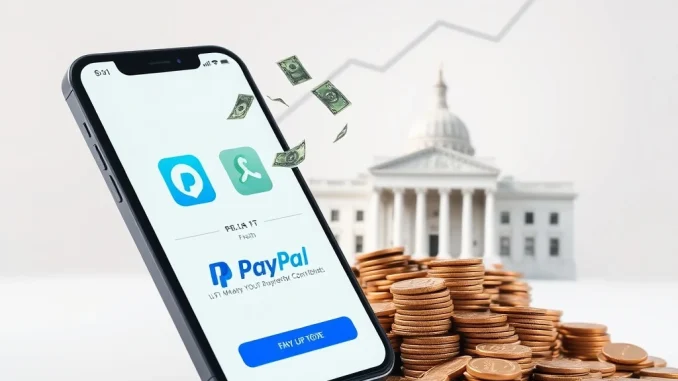
The core of this new initiative lies in making it easier than ever for everyday Americans to contribute. The U.S. Treasury has officially expanded its debt-reduction program to include Venmo PayPal donations as direct channels for citizens to send funds. Launched in late July 2025, this move allows users to make fiat-only payments directly through these popular platforms via the government’s secure Pay.gov portal.
Here’s how the new system works:
- Direct Integration: Users can now select Venmo or PayPal as payment options when making a donation through Pay.gov.
- Fiat Only: Contributions are strictly limited to traditional fiat currency (USD), with no option for cryptocurrency.
- Voluntary Contributions: These digital donations are treated identically to existing methods like credit/debit cards and direct bank transfers, falling under the ‘Gifts to Reduce the Public Debt’ umbrella.
This integration signifies the Treasury’s broader push to modernize how citizens interact with government financial tools. By leveraging apps that millions already use daily, the barrier to participation for even micro-donations is significantly lowered. The convenience factor for Venmo PayPal donations is undeniable, especially for younger demographics accustomed to mobile-first financial transactions.
The Treasury’s Debt Reduction Program: Symbolism Over Substance?
While the integration of modern digital payment channels is a step forward in accessibility, many experts and the public alike question its true impact. Given the scale of the national debt, which now stands at an astonishing $36.7 trillion, even a substantial increase in donations would represent a mere drop in the ocean. Economist Ray Dalio, among others, has voiced skepticism, arguing that such symbolic gestures do little to address the systemic fiscal challenges that necessitate structural reforms, such as deficit spending.
Public reaction on social media has been predictably mixed:
- Some users have mocked the effort, viewing it as a trivial or even audacious gesture given the government’s own spending habits.
- Others have praised the convenience, seeing it as a simple way to participate in civic responsibility, even if the financial impact is small.
The program’s potential lies less in immediate fiscal outcomes and more in its ability to influence long-term behavioral shifts. By fostering a sense of participation and fiscal awareness, the Treasury hopes to encourage greater civic engagement, particularly among younger generations who are native to mobile payments.
Why Digital Payment Channels But No Crypto?
For the cryptocurrency community, a glaring question emerges: why have the Treasury’s new digital payment channels excluded blockchain-based options? Despite the burgeoning interest in digital assets and their potential for secure, efficient transactions, the U.S. government has firmly adhered to traditional payment infrastructure.
This decision aligns with current regulatory frameworks, which are still grappling with how to classify and govern cryptocurrencies. The lack of a clear, comprehensive regulatory roadmap for digital assets likely plays a significant role in the Treasury’s cautious approach. While platforms like PayPal already offer crypto buying and selling services, integrating crypto payments for government programs would require navigating complex legal, security, and accounting challenges that the Treasury appears unwilling to undertake at this time.
This exclusion means a segment of tech-savvy potential donors, particularly those who primarily operate within the crypto ecosystem, are left out. It underscores a broader divide between traditional financial systems and the rapidly evolving world of decentralized finance, highlighting the government’s preference for established, regulated fiat channels.
Broader Implications of the Treasury Initiative
The expansion of the Treasury initiative also raises intriguing questions about the evolving role of private corporations in public finance. PayPal Holdings Inc. (PYPL) and Affirm Holdings Inc. (AFRM), which owns Venmo, now serve as intermediaries for a government program. This collaboration could potentially enhance their brand visibility and reinforce their position as trusted payment providers, even though neither company has issued public statements overtly promoting their involvement.
The lack of corporate commentary suggests a measured approach, perhaps to avoid politicizing the initiative or setting a precedent for future collaborations. Nevertheless, the technical integration has been verified, confirming their behind-the-scenes role.
As this program progresses, its true effectiveness will hinge on several factors:
- Sustained Public Interest: Will the initial curiosity translate into consistent micro-donations?
- Government Communication: How effectively will the Treasury promote and explain the program’s purpose?
- Broader Fiscal Context: Ultimately, the program’s symbolic success will be overshadowed if structural fiscal reforms are not pursued concurrently.
While the introduction of Venmo and PayPal reflects a commendable step toward modernized governance and civic engagement, it remains to be seen whether similar initiatives will emerge in other countries or if the U.S. will continue as a standalone experiment in digital civic engagement for debt reduction.
Conclusion: A Small Step in a Long Journey
The U.S. Treasury’s decision to accept Venmo PayPal donations for the national debt marks a significant, albeit largely symbolic, leap in integrating modern digital payment methods into government operations. While it offers unparalleled convenience for citizens wishing to contribute to the monumental US national debt, the financial impact is expected to be negligible compared to the $36.7 trillion sum. The deliberate exclusion of cryptocurrency options also highlights the current regulatory caution surrounding digital assets. Ultimately, this debt reduction program serves as an interesting case study in how governments attempt to leverage technology for civic engagement, prompting discussions on financial literacy, public responsibility, and the future of digital finance in a traditional economic landscape.
Frequently Asked Questions (FAQs)
Q1: What is the U.S. Treasury’s ‘Gifts to Reduce the Public Debt’ program?
A1: It’s a long-standing initiative by the U.S. Treasury that allows individual citizens to make voluntary financial contributions to help reduce the national debt. These donations are considered gifts to the U.S. government.
Q2: How do Venmo and PayPal fit into this debt reduction program?
A2: The U.S. Treasury has expanded the program to include Venmo and PayPal as direct donation channels through its Pay.gov portal. This allows users to make fiat-only payments conveniently using these popular digital payment channels.
Q3: Can I donate cryptocurrency to reduce the national debt?
A3: No, currently the program only accepts fiat currency (USD) donations. Despite the growing interest in digital assets, the U.S. Treasury has not announced plans to integrate cryptocurrency options, adhering to traditional payment infrastructure and current regulatory frameworks.
Q4: Will these digital donations significantly impact the $36.7 trillion US national debt?
A4: While the new digital payment channels make it easier to donate, experts caution that the financial impact will likely remain symbolic. The total amount raised historically ($67.3 million) is minuscule compared to the $36.7 trillion debt, suggesting that even sustained growth in contributions would barely dent the deficit. The program’s primary goal might be more about fostering civic engagement than immediate fiscal relief.
Q5: Why did the Treasury choose Venmo and PayPal?
A5: The Treasury aims to modernize civic engagement and lower participation barriers, especially among younger demographics accustomed to mobile payments. Venmo and PayPal are widely used digital payment channels, making them ideal for reaching a broad audience and facilitating micro-donations.