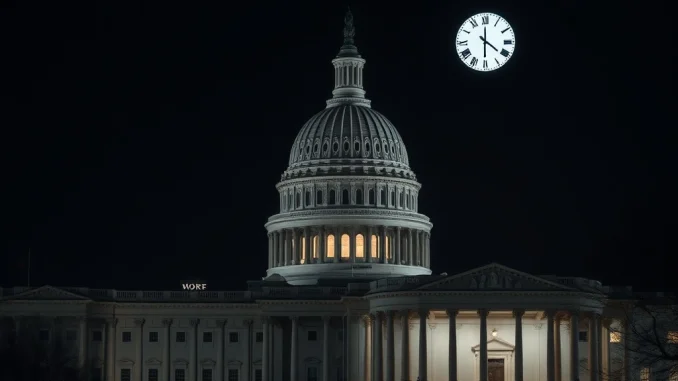
The financial world often watches Washington, D.C., with keen interest, as political developments can ripple through markets, including the dynamic cryptocurrency space. This week, all eyes are on Capitol Hill. The U.S. House of Representatives is scheduled to commence a pivotal vote to resolve the ongoing US government shutdown at 9:00 p.m. UTC on Wednesday. This significant legislative action, reported by Solid Intel, marks a critical juncture for federal operations and the broader economy.
Understanding the US Government Shutdown
A US government shutdown occurs when Congress fails to pass appropriations bills or continuing resolutions that fund federal government operations for the upcoming fiscal year. Without legal authority to spend money, non-essential government agencies must cease operations. Essential services, however, typically continue. This includes critical functions like national security and public safety. Furthermore, the impact can be widespread, affecting millions of citizens and federal employees.
Historically, shutdowns have varied in duration and cause. They often stem from disagreements over spending levels, policy riders, or broader budgetary priorities. The current situation highlights the persistent challenges in achieving bipartisan consensus. Consequently, the upcoming House vote carries immense weight for the nation’s stability.
The Immediate Impact of a Federal Funding Crisis
When the government shuts down, its effects are felt almost immediately. Federal workers, deemed non-essential, are furloughed without pay. Essential personnel, such as air traffic controllers and border patrol agents, continue to work but face delayed paychecks. This creates significant financial hardship for many families across the country. Moreover, public services can suffer dramatically. National parks may close, visa and passport processing can slow down, and various government services might become unavailable. These disruptions underscore the gravity of a federal funding crisis.
Beyond federal employees, contractors who rely on government projects also face uncertainty. Their contracts may be suspended, leading to layoffs or financial strain for their businesses. Therefore, the ripple effect extends far beyond the immediate government workforce. Communities that host large federal workforces also experience economic downturns. This often includes reduced consumer spending and business activity.
The Significance of the House Vote on Wednesday
The impending House vote on Wednesday is not merely a procedural step; it represents a concentrated effort to restore full government functionality. The legislative process for ending a shutdown typically involves passing a new appropriations bill or a continuing resolution. This funding measure must then be signed into law by the President. The outcome of this vote will determine the immediate future of countless federal programs and services.
Observers are closely watching the proceedings. They anticipate intense debate and negotiation leading up to the scheduled 9:00 p.m. UTC vote. Lawmakers face immense pressure from their constituents and various interest groups. Ultimately, the goal is to find common ground to reopen the government swiftly. The timing of the vote, late in the evening, suggests the culmination of extensive discussions.
Broader Economic Implications of a Prolonged Shutdown
A prolonged US government shutdown can have severe economic implications. Economic growth can slow as federal spending halts and consumer confidence wanes. Businesses, particularly those reliant on government contracts or services, face increased uncertainty. For instance, small businesses applying for federal loans might experience delays, hindering their growth. Financial markets often react negatively to political instability, preferring predictability.
Furthermore, a shutdown can impact the nation’s credit rating, potentially increasing borrowing costs for the government. This can lead to higher interest rates for consumers and businesses alike. Analyst firms frequently revise their economic forecasts downward during extended shutdowns. They cite reduced GDP growth and potential job losses. Therefore, the swift resolution of this federal funding crisis is paramount for maintaining economic momentum.
Congressional Action and Market Sentiment
The scheduled congressional action on Wednesday is a critical moment for political stability. Market participants, including those in the crypto sector, generally prefer a stable political environment. Uncertainty often leads to volatility across all asset classes. A successful vote to end the shutdown could provide a much-needed boost to market sentiment. Conversely, a failure to reach an agreement could prolong the uncertainty, potentially causing further market jitters.
While cryptocurrencies are often seen as decentralized and less susceptible to traditional political upheavals, they are not entirely immune. Broader economic concerns and shifts in investor confidence can indirectly influence digital asset prices. Therefore, the resolution of the US government shutdown is a factor that astute investors consider. They weigh its potential impact on overall market stability and risk appetite.
Navigating Political Uncertainty: Lessons from Past Shutdowns
History offers valuable lessons regarding government shutdowns. Past events have demonstrated the importance of timely congressional action. For example, the 2018-2019 shutdown, the longest in U.S. history, had measurable negative impacts on GDP growth. It also caused significant disruption to federal agencies. These historical precedents underscore the urgency of the current situation.
Each shutdown, while unique in its political context, shares common threads: disruption, economic cost, and public frustration. The current federal funding crisis demands a swift and effective solution. Lawmakers must consider the broad consequences of their decisions. Their ability to compromise and pass essential legislation is vital for national well-being. Therefore, the upcoming vote is a test of political will and effectiveness.
Anticipation and Outlook Following the House Vote
As Wednesday evening approaches, anticipation builds around the House vote. If the vote succeeds in passing a funding measure, the government would begin the process of reopening. Furloughed employees would return to work, and suspended services would resume. This positive outcome would likely alleviate some of the immediate economic concerns. It could also provide a sense of relief to markets and the public.
However, if the vote fails, the US government shutdown would continue. This would escalate the pressure on lawmakers to find an alternative solution. Continued gridlock could lead to more significant economic implications and prolonged uncertainty. The eyes of the nation, and indeed the world, will be on the U.S. House of Representatives as they undertake this crucial congressional action. The outcome will undoubtedly shape the immediate economic and political landscape.
In conclusion, the impending vote in the U.S. House of Representatives to end the US government shutdown is a moment of significant national importance. The scheduled 9:00 p.m. UTC vote on Wednesday, as reported by Solid Intel, will determine the immediate future of federal operations. It will also influence broader economic stability. The consequences of a prolonged federal funding crisis are substantial, affecting everything from federal workers to financial markets. Therefore, all stakeholders hope for a swift and positive resolution.
Frequently Asked Questions (FAQs)
What exactly is a US government shutdown?
A US government shutdown occurs when Congress fails to pass legislation, such as appropriations bills or continuing resolutions, to fund government operations for the upcoming fiscal year. Without funding authority, non-essential government agencies must temporarily cease operations.
How does a government shutdown impact federal employees?
During a shutdown, non-essential federal employees are furloughed without pay. Essential employees, such as those in public safety and national security, are required to work but often face delayed paychecks until the government reopens and funding is restored.
What are the typical economic implications of a federal funding crisis?
The economic implications can include a slowdown in economic growth, reduced consumer confidence, delays in government services (like loan processing), and potential negative reactions in financial markets. A prolonged crisis can have more severe and lasting effects on the economy.
How does a government shutdown affect public services?
Public services are significantly affected. National parks may close, passport and visa processing can slow, scientific research might halt, and various agency operations that rely on federal funding become unavailable. This impacts citizens directly.
What is the significance of the upcoming House vote?
The upcoming House vote is crucial because it represents the legislative body’s attempt to pass a funding bill or resolution to end the shutdown. A successful vote would allow the government to reopen, restoring services and pay for federal workers, thereby alleviating economic uncertainty.
How might this congressional action indirectly affect cryptocurrency markets?
While not directly tied to crypto, a government shutdown creates broader economic and political uncertainty. This uncertainty can lead to shifts in investor sentiment and risk appetite across all financial markets, including digital assets. Stability in traditional markets is generally favorable for investor confidence, which can indirectly benefit crypto.