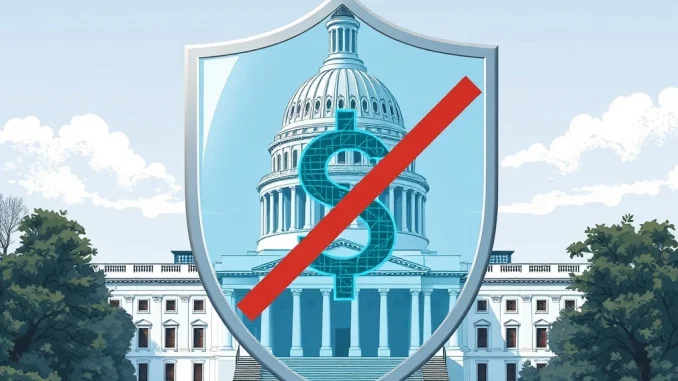
The United States House of Representatives recently took a significant step. They added a crucial anti-CBDC measure to the National Defense Authorization Act (NDAA). This move aims to prevent the Federal Reserve from launching a central bank digital currency (CBDC). This legislative action signals growing congressional concern over a potential US House CBDC. It sets a clear legislative boundary for digital currency innovation.
The US House CBDC Stance Takes Shape
Lawmakers in the U.S. House have clearly stated their position. They inserted a specific provision into the must-pass NDAA. This provision directly targets the development of a central bank digital currency. Consequently, the Federal Reserve faces new restrictions. This demonstrates a proactive approach to digital currency policy. Many view this as a protective measure against potential overreach. It reflects a growing skepticism towards government-issued digital money.
Understanding the Anti-CBDC Measure’s Details
The amendment is quite comprehensive. It explicitly blocks the Fed from several key activities. These include testing, studying, developing, creating, or implementing a CBDC. This broad prohibition covers all stages of a potential digital currency project. However, there is a notable exception. The measure specifically allows for U.S. dollar-pegged stablecoins. These stablecoins must be “open, permissionless, and private.” This distinction highlights a preference for private sector innovation. It also addresses concerns about government control. Therefore, the focus remains on preventing a direct government-issued digital dollar.
The criteria for stablecoins are important. An “open” system means accessibility for all. “Permissionless” implies no central authority controls participation. “Private” ensures user anonymity. These conditions are critical for advocates of decentralized finance. They contrast sharply with potential government surveillance capabilities. This aspect offers clarity on acceptable digital asset forms.
Why the National Defense Authorization Act is a Key Vehicle
The NDAA is an annual legislative package. It is considered essential for national security. For this reason, it nearly always passes Congress. Lawmakers often attach unrelated provisions to it. This strategy increases the chances of these measures becoming law. The inclusion of the anti-CBDC measure within the NDAA underscores its perceived importance. It reflects a desire to expedite its passage. This method is a common tactic in Washington D.C. It ensures that critical policy changes receive attention. The defense bill provides a robust platform for such amendments.
The Broader Legislative Landscape for a Federal Reserve CBDC
This is not the first time the House has addressed a potential Federal Reserve CBDC. Earlier in July, the House narrowly passed the Republican-led Anti-CBDC Surveillance State Act. That bill also aimed to restrict the Fed’s ability to issue a digital currency. However, its path through the Senate remains uncertain. The NDAA provision, therefore, offers another avenue for similar legislation. It brings the debate to the forefront once again. This dual approach highlights the intensity of the opposition. It also shows a strategic effort to secure legislative victories.
The Federal Reserve itself has explored the concept. They released a discussion paper on a potential U.S. CBDC. This paper outlined various design choices and implications. However, the Fed has maintained that it would only proceed with clear congressional authorization. This latest House action provides a direct legislative response. It signifies a major hurdle for any future Fed-led digital currency initiative.
Debating the Future of the Digital Dollar
The discussion around a digital dollar involves many complex factors. Proponents of a CBDC often cite several benefits. These include enhanced payment efficiency, financial inclusion for the unbanked, and strengthening the U.S. dollar’s international standing. Conversely, opponents raise significant privacy concerns. They also worry about potential government surveillance. The current legislative efforts reflect these deep-seated concerns. They prioritize individual privacy and financial freedom. This fundamental disagreement shapes the ongoing policy debate.
Advocates for the measure emphasize the risks of a centralized digital currency. They fear a system that could allow the government to monitor or control citizens’ spending. This potential for a “surveillance state” is a major point of contention. Therefore, safeguarding individual liberties remains paramount. The explicit allowance for private stablecoins further reinforces this commitment to privacy-preserving digital assets.
The Implications for the National Defense Authorization Act and Beyond
The inclusion of this provision within the National Defense Authorization Act carries significant weight. Its “must-pass” status increases the likelihood of becoming law. If enacted, this measure would represent a substantial legislative victory for CBDC opponents. It would effectively halt the Federal Reserve’s ability to pursue a direct digital currency. This outcome would force a re-evaluation of digital asset strategies. It would also empower private stablecoin development within a clear regulatory framework.
The broader implications extend to global digital currency developments. Many countries are actively exploring or launching CBDCs. China, for instance, has significantly advanced its digital yuan. The U.S. stance, therefore, sends a powerful message. It signals a cautious and privacy-focused approach. This contrasts with some other nations. It highlights a unique American perspective on digital financial innovation.
The outcome of this legislative push will undoubtedly influence the wider cryptocurrency market. Clarity on the U.S. position regarding a US House CBDC provides some certainty. It may encourage further innovation in the private stablecoin sector. This dynamic landscape demands constant monitoring from investors and policymakers alike. The debate is far from over, but a significant battle has been won by anti-CBDC proponents.
The U.S. House’s recent addition to the NDAA marks a significant moment. It demonstrates a clear legislative intent to curb a central bank digital currency. This action protects privacy and promotes permissionless stablecoins. As the NDAA moves forward, the debate over a US House CBDC will continue. Its passage could fundamentally alter the trajectory of digital currency development in the nation. This decisive legislative move will shape the future of digital finance in America for years to come.
Frequently Asked Questions (FAQs)
- What is the anti-CBDC measure in the NDAA?
The measure prevents the Federal Reserve from developing, testing, or implementing a central bank digital currency (CBDC). This broad prohibition aims to stop government-issued digital money. - Why was this measure added to the National Defense Authorization Act (NDAA)?
The NDAA is a “must-pass” bill, making it a strategic vehicle for lawmakers to attach other provisions. This increases the likelihood of these measures becoming law due to the bill’s critical nature. - Does this measure ban all digital currencies in the U.S.?
No, it specifically targets a Federal Reserve-issued CBDC. It makes an explicit exception for “open, permissionless, and private” U.S. dollar-pegged stablecoins, encouraging private sector innovation. - What are the main concerns driving opposition to a U.S. CBDC?
Primary concerns include potential government surveillance over citizens’ financial activities, privacy issues, and the extent of government control over individual finances. Critics fear a “surveillance state.” - How does this NDAA provision relate to the “Anti-CBDC Surveillance State Act”?
This NDAA provision serves a similar purpose to the earlier “Anti-CBDC Surveillance State Act,” which also aimed to restrict the Fed. The NDAA inclusion offers another, potentially more certain, path for similar legislative intent. - What are “open, permissionless, and private” stablecoins?
These are digital currencies pegged to the U.S. dollar, issued by private entities. “Open” means accessible to all, “permissionless” implies no central gatekeeper, and “private” ensures transaction anonymity, contrasting with a centralized CBDC.