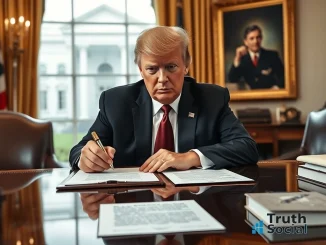
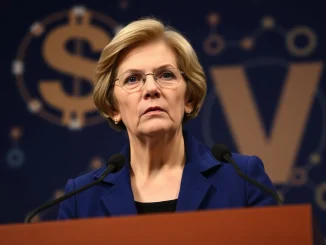
The United States faces growing apprehension. A critical US government shutdown has deepened. A temporary spending bill, proposed by Senate Republicans, recently failed to pass in the Senate. This development extends the ongoing budgetary stalemate. Consequently, federal services face disruption. Many government employees now face furloughs. This political impasse generates significant economic uncertainty. It also casts a shadow over broader financial markets impact, including the volatile cryptocurrency sector.
US Government Shutdown Deepens
The federal government remains partially closed. Lawmakers could not agree on funding. The latest attempt to resolve the crisis ended in failure. This means a continuation of the US government shutdown. Essential services still operate. However, many non-essential operations have ceased. Agencies cannot function fully. This situation impacts various sectors. Moreover, it affects millions of Americans directly.
Government shutdowns carry real consequences. Federal workers face delayed paychecks. National parks close their gates. Certain regulatory functions pause. This ripple effect spreads through the economy. Therefore, observers watch closely. They seek signs of a resolution. The current standoff highlights deep divisions. These divisions exist within Washington D.C. political circles.
Spending Bill Fails Again in Senate
A proposed temporary spending bill aimed to reopen the government. It offered short-term funding. However, the measure did not gain enough support. It required 60 votes to advance. Instead, it received fewer. This outcome marks another setback. It prolongs the fiscal impasse. Both parties blame the other. They cannot find common ground. This latest failure shows the depth of the disagreement.
The bill included specific provisions. These provisions were unacceptable to some members. Democrats largely opposed the Republican-led effort. They argued for a broader, bipartisan solution. Conversely, some Republicans sought different concessions. This internal disagreement also contributed to the bill’s demise. Thus, the path to ending the shutdown remains unclear.
Economic Uncertainty Looms Large
Prolonged shutdowns create significant economic uncertainty. Businesses become hesitant to invest. Consumers may reduce spending. This caution slows economic activity. Furthermore, federal data collection often pauses. This lack of information hinders economic analysis. Policymakers struggle to make informed decisions. The overall economic outlook darkens with each passing day of the shutdown.
Federal workers comprise a large workforce. Their missed paychecks reduce household income. This reduction directly affects local economies. Small businesses near government facilities feel the pinch. They experience less customer traffic. Consequently, they face revenue losses. This domino effect illustrates the widespread impact. It extends far beyond Washington’s Beltway.
Broader Financial Markets Impact
Traditional financial markets react to political instability. A lengthy US government shutdown can trigger volatility. Investors prefer predictability. They dislike uncertainty. Stock markets might show declines. Bond yields could fluctuate. The value of the U.S. dollar may also experience pressure. These shifts reflect investor anxiety. They worry about the nation’s fiscal health.
Cryptocurrency markets are not immune. While often seen as decoupled, they react to macro trends. Global economic instability can influence crypto prices. A weakening dollar might boost some digital assets. Conversely, a flight to safety could favor established assets. Bitcoin, for example, sometimes acts as a safe-haven. However, its correlation varies. Therefore, investors monitor the situation closely. They assess the potential for broader financial markets impact.
Senate Republicans Push for Fiscal Discipline
Senate Republicans advocated for specific spending cuts. They believe fiscal discipline is paramount. Their proposed bill reflected these priorities. They aimed to reduce the national debt. Moreover, they sought to control government spending. This stance forms a core part of their platform. They argue that unchecked spending harms future generations. Therefore, they remain firm in their demands.
However, these demands face strong opposition. Democrats often prioritize social programs. They also advocate for government investments. These investments support infrastructure and public services. The ideological gap appears wide. Bridging this gap proves challenging. Each side holds firm to its principles. This creates the current deadlock in Congress.
The Path Forward for Congress
Negotiations continue behind closed doors. Leaders from both parties seek a resolution. Various options remain on the table. A clean continuing resolution is one possibility. This would fund the government without major policy changes. Another option involves a bipartisan compromise. Such a deal would require concessions from both sides. However, finding common ground remains difficult. The pressure to end the shutdown grows daily.
Public opinion often sways lawmakers. Citizens demand a functional government. They expect their representatives to find solutions. This external pressure might accelerate talks. Lawmakers understand the political costs. A prolonged shutdown can damage reputations. Thus, a breakthrough could emerge. It requires a willingness to compromise. This is the only way to move forward.
Historical Context of Government Shutdowns
Government shutdowns are not new. The U.S. has experienced several. These past events offer insights. They show varying durations and impacts. For instance, the 2018-2019 shutdown lasted 35 days. It became the longest in U.S. history. That event also caused significant economic disruption. It affected hundreds of thousands of federal workers.
Past shutdowns typically ended through negotiation. Often, public pressure played a role. Lawmakers eventually found common ground. However, each shutdown differs. The specific political climate changes. The issues at stake also vary. This current situation presents unique challenges. Yet, the underlying dynamics of political negotiation persist.
What This Means for Everyday Americans and Businesses
The direct impact on citizens varies. Many federal services face interruption. These include:
- Passport processing delays
- Loan applications slowdowns
- Research grant suspensions
- Environmental inspections pauses
Businesses relying on federal contracts also suffer. Their payments might be delayed. This creates cash flow problems. Small businesses are particularly vulnerable. They often lack large reserves. Therefore, the shutdown creates widespread anxiety. It affects financial planning for many.
The US government shutdown continues to dominate headlines. The failure of the Republican spending bill fails to provide a resolution. This ongoing stalemate fuels significant economic uncertainty. It also carries potential, albeit indirect, financial markets impact. Both Senate Republicans and Democrats face immense pressure. They must find a path forward. Until then, the nation watches. It waits for a resolution to this critical fiscal standoff.
Frequently Asked Questions (FAQs)
Q1: What exactly is a US government shutdown?
A government shutdown occurs when Congress fails to pass legislation funding government operations. This can happen when a new fiscal year begins without appropriations or when a continuing resolution expires. Non-essential government agencies and services cease to operate. Essential services, such as national security and emergency services, usually continue.
Q2: Why did the Republican spending bill fail in the Senate?
The Republican-proposed spending bill failed because it did not garner the necessary 60 votes in the Senate. Democrats largely opposed the bill, citing various policy disagreements and a desire for a broader, bipartisan funding solution. Some Republicans also expressed reservations, leading to insufficient support for its passage.
Q3: How does a government shutdown create economic uncertainty?
A government shutdown creates economic uncertainty in several ways. It leads to furloughs for federal workers, reducing consumer spending. It also delays government payments to contractors and pauses critical economic data collection. This uncertainty makes businesses and investors hesitant, potentially slowing economic growth and impacting market confidence.
Q4: What is the potential financial markets impact of a prolonged shutdown?
A prolonged shutdown can negatively affect financial markets. It often leads to increased volatility in stock markets and potential fluctuations in bond yields. Investor confidence may decline due to perceived political instability and economic disruption. While direct impacts on cryptocurrency markets are less clear, broader economic instability can influence crypto prices and investor sentiment.
Q5: What are Senate Republicans seeking in a spending bill?
Senate Republicans generally seek greater fiscal discipline and reduced government spending. They often advocate for measures that aim to lower the national debt and control the growth of federal programs. Their proposed bills typically reflect these priorities, aiming to achieve a more balanced budget through spending cuts.