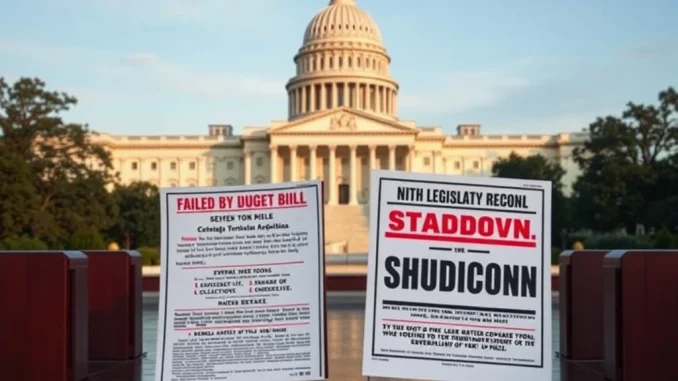
The ongoing political drama in Washington D.C. often sends ripples across global financial markets. A recent development, specifically the failure of a crucial Republican budget bill, has deepened the **US government shutdown**. This situation could indirectly influence investor sentiment, even within the dynamic cryptocurrency space. Understanding these macro events remains vital for all market participants.
US Government Shutdown Deepens as Republican Bill Fails
The U.S. Senate recently rejected a key Republican budget bill. This legislative proposal aimed to restore government funding and end the current federal shutdown. The outcome marks a significant setback for congressional efforts toward resolution. Earlier, the Senate also dismissed a similar proposal from the Democratic Party. Therefore, the US government shutdown continues without a clear end in sight. The failure highlights deep, persistent divisions within Congress.
The Battle Over Government Funding: A Closer Look
Lawmakers disagree fundamentally on spending priorities. The rejected Republican budget bill included specific appropriations and various policy riders. These provisions proved unacceptable to the opposing party. Consequently, negotiations stalled. Both sides accuse the other of intransigence. This ongoing political deadlock paralyzes legislative action. The core issue revolves around departmental allocations and broader fiscal policy. Furthermore, differing views on national debt contribute to the impasse.
Political Deadlock: What This Means for the Economy
A prolonged US government shutdown carries significant economic risks. Many federal agencies cease non-essential operations during this period. This affects hundreds of thousands of federal employees. They face unpaid leave or must work without pay. Moreover, essential services might experience delays. Economists warn of potential impacts on GDP growth. Consumer confidence could also decline significantly. The financial markets typically react negatively to such instability. This creates an environment of heightened uncertainty for investors. Furthermore, a shutdown can damage international perceptions of U.S. economic stability.
Historical Context of US Government Shutdowns
The U.S. has experienced multiple government shutdowns throughout its history. Each event stemmed from budgetary disagreements between the executive and legislative branches. For instance, past shutdowns varied widely in duration. Some lasted only a few days. Others extended for several weeks. Resolutions often involved compromises from both parties, often after intense negotiations. The current political deadlock mirrors these past struggles. However, the stakes often feel higher each time. Understanding these precedents offers crucial context to the present situation.
Navigating Uncertainty: Implications for Digital Assets
While not directly linked, the US government shutdown can affect broader market sentiment. Traditional asset classes might experience increased volatility during such periods. Investors often seek safe havens during times of economic uncertainty. Conversely, some might become more risk-averse, pulling capital from all markets. The cryptocurrency market, known for its inherent volatility, can react to these shifts. Bitcoin and other digital assets sometimes correlate with traditional markets, especially during macro events. Therefore, monitoring macro events like the Republican budget bill failure is crucial. This helps understand potential indirect impacts on the digital asset space.
The failure of the Republican budget bill leaves the US government shutdown unresolved. This persistent political deadlock creates significant economic uncertainty. Observers await further developments from Washington. The path to restoring government funding remains unclear. Ultimately, a bipartisan compromise is necessary to end this stalemate. The nation watches as lawmakers attempt to find common ground.
Frequently Asked Questions (FAQs)
1. What is a US government shutdown?
A US government shutdown occurs when Congress fails to pass appropriation bills or continuing resolutions that fund government operations. Consequently, non-essential government agencies and services cease functioning, and many federal employees are furloughed or work without pay.
2. Why did the Republican budget bill fail in the Senate?
The Republican budget bill failed because it did not secure the necessary majority votes in the Senate. This usually happens due to fundamental disagreements between political parties on spending levels, policy riders, or other provisions included in the bill. The opposing party found the terms unacceptable.
3. How does a government shutdown impact the economy?
A government shutdown can negatively impact the economy in several ways. It can reduce GDP growth, decrease consumer confidence, delay essential federal services, and result in lost wages for federal employees. Prolonged shutdowns can also affect market stability and investor sentiment.
4. How do government shutdowns typically end?
Government shutdowns typically end when Congress and the President reach a bipartisan agreement on a new budget or a temporary continuing resolution. This compromise usually involves negotiations where both sides concede on certain demands to restore government funding.
5. Could this shutdown affect cryptocurrency markets?
While not a direct cause-and-effect, a US government shutdown can indirectly affect cryptocurrency markets. It contributes to broader economic uncertainty and volatility in traditional financial markets. This uncertainty can sometimes lead investors to seek alternative assets like cryptocurrencies, or conversely, increase overall risk aversion, impacting digital asset prices.
6. What services are impacted during a government shutdown?
During a government shutdown, non-essential services are typically impacted. This includes closures of national parks, delays in processing passports or visas, interruptions in some research activities, and reduced administrative functions across various federal agencies. Essential services like national security, air traffic control, and certain medical services usually continue.