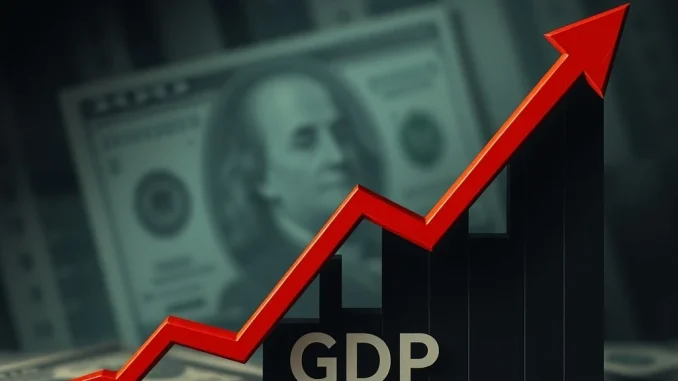
In a surprising turn of events, the U.S. GDP contracted by 0.5% in Q1 2025, defying market expectations of a milder 0.2% decline. This sharp reversal from the previous quarter’s 2.4% growth has sent ripples through financial markets. What does this mean for investors and the broader economy?
U.S. GDP Decline: What Went Wrong in Q1 2025?
The U.S. Bureau of Economic Analysis released its final estimate showing a 0.5% annualized contraction in GDP for the first quarter of 2025. This disappointing performance missed the market forecast tracked by Investing.com by a significant margin. Key factors contributing to the decline include:
- Reduced consumer spending amid inflation concerns
- Slowing business investment
- Weaker export performance
Market Forecast vs Reality: Why the Big Miss?
Analysts had predicted a modest 0.2% contraction, making the actual 0.5% decline particularly concerning. The gap between expectations and reality suggests underlying economic weaknesses that weren’t fully accounted for in earlier projections.
| Quarter | GDP Growth | Market Forecast |
|---|---|---|
| Q4 2024 | +2.4% | +2.1% |
| Q1 2025 | -0.5% | -0.2% |
Investing.com Data Reveals Broader Economic Concerns
The Investing.com economic calendar shows this GDP report as part of a concerning trend. Other recent indicators including manufacturing data and consumer confidence surveys have also pointed to slowing economic momentum as we move through 2025.
What This Means for Investors and Policymakers
The unexpected GDP contraction raises important questions about the Federal Reserve’s next moves and potential impacts across asset classes. Investors should watch for:
- Potential shifts in monetary policy
- Increased market volatility
- Sector-specific impacts
Frequently Asked Questions
How does this GDP contraction compare to historical recessions?
At 0.5%, this contraction is relatively mild compared to recession-level declines, but the unexpected nature is concerning to economists.
Could this lead to changes in interest rate policy?
The Fed may reconsider its rate trajectory if economic weakness persists, potentially pausing or reversing recent hikes.
Which sectors are most affected by the GDP decline?
Consumer discretionary and industrial sectors typically feel the earliest impacts, while utilities and healthcare tend to be more resilient.
How reliable are GDP forecasts from sources like Investing.com?
While generally accurate, forecasts can miss unexpected economic shifts, as demonstrated by this quarter’s significant deviation.