In the often volatile world of cryptocurrency, market sentiment is heavily influenced by global economic stability. A major trade dispute between economic powerhouses like the U.S. and the EU could send ripples through digital asset markets, affecting everything from investor confidence to institutional adoption. That’s why the recent US-EU trade deal, averting a significant tariff escalation, is more than just a headline – it’s a critical development that could underpin broader market confidence, including for crypto investors seeking stability.
Averting a Major Trade War: The US-EU Trade Deal Unpacked
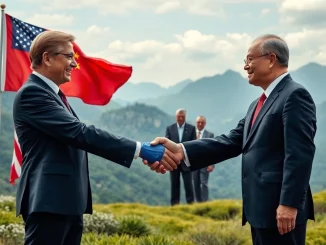
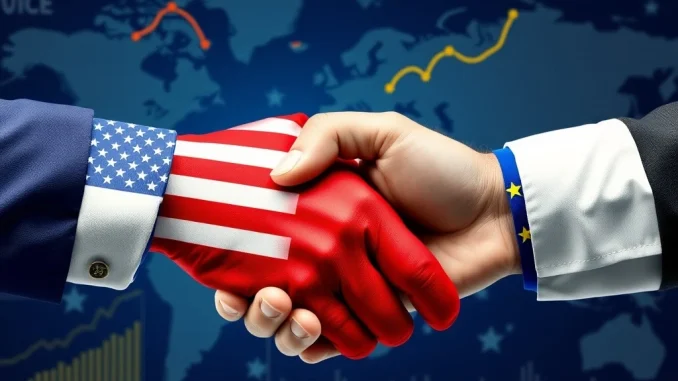
On July 27, 2025, the United States and the European Union announced a landmark trade agreement, setting a 15% tariff rate on most EU imports to the U.S. This crucial step came after intense negotiations in Scotland, led by President Donald Trump, successfully averting a planned 30% tariff increase that would have drastically raised U.S. duties on EU exports from 10% to 30% as of August 1. The significance of this US-EU trade deal cannot be overstated; it pulls two of the world’s largest economies back from the brink of a potentially damaging trade war.
This agreement mirrors the U.S.-Japan trade deal from earlier in July, which also established a 15% tariff and secured a substantial $550 billion investment pledge from Japan. Such coordinated efforts highlight a broader strategic shift towards negotiated settlements over confrontational rhetoric in international trade.
Billions in Investment: Understanding the International Investment Pledges
Beyond tariffs, a core component of this agreement is the commitment to substantial cross-border international investment. The deal includes a framework for the EU to invest a staggering $600 billion in U.S. industries. This influx of capital is expected to bolster various sectors, creating jobs and stimulating economic growth within the U.S.
Furthermore, the EU has pledged to purchase $750 billion in U.S. energy products, a significant boost for American energy firms. In return, the U.S. will reduce tariffs on certain sectors like aircraft and spirits, offering a reciprocal benefit to European industries. While President Trump confirmed that pharmaceuticals and metals would not be subject to the new 15% rate, he clarified that autos would be included. Despite the promising figures, Wall Street analysts have expressed some skepticism regarding the EU’s ability to deliver the promised funds, a point noted by Treasury Secretary Scott Bessent.
Navigating the New Tariff Agreement Landscape
For the EU, this tariff agreement represents a carefully considered compromise. While tariffs on autos will see a significant reduction from 25% to 15%, existing 50% tariffs on steel and aluminum remain in place. EU diplomats have described the 15% rate as “all inclusive,” yet acknowledged exceptions for strategic industries, indicating a nuanced approach to protecting key domestic sectors.
Key aspects of the new tariff structure include:
- Autos: Tariffs reduced from 25% to 15%. This is a major win for European automakers, which had faced substantial duties.
- Pharmaceuticals & Metals: These sectors are explicitly excluded from the 15% rate, maintaining their current tariff structures.
- Steel & Aluminum: Existing 50% tariffs on these products remain unchanged, a point of contention for some EU members.
- Strategic Industries: Specific carve-outs and limited quotas for EU energy and steel sectors, alongside provisions for liquefied natural gas (LNG) purchases, highlight a pragmatic approach to sensitive areas.
This structured approach aims to balance broad tariff reductions with protections for critical industries on both sides of the Atlantic.
What Does This Mean for Global Trade and Economic Impact?
The immediate market reaction to the US-EU trade deal has been largely positive. Market analysts, such as Michael Brown, a senior research strategist at Pepperstone, emphasized that the deal removes a key “left tail risk” for markets, fostering a sense of stability. This agreement, valued at an impressive $1.9 trillion annually in goods and services, has a profound economic impact on various sectors:
- European Automakers: Set to benefit significantly from reduced tariffs, making their exports more competitive in the U.S. market.
- U.S. Defense & Energy Firms: Poised to gain from the EU’s substantial investment and energy purchase commitments, strengthening these key American industries.
- Global Markets: The deal reinforces a global shift towards negotiated trade agreements, reducing the likelihood of disruptive trade wars and fostering a more predictable environment for international commerce.
This agreement aligns with President Trump’s broader strategy of leveraging tariffs as a tool to secure investment and energy commitments, rather than solely as punitive measures. For the foreseeable future, the U.S. and EU have averted a trade war, allowing businesses to plan with greater certainty.
Challenges and Lingering Uncertainties
While the deal is a significant step forward, uncertainties persist. The EU retains a contingency plan to impose retaliatory tariffs on $109 billion of U.S. goods if the agreement collapses, serving as a powerful deterrent. Furthermore, France has openly advocated for invoking a “trade bazooka” to counter perceived coercive practices, although such measures would undoubtedly escalate tensions.
The Trump administration has yet to finalize all details for the auto sector, which remains a sticking point given its immense economic significance to key EU members like Germany and France. Vague commitments on U.S. defense sales, with Trump suggesting “vast amounts” of American weapons would be part of the agreement, also add a layer of ambiguity. The EU’s ability to balance its industrial interests with U.S. demands will be a key test of the deal’s durability. Moreover, this agreement sets the stage for other crucial negotiations, such as the U.S. and China talks scheduled to begin on August 12, with no extensions offered for resolving disputes with other trading partners.
Conclusion
The landmark US-EU trade deal marks a pivotal moment in global economic relations, transforming potential conflict into a framework for cooperation and substantial international investment. By averting a major tariff escalation, the agreement provides much-needed stability for businesses and markets worldwide, including a positive ripple effect for the broader digital asset ecosystem. While challenges remain, this tariff agreement underscores a strategic pivot towards negotiated solutions in global trade, promising a more predictable and prosperous future. Its long-term economic impact will be closely watched, but for now, it’s a testament to the power of diplomacy in shaping the future of international commerce.
Frequently Asked Questions (FAQs)
What is the core of the US-EU tariff deal?
The core of the deal is setting a 15% tariff rate on most EU imports to the U.S., effectively averting a planned increase to 30%. It also includes significant investment and energy purchase commitments from the EU.
How much investment is involved in the agreement?
The agreement includes a framework for the EU to invest $600 billion in U.S. industries and purchase $750 billion in U.S. energy products. The total annual trade in goods and services under this agreement is valued at $1.9 trillion.
Which industries are most affected by the new tariffs?
European automakers will see their tariffs reduced from 25% to 15%. Pharmaceuticals and metals are not subject to the 15% rate, while existing 50% tariffs on steel and aluminum remain. U.S. defense and energy firms are poised to benefit from EU investment commitments.
What are the remaining challenges for the deal?
Key challenges include the EU’s contingency plan for retaliatory tariffs if the deal collapses, France’s push for stronger trade measures, pending final details for the auto sector, and skepticism from Wall Street regarding the EU’s ability to deliver on its investment pledges.
How does this deal compare to other US trade agreements?
The US-EU deal mirrors the U.S.-Japan trade agreement from earlier in July, which also set a 15% tariff and secured a substantial investment pledge from Japan ($550 billion). This suggests a consistent strategy by the U.S. administration in recent trade negotiations.