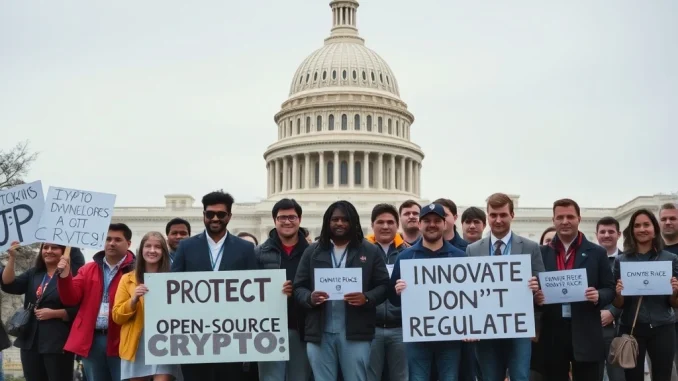
A critical moment has arrived for the **US crypto industry**. A powerful coalition, including major players like Coinbase, is urgently appealing to the Senate. They seek vital **crypto developer protections** within the proposed Digital Asset Market Structure Act, commonly known as the **CLARITY Act**. This legislation could significantly reshape the future of digital assets in the United States. Furthermore, its current form poses a substantial threat to innovation.
Understanding the CLARITY Act and its Impact on the US Crypto Industry
The Digital Asset Market Structure Act, or CLARITY Act, aims to establish a comprehensive regulatory framework for digital assets in the U.S. Policymakers designed it to bring clarity and oversight to a rapidly evolving sector. However, the bill’s current language raises serious concerns for many. Specifically, it could inadvertently classify crypto developers as money transmitters. This classification carries significant legal and operational burdens. Consequently, the **US crypto industry** fears it will stifle growth and innovation.
Money transmitter regulations are typically stringent. They require extensive licensing, compliance, and reporting obligations. Applying these rules to developers of open-source software, who often create tools without directly handling user funds, presents a unique challenge. Therefore, the coalition of 112 U.S. cryptocurrency companies and organizations believes this oversight needs immediate correction. They sent a letter to key lawmakers, including Senator Tim Scott, outlining their concerns. This proactive step highlights the industry’s commitment to responsible growth.
The Critical Need for Crypto Developer Protections
The core of the industry’s plea revolves around safeguarding **crypto developer protections**. Developers are the architects of the digital asset ecosystem. They build the underlying infrastructure, protocols, and applications. Many of these contributions are open-source. This means their code is publicly accessible and collaboratively built. Without clear protections, these innovators face an uncertain legal landscape. They risk being subjected to regulations not designed for their activities.
Imagine a scenario where every software developer must obtain a banking license to publish code. This analogy illustrates the potential burden. Such requirements would deter new talent and existing contributors alike. Moreover, it could push development offshore. The coalition emphasizes that open-source innovation is a cornerstone of the internet’s success. It fosters transparency, security, and rapid progress. Therefore, preserving this environment is paramount for the future of digital assets.
The Threat to Open-Source Crypto Innovation in the U.S.
The consequences of misclassification extend far beyond individual developers. The letter highlights a concerning trend: the declining share of **open-source crypto** software developers in the U.S. In 2021, the U.S. accounted for 25% of these developers. By 2023, this figure had dropped to 18%. This decline signals a worrying shift. It suggests that regulatory uncertainty already impacts the sector. The CLARITY Act, without amendments, could accelerate this trend. Ultimately, it jeopardizes America’s leadership in blockchain technology.
Open-source projects thrive on collaboration and permissionless participation. They allow anyone to inspect, modify, and distribute code. This model accelerates technological advancements. It also enhances security through community review. If developers fear legal repercussions for contributing to these projects, innovation will suffer. The U.S. risks losing its competitive edge in a crucial technological frontier. Thus, robust **crypto developer protections** are essential for nurturing this vital ecosystem.
Advocating for Sensible Digital Asset Regulation
The coalition’s efforts are not an attempt to avoid **digital asset regulation**. Instead, they advocate for sensible and tailored regulation. They believe that regulation should foster innovation, not hinder it. Differentiating between custodial service providers and non-custodial developers is crucial. Custodial services hold user funds. They inherently require more stringent oversight. Non-custodial developers, however, build tools. They do not typically control user assets. Therefore, applying the same rules to both groups creates an imbalance.
The letter argues for a nuanced approach. This approach would recognize the distinct roles within the crypto ecosystem. It would ensure that regulations are proportionate to the risks involved. Clear definitions and exemptions for developers of open-source software are necessary. Such clarity would allow innovators to build with confidence. It would also enable regulators to focus on areas that genuinely require consumer protection. Ultimately, effective **digital asset regulation** balances oversight with fostering growth.
The Coalition’s Call to Action: Key Arguments
The 112 organizations, representing a broad spectrum of the **US crypto industry**, presented several key arguments to the senators:
- Preventing Misclassification: They argue that classifying developers as money transmitters is inappropriate. It misrepresents their function in the ecosystem.
- Fostering Innovation: Clear exemptions would encourage continued development of open-source protocols and applications. This supports the growth of **open-source crypto**.
- Maintaining U.S. Competitiveness: Protecting developers ensures the U.S. remains a leader in blockchain and Web3 technologies. Without this, talent may migrate.
- Promoting Security and Transparency: Open-source development inherently promotes these values. Over-regulation could inadvertently reduce them.
- Targeted Regulation: They advocate for regulations that focus on entities truly posing systemic risks, rather than foundational builders.
These points underscore the industry’s desire for a regulatory environment that understands its unique characteristics. They seek a framework that supports, rather than stifles, technological progress. This is particularly important for the **US crypto industry** to thrive.
Broader Implications for the Future of Crypto
The outcome of this legislative debate will have far-reaching implications. It will set a precedent for how the U.S. approaches emerging technologies. A supportive regulatory environment can unlock immense economic potential. It can also create jobs and drive technological advancements. Conversely, overly burdensome regulations could stifle an entire industry. This would push innovation to more permissive jurisdictions.
The global race for crypto leadership is intense. Other nations are actively developing their own regulatory frameworks. Many aim to attract blockchain talent and investment. Therefore, the U.S. must act strategically. It must ensure its policies promote innovation while addressing legitimate concerns. The **CLARITY Act** offers an opportunity to get this balance right. Ensuring **crypto developer protections** is a crucial step in that direction. This move will define the trajectory of **digital asset regulation** for years to come.
The **US crypto industry** stands at a crossroads. The Senate’s decision on the CLARITY Act will significantly influence its future. By incorporating **crypto developer protections**, lawmakers can safeguard open-source innovation. They can also ensure the U.S. remains a global leader in the digital asset space. This proactive engagement from the industry highlights the urgent need for thoughtful and informed policy-making. Ultimately, a balanced approach will benefit consumers, innovators, and the broader economy.
Frequently Asked Questions (FAQs)
Q1: What is the CLARITY Act?
The CLARITY Act (Digital Asset Market Structure Act) is proposed U.S. legislation. It aims to create a comprehensive regulatory framework for digital assets. It seeks to bring clarity and oversight to the cryptocurrency market.
Q2: Why are crypto developers concerned about the CLARITY Act?
Developers are concerned because the bill, in its current form, could classify them as money transmitters. This classification would impose strict licensing and compliance requirements. These requirements are typically meant for entities handling user funds, not for those building open-source software.
Q3: What are “crypto developer protections”?
**Crypto developer protections** refer to specific provisions or exemptions within legislation. They aim to prevent the misclassification of open-source software developers. These protections ensure developers are not subjected to regulations meant for financial intermediaries, allowing them to innovate freely.
Q4: How does this impact open-source crypto innovation?
If developers face burdensome regulations, it could stifle **open-source crypto** innovation. The U.S. has already seen a decline in its share of open-source developers. Over-regulation might deter new talent and push development to other countries. This would hinder the growth of new technologies.
Q5: What is the coalition asking the senators to do?
The coalition of 112 U.S. crypto companies and organizations is urging senators to amend the CLARITY Act. They want to include explicit protections and exemptions for developers and non-custodial service providers. This would ensure **digital asset regulation** is appropriately tailored.
Q6: Which organizations are part of this coalition?
The coalition includes prominent entities within the **US crypto industry**, such as Coinbase. Over 100 other U.S. cryptocurrency companies and organizations have also joined this collective effort to advocate for sensible regulation.