The geopolitical landscape significantly influences global markets. Therefore, understanding major international disputes is crucial for all investors, including those in cryptocurrencies. The ongoing US-China trade war stands as a prime example of such a conflict. It creates ripples across various sectors. Recent statements from Beijing indicate an unwavering resolve to continue this struggle. This commitment impacts the global economy profoundly.
China’s Firm Stance on the US-China Trade War
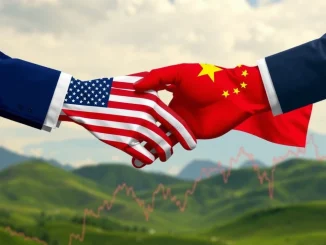
China has made its position clear. It will fight the US-China trade war to the very end. This declaration, reported by Walter Bloomberg, signals a continued period of economic friction. Beijing views the trade dispute as a matter of national sovereignty and economic development. Therefore, it resists external pressure. The country has consistently emphasized its determination. This firm stance shapes international relations. It also influences global trade dynamics significantly.
The origins of this conflict are complex. They involve disagreements over:
- Intellectual property rights.
- Technology transfer policies.
- Trade imbalances.
- Industrial subsidies.
Each point represents a significant area of contention. China maintains that its policies are essential for its growth. The United States, conversely, argues for fair and reciprocal trade practices. This fundamental divergence fuels the ongoing tensions. Moreover, it impacts businesses and consumers worldwide. The resolve from both sides suggests no easy resolution is in sight. Investors must therefore monitor these developments closely.
Understanding the Economic Conflict and Its Roots
The economic conflict between the United States and China extends beyond tariffs. It encompasses a broader competition for technological supremacy and global influence. Both nations employ various strategies. These include export controls, investment restrictions, and supply chain adjustments. These measures aim to secure strategic advantages. They also seek to protect national interests. This multifaceted approach complicates any potential de-escalation.
For instance, the semiconductor industry has become a major battleground. The U.S. has imposed restrictions on China’s access to advanced chip technology. This action aims to slow China’s technological advancement. Beijing, in response, has accelerated its efforts. It focuses on achieving self-sufficiency in critical technologies. This rivalry impacts global supply chains directly. It also affects the profitability of many international companies. Consequently, the world economy faces increased uncertainty. Businesses must adapt to these shifting landscapes. They need resilient strategies to navigate these challenges.
Furthermore, the dispute affects global financial markets. Volatility often increases with new trade announcements. This uncertainty influences investor confidence. It can lead to shifts in asset allocation. Digital assets are not immune to these effects. They often react to broader market sentiments. Therefore, understanding the nuances of this economic struggle is vital.
Impact of Trade Tensions on the Global Economy
Persistent trade tensions between the world’s two largest economies create significant headwinds for the global economy. Businesses face higher costs due to tariffs. Supply chains become more fragmented and less efficient. Consumer prices may also increase. These factors can slow economic growth worldwide. International organizations, like the IMF and WTO, frequently express concerns. They highlight the potential for widespread negative consequences. The ripple effect is undeniable.
Consider the impact on specific industries:
- Manufacturing: Companies often relocate production to avoid tariffs. This causes job shifts and investment uncertainty.
- Agriculture: Tariffs on agricultural products severely affect farmers. They lose access to key markets, impacting livelihoods.
- Technology: Restrictions on technology transfer hinder innovation. They force companies to duplicate research and development efforts.
These examples illustrate the broad reach of the trade dispute. It disrupts established economic relationships. It also forces countries to re-evaluate their trade partners. Many nations find themselves caught between the two economic giants. They must navigate a complex diplomatic and economic environment. This situation fosters a less predictable global trade system. It demands careful planning from businesses and governments alike.
China US Relations: Beyond Trade
The current state of China US relations extends beyond just trade. It encompasses strategic competition in various domains. These include military influence, human rights, and regional security. Each area adds layers of complexity to the overall relationship. The trade war is often seen as a manifestation of these deeper geopolitical rivalries. Beijing’s unwavering stance reflects this broader context.
For example, competition in the South China Sea remains a flashpoint. Both nations assert their presence. Taiwan’s status also presents a significant point of tension. These issues contribute to an environment of mistrust. They make resolving economic disputes more challenging. Diplomacy becomes increasingly difficult. Consequently, the world watches closely. The actions of these two powers have global implications. They shape alliances and international norms.
The relationship impacts global governance. It affects multilateral institutions like the United Nations. Both countries vie for leadership roles. Their disagreements can paralyze international efforts. This can prevent cooperation on global challenges. These include climate change and pandemics. Thus, the broader relationship has far-reaching consequences. It affects global stability and prosperity.
Future Outlook for the Global Economy and Trade Tensions
The declaration from China suggests a prolonged period of trade tensions. This means businesses and investors must prepare for continued volatility. Diversification of supply chains becomes even more critical. Geopolitical risk assessment gains increased importance. The global economy will likely continue to face headwinds. These stem from this significant bilateral dispute. However, opportunities may also arise. Companies adapting quickly could find new markets or innovative solutions.
Some analysts predict a decoupling of the two economies. This scenario involves distinct supply chains and technological ecosystems. Such a development would fundamentally alter global trade. Others hope for eventual de-escalation. They believe that mutual economic interests will prevail. However, the current rhetoric points towards continued friction. Therefore, resilience and adaptability are key. Stakeholders must remain agile. They need to respond effectively to evolving conditions. This includes monitoring policy shifts from both Washington and Beijing.
Ultimately, the resolution of the US-China trade war remains uncertain. China’s stated intent to fight to the end underscores the deep-seated nature of the conflict. This ongoing struggle will continue to define a significant aspect of the global economy for the foreseeable future. Investors, especially in the volatile cryptocurrency market, should remain informed. They must understand these macroeconomic forces. These forces significantly influence market sentiment and asset valuations.
Frequently Asked Questions (FAQs)
What is the primary reason for the US-China trade war?
The US-China trade war stems from disagreements over trade imbalances, intellectual property theft, forced technology transfers, and industrial subsidies. The United States seeks fairer market access and protection for its businesses, while China aims to protect its developing industries.
How do US-China trade tensions impact the global economy?
Trade tensions increase tariffs, disrupt global supply chains, raise production costs, and create uncertainty for businesses. This can lead to slower economic growth, reduced international trade, and increased market volatility worldwide.
Does the US-China trade war affect cryptocurrency markets?
While not directly linked, the US-China trade war significantly impacts global financial markets and investor sentiment. Increased geopolitical uncertainty and economic instability can lead to shifts in traditional asset markets, which often spill over into the cryptocurrency space, influencing prices and investor behavior.
What is China’s stated position regarding the trade war?
China has consistently stated its unwavering resolve to fight the trade war to the end. This indicates a firm stance against perceived external pressures and a commitment to protecting its economic interests and national sovereignty.
What are the long-term implications of this economic conflict?
The long-term implications could include a significant restructuring of global supply chains, a potential decoupling of the US and Chinese economies in certain sectors, and a continued shift in global geopolitical alliances. It may also accelerate China’s drive for technological self-sufficiency.
What sectors are most affected by the trade tensions?
Key sectors heavily impacted include manufacturing, agriculture, and technology, particularly the semiconductor industry. Companies in these sectors face challenges like tariffs, export controls, and increased pressure to localize production or diversify supply chains.