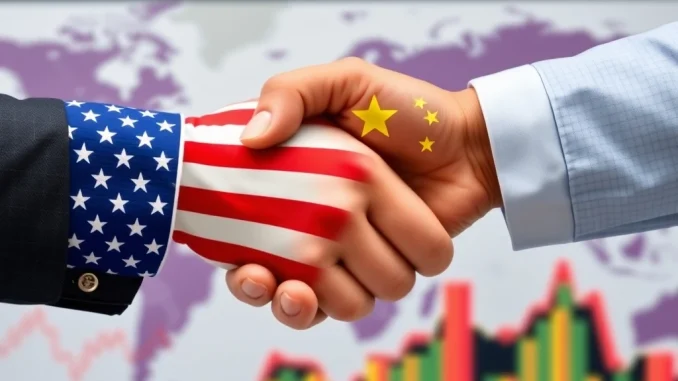
In a move that has sent ripples of cautious optimism through financial circles, the United States and China are reportedly poised to extend their current US China trade truce by an additional 90 days. This pivotal development, initially reported by the South China Morning Post (SCMP), cites unnamed sources close to the negotiations, indicating a concerted effort to prevent the imposition of new tariffs. For market participants, including those keenly observing cryptocurrency trends often influenced by broader economic stability, this extension offers a temporary reprieve from escalating economic uncertainties. The current pause, originally slated to end on August 12, would now push back the threat of new duties, allowing both economic giants more breathing room.
Understanding the Extended US China Trade Truce
The proposed 90-day extension marks a significant continuation of de-escalation efforts between the world’s two largest economies. This would be the third such pause since the initial de-escalation of the trade war in 2023, underscoring the delicate and often unpredictable nature of their economic interactions. The announcement comes just ahead of critical trade negotiations scheduled to take place in Stockholm later this week, involving U.S. Treasury Secretary Scott Bessent and Chinese Vice Premier He Lifeng. These talks are not merely about tariffs but are expected to delve into more complex and sensitive issues, including China’s energy sourcing from Russia and Iran, a point recently highlighted by Secretary Bessent.
Why is This Extension Happening Now?
Several factors contribute to the timing of this extension:
- Averting Immediate Tariffs: The most direct benefit is the prevention of new trade tariffs, which could severely disrupt supply chains and increase costs for businesses and consumers globally.
- Upcoming High-Stakes Meetings: The extension provides a more stable environment for the upcoming G20 meetings, where global economic cooperation will be a key theme.
- Domestic Political Pressures: Both nations face internal policy priorities and political calendars. For the U.S., the looming 2026 presidential elections mean a stable economic outlook is desirable. For China, focusing on its ongoing economic recovery takes precedence.
- Time for Deeper Dialogue: It grants negotiators additional time to address fundamental disagreements beyond tariffs, which are often symptoms of deeper structural issues.
Beyond Trade Tariffs: Unpacking Deeper Issues
While the immediate focus of the truce is on preventing new trade tariffs, the underlying issues between the U.S. and China are far more intricate and challenging. The Stockholm talks are anticipated to pivot towards these structural disagreements, which include:
- Energy Sourcing Practices: Washington’s concerns about Beijing’s oil imports from countries like Russia and Iran are a significant point of contention, linking trade directly to geopolitical strategy.
- U.S. Debt Concerns: The U.S. has voiced concerns regarding China’s holdings of U.S. debt and its potential implications for financial stability.
- Intellectual Property Disputes: Long-standing issues surrounding intellectual property theft and forced technology transfers remain unresolved.
- Supply Chain Dependencies: Both nations are grappling with the complexities of supply chain resilience and reducing reliance on each other in critical sectors.
- Geopolitical Rivalries: The broader competition for global influence, technological dominance, and regional security adds layers of complexity to economic discussions.
The truce provides a window, but it does not resolve these deeply entrenched issues. The true test of the relationship will be how effectively these core disagreements are addressed in subsequent negotiations.
Navigating Geopolitical Tensions and Future Talks
The decision to extend the US China trade truce is a clear indicator that both Washington and Beijing recognize the immense stakes involved in their relationship. The ongoing geopolitical tensions between the two superpowers extend far beyond economics, touching on technology, human rights, and regional security in areas like the South China Sea and Taiwan. Analysts suggest that the fragility of the current arrangement is evident in the lack of concrete, long-term commitments beyond this temporary pause. There are no guarantees that further extensions will be granted, making the outcome of the Stockholm talks exceptionally critical in determining the future trajectory of U.S.-China economic relations.
Implications for Economic Relations and Domestic Agendas
For both the U.S. and China, this extension allows for a crucial period of focus on domestic priorities without the immediate disruption of escalating trade conflicts. China is heavily invested in its ongoing economic recovery post-pandemic, implementing various policies to stimulate growth and stabilize its markets. Similarly, the U.S. Federal Reserve is navigating complex monetary policy adjustments aimed at controlling inflation while supporting economic growth. A stable external trade environment, free from new tariffs, provides a more predictable backdrop for these internal policy efforts. However, the temporary nature of the truce means that businesses and investors must remain agile and prepared for potential shifts in the trade landscape. The broader implications for global economic relations are significant, as stability between these two nations often sets the tone for international trade and investment flows.
How This Impacts Global Markets
Market participants are responding with cautious optimism to the news of the extended US China trade truce. While the immediate threat of new tariffs is averted, volatility remains a significant risk should negotiations falter or if the deeper structural issues prove intractable. Financial markets thrive on certainty, and while this extension provides a temporary dose of it, the underlying unresolved issues continue to cast a shadow. Investors will be closely watching the outcomes of the Stockholm talks for any signs of concrete progress on structural disagreements. The stability of the U.S.-China trade relationship has a profound impact on commodity prices, supply chains, and investor confidence worldwide, making this development a key indicator for the health of global markets. Cryptocurrencies, while often seen as a hedge against traditional market instability, can also react to major shifts in global economic sentiment, making this truce relevant for the broader financial ecosystem.
In conclusion, the reported 90-day extension of the U.S.-China trade truce offers a vital period of calm amidst ongoing economic and geopolitical complexities. It provides a window for high-level negotiations to address deep-seated issues beyond mere tariffs, allowing both nations to focus on their respective domestic challenges. While the temporary relief is welcomed by markets, the underlying fragility of the arrangement means that continued vigilance is essential. The path ahead for U.S.-China economic relations remains challenging, but this truce represents a crucial step towards de-escalation, offering a glimmer of hope for more stable and predictable global trade in the coming months.
Frequently Asked Questions (FAQs)
Q1: What is the significance of the US China trade truce extension?
The extension signifies a mutual effort by the United States and China to prevent the immediate imposition of new trade tariffs, which could disrupt global supply chains and economic stability. It provides a critical 90-day window for further high-level negotiations on deeper structural issues.
Q2: What key issues will be discussed during the upcoming trade negotiations?
Beyond tariffs, the upcoming talks in Stockholm are expected to address significant structural disagreements, including China’s oil imports from Russia and Iran, concerns over U.S. debt, intellectual property disputes, and broader supply chain dependencies. These issues highlight the complex nature of U.S.-China economic relations.
Q3: How might this truce extension impact global markets?
Global markets are reacting with cautious optimism, as the immediate threat of new tariffs is averted, reducing short-term uncertainty. However, the temporary nature of the truce means that volatility remains a risk. Investors will be closely monitoring the progress of negotiations on long-standing issues, as the overall stability of U.S.-China economic relations significantly influences global trade and investment flows.
Q4: Is this the first time the US and China have extended a trade truce?
No, if finalized, this would mark the third such pause in trade tensions since the initial de-escalation of the trade war in 2023. This pattern underscores the ongoing efforts to manage and de-escalate economic friction between the two nations.
Q5: What are the long-term challenges despite this temporary truce?
Despite the temporary relief, key unresolved issues such as intellectual property disputes, supply chain dependencies, and broader geopolitical rivalries remain unaddressed. The fragility of the current arrangement means there are no guarantees of further extensions, and a comprehensive, lasting resolution is still distant.