Geopolitical developments often send ripples across financial markets. For those tracking cryptocurrencies, understanding these global shifts is vital. Major events, like the upcoming **US-China trade talks**, influence investor sentiment everywhere. This includes the volatile digital asset space. Therefore, closely watching these high-level discussions becomes essential for all market participants.
Crucial Trump Xi Meeting Announced
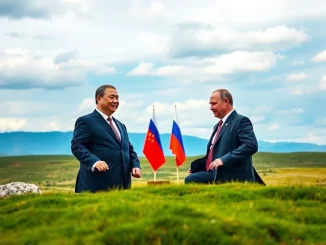
U.S. President Donald Trump recently announced significant plans. He intends to meet with Chinese President Xi Jinping within the next two weeks. Tree News initially reported this development. This announcement signals a potential de-escalation of ongoing trade tensions. Furthermore, President Trump openly stated that high **China tariffs** are simply not sustainable. This marks a notable shift in rhetoric. Such a declaration suggests a willingness to find common ground. The global community watches these developments closely. They hope for a positive resolution.
The proposed meeting carries immense weight. It could redefine economic relations between the world’s two largest economies. Many anticipate a detailed agenda. Both leaders face pressure to ease economic uncertainties. Therefore, this meeting offers a critical juncture. It might bring much-needed stability to international trade.
Understanding the Trade War Impact
The **trade war impact** has been profound. It began with the U.S. imposing tariffs on Chinese goods. These tariffs aimed to address perceived unfair trade practices. China quickly retaliated with its own duties. This cycle of tariffs escalated tensions significantly. Businesses on both sides faced higher costs. Consumers also saw price increases. Supply chains experienced major disruptions.
The conflict affected various industries. American farmers lost access to key Chinese markets. Technology companies grappled with export restrictions. Many companies sought to diversify their manufacturing away from China. This ongoing uncertainty slowed global economic growth. Consequently, the world economy felt the strain of these prolonged disputes. The need for a resolution grew steadily.
Economic Repercussions and Global Economic Stability
The prolonged trade dispute cast a long shadow. It directly threatened **global economic stability**. Businesses delayed investment decisions. They feared future tariff hikes. Manufacturing output declined in many regions. International trade volumes also decreased. Experts warned of a potential global recession. This uncertainty led to volatile stock markets. Investors sought safer assets.
Key areas affected include:
- Supply Chains: Companies re-evaluated sourcing strategies. Many moved production out of China.
- Consumer Prices: Tariffs often translated into higher costs for consumers.
- Agricultural Sector: U.S. farmers suffered from reduced exports to China.
- Manufacturing: Both nations saw a slowdown in industrial output.
These ripple effects underscored the interconnectedness of the global economy. Everyone recognized the need for dialogue. A stable trade environment benefits all nations. Therefore, these upcoming talks hold significant importance.
Examining China Tariffs and Future Prospects
President Trump’s statement about unsustainable **China tariffs** highlights a crucial point. Tariffs are not without cost to the imposing nation. American businesses and consumers ultimately bear some of the burden. Higher import costs can reduce corporate profits. They also increase prices for goods. This economic reality likely influenced Trump’s recent comments. He acknowledged the limitations of such a strategy.
The upcoming **Trump Xi meeting** could explore several outcomes:
- Partial Agreement: Both sides might agree on specific concessions.
- Tariff Rollbacks: Some existing tariffs could be reduced or removed.
- New Negotiations: The meeting might set a framework for future talks.
- Continued Stalemate: A complete breakthrough is not guaranteed.
A positive resolution would boost global trade confidence. It would also alleviate pressure on businesses. Conversely, a failure to agree could reignite tensions. This would further destabilize markets. The world anticipates the results with great interest. The future of global commerce hangs in the balance.
Market Sentiment and the Trade War Impact on Crypto
Financial markets typically react strongly to trade news. Positive developments often lead to rallies. Conversely, negative news can trigger sell-offs. This pattern extends to the cryptocurrency market, albeit indirectly. When **global economic stability** is threatened, investors may seek alternative assets. Cryptocurrencies, like Bitcoin, sometimes act as a hedge. They offer a decentralized alternative to traditional finance.
The **trade war impact** on crypto is complex. Increased market uncertainty can drive some investors towards digital assets. They view crypto as a safe haven. Others might pull out of all risky assets, including crypto. However, a significant de-escalation of trade tensions could boost overall market confidence. This might benefit cryptocurrencies as well. The sentiment often flows from traditional markets into the crypto space. Therefore, these high-level **US-China trade talks** are relevant to all investors.
Conclusion: A Pivotal Moment for US-China Trade Talks
The announced **Trump Xi meeting** marks a pivotal moment. It offers a chance to resolve a contentious trade dispute. President Trump’s acknowledgment of unsustainable **China tariffs** signals a potential shift. The outcome will significantly influence **global economic stability**. It will also affect the broader financial landscape. Investors, including those in the cryptocurrency market, will closely monitor these discussions. A successful resolution could bring renewed confidence. It could foster a more predictable economic environment worldwide. Conversely, a failure to agree would perpetuate uncertainty. This highlights the critical nature of these upcoming **US-China trade talks**.
Frequently Asked Questions (FAQs)
1. What is the main purpose of the upcoming Trump-Xi meeting?
The primary purpose is to address ongoing trade tensions between the U.S. and China. Both leaders aim to discuss existing **China tariffs** and seek a path towards a more stable trade relationship. President Trump’s statement about tariffs being unsustainable underscores the urgency for a resolution.
2. Why did Trump call tariffs “unsustainable”?
President Trump likely acknowledged that the tariffs, while intended to pressure China, also imposed costs on American businesses and consumers. High tariffs can lead to increased prices for goods, reduced corporate profits, and disruptions to global supply chains, ultimately impacting U.S. economic interests and **global economic stability**.
3. How do US-China trade tensions affect global markets?
Trade tensions create uncertainty, which often leads to market volatility. Businesses delay investments, supply chains are disrupted, and consumer confidence can wane. This directly impacts stock markets, commodity prices, and currency valuations worldwide, reflecting the broader **trade war impact**.
4. Is there a direct link between trade wars and cryptocurrency prices?
While not a direct causal link, trade wars can indirectly affect cryptocurrency prices. Increased geopolitical and economic uncertainty often leads investors to seek alternative assets. Some perceive cryptocurrencies as a hedge against traditional market instability, potentially driving demand. However, others might reduce exposure to all volatile assets, including crypto.
5. What are the potential outcomes of these US-China trade talks?
Potential outcomes range from a partial agreement, where specific tariffs are rolled back or concessions are made, to a continued stalemate. A comprehensive trade deal could lead to significant de-escalation, while a failure to agree might reignite tensions and further impact **global economic stability**.
6. What is the history of the US-China trade war?
The US-China trade war began in 2018 when the U.S. imposed tariffs on Chinese imports, citing unfair trade practices and intellectual property theft. China retaliated with its own tariffs on American goods. This led to an escalating series of duties and counter-duties, causing significant disruptions to international trade and creating a prolonged period of economic uncertainty.