In a significant move aimed at de-escalating long-standing tensions, a high-level U.S. Business Delegation has arrived in China this week. This visit coincides with critical U.S.-China Trade Talks happening concurrently in Stockholm, Sweden, signaling a dual-track approach to mending complex economic ties. For anyone observing global markets, understanding these developments is crucial, as they could reshape international commerce and investment landscapes.
A Pivotal Moment for US-China Trade
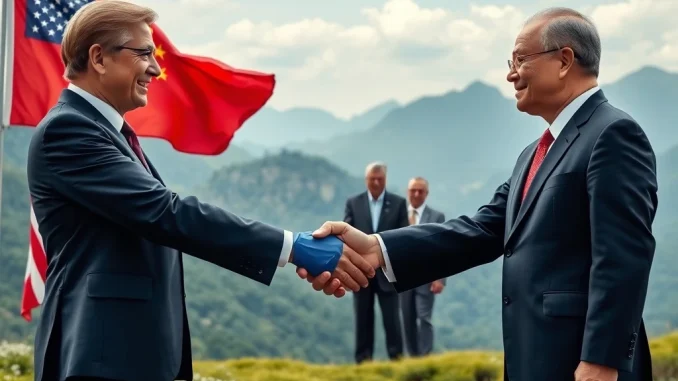
The current landscape of US-China Trade relations has been marked by volatility and strategic competition for years. However, recent actions suggest a deliberate shift towards dialogue and potential de-escalation. The arrival of a senior U.S. business delegation in China, led by FedEx CEO Rajesh Subramaniam, marks the highest-level engagement of its kind since the trade disputes escalated significantly under the previous U.S. administration. This isn’t just a symbolic gesture; it’s a strategic effort to re-establish lines of communication and find common ground on critical economic issues.
Organized by the U.S.-China Business Council (USCBC), the delegation includes executives from major American corporations, including Boeing. Their presence underscores the private sector’s vested interest in fostering a stable and predictable trading environment. The aim is clear: to open channels for dialogue on easing trade tensions and improving Market Access for American firms operating within China.
High-Stakes Trade Talks in Stockholm: The Diplomatic Front
Parallel to the business delegation’s visit, high-level diplomatic negotiations are underway in Stockholm, Sweden, from July 27 to 30. These Trade Talks involve key U.S. and Chinese officials, including Chinese Vice Premier He Lifeng. The agenda is comprehensive, focusing on persistent issues such as tariff reductions, structural trade imbalances, and the broader framework for future bilateral commerce. While no new agreements or funding announcements have been made public yet, the discussions are foundational for potential diplomatic breakthroughs.
The simultaneous engagement of both business leaders and government officials highlights a comprehensive strategy. It acknowledges that resolving intricate trade disputes requires not only top-down diplomatic efforts but also bottom-up engagement from the businesses directly impacted by trade policies. This coordinated approach aims to build momentum and create a more conducive environment for substantial progress.
The Business Delegation’s Crucial Role in Market Access
The Business Delegation plays a unique and vital role in these ongoing efforts. Led by Rajesh Subramaniam, who chairs the USCBC board, the group is coordinating meetings with Chinese counterparts to emphasize the importance of collaboration between the private sectors and their respective governments. Their key objectives include:
- Addressing Lingering Trade Barriers: Discussions are focusing on persistent obstacles such as tariffs on goods and regulatory hurdles that have remained since the 2018-2020 trade war.
- Improving Market Access: A primary goal is to enhance opportunities for American companies in the Chinese market, ensuring fair competition and a level playing field.
- Fostering Dialogue: The delegation seeks to establish open lines of communication to discuss supply chain resilience, technology collaboration, and other areas of mutual interest.
Analysts suggest that the business community’s direct involvement reflects a strategic effort to build momentum ahead of potential diplomatic breakthroughs. Their on-the-ground insights and direct engagement can often bridge gaps that purely governmental negotiations might miss, highlighting pragmatic solutions that benefit both economies.
Navigating Complex US-China Economic Relations
The intricate web of Economic Relations between the U.S. and China is arguably the most significant bilateral relationship globally. Both nations are seeking to manage economic risks amid global market volatility, making these talks particularly timely. The delegation’s emphasis on pragmatic cooperation signals a potential shift from the zero-sum dynamics that characterized previous administrations. By engaging directly with Chinese officials and business leaders, the U.S. delegation aims to reinforce the idea that mutual gains from trade often outweigh ideological differences.
However, significant challenges persist. Unresolved issues over intellectual property protections, cybersecurity concerns, and the integration of Chinese tech firms into global markets remain sticking points. The success of these current discussions will likely hinge on balancing domestic political pressures in both countries with the undeniable economic incentives of an open and fair trading relationship. These efforts align with broader trends of de-escalation seen in recent months, including reduced rhetoric from both governments and tentative steps toward normalization.
What’s Next for Bilateral Trade?
While the path forward for US-China Trade is complex and fraught with historical baggage, the current dual-track engagement offers a glimmer of hope. The presence of a high-profile U.S. Business Delegation in China, coupled with simultaneous high-level Trade Talks in Stockholm, indicates a serious commitment from both sides to find common ground. The focus on improving Market Access and fostering better Economic Relations suggests a recognition that cooperation, not just competition, is essential for global stability and prosperity.
The outcomes of these discussions will be closely watched by industries worldwide, as they could set the tone for future international trade policies and investment flows. While immediate breakthroughs might be elusive, the sustained dialogue itself is a positive development, paving the way for a more predictable and mutually beneficial economic future between the world’s two largest economies.
Frequently Asked Questions (FAQs)
1. What is the main purpose of the U.S. business delegation’s visit to China?
The main purpose is to foster dialogue on easing trade tensions, improving market access for American firms, and emphasizing collaboration between the private sectors and governments.
2. Where are the high-level trade talks taking place concurrently with the business delegation’s visit?
The high-level diplomatic trade talks are taking place in Stockholm, Sweden, involving U.S. and Chinese officials.
3. Who is leading the U.S. business delegation to China?
The U.S. business delegation is led by FedEx CEO Rajesh Subramaniam, who also chairs the U.S.-China Business Council (USCBC) board.
4. What are some key objectives being addressed in these discussions?
Key objectives include addressing lingering trade barriers like tariffs and regulatory hurdles, improving market access for American companies, and discussing areas like supply chain resilience and technology collaboration.
5. What challenges remain in U.S.-China economic relations?
Significant challenges include unresolved issues over intellectual property protections, cybersecurity concerns, and the integration of Chinese tech firms into global markets.
6. How does the business community’s involvement complement official negotiations?
The business community’s involvement provides on-the-ground insights and direct engagement, helping to bridge gaps and highlight pragmatic solutions that can complement and build momentum for governmental diplomatic efforts.