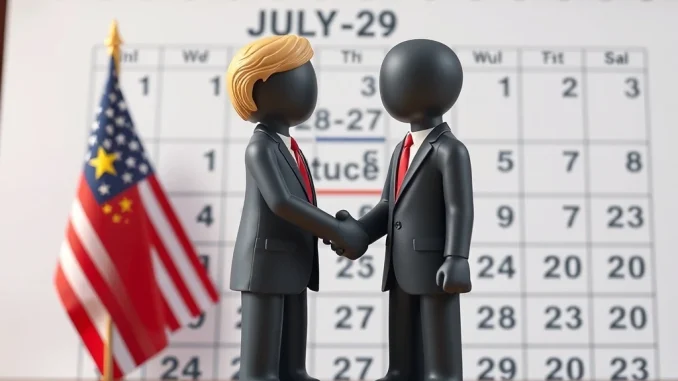
In a pivotal move, the U.S. and China have agreed to extend their tariff truce beyond August 12, 2025, pending final approval from former President Donald Trump. This development offers temporary relief to global trade dynamics, but what does it mean for cryptocurrency markets? Let’s dive in.
U.S.-China Tariff Truce: Key Details
The U.S. and China concluded two days of trade negotiations in Stockholm on July 29, 2025, agreeing to extend their existing 90-day tariff truce. Here’s what you need to know:
- Current Tariffs: 30% on Chinese goods in the U.S. and 10% on U.S. products in China.
- Conditional Approval: The extension hinges on Trump’s review, with U.S. officials stating, “Nothing is agreed until we speak with [Trump].”
- Core Disputes: Talks addressed U.S. concerns over China’s oil imports from Iran, dual-use technology exports, and semiconductor restrictions.
Impact on Global Trade and Cryptocurrency Markets
While the tariff truce provides temporary stability, its broader implications are still unfolding:
- Global Trade: Immediate relief for industries exposed to tariff risks, but underlying disputes remain unresolved.
- Cryptocurrency Markets: Unaffected by the announcement, as discussions focused on macroeconomic stability rather than digital assets.
What’s Next for U.S.-China Trade Relations?
The extended truce aligns with broader trends in U.S.-China trade dynamics, where communication remains critical despite unpredictable policy shifts. Analysts note Beijing’s increased confidence in negotiations, leveraging rare earths and manufacturing capacity.
Conclusion
The U.S.-China tariff truce extension offers a temporary reprieve, but its long-term impact depends on Trump’s approval and future negotiations. For now, cryptocurrency markets remain steady, but traders should stay vigilant.
Frequently Asked Questions (FAQs)
- What is the current status of the U.S.-China tariff truce?
The truce has been extended past August 12, 2025, pending Trump’s approval. - How do tariffs affect cryptocurrency markets?
Cryptocurrency markets were unaffected, as the talks focused on macroeconomic stability. - What are the key issues in U.S.-China trade negotiations?
Core disputes include China’s oil imports from Iran, dual-use technology exports, and U.S. semiconductor restrictions. - What happens if Trump doesn’t approve the extension?
Tariffs could revert to higher levels, escalating trade tensions.