Geopolitical events often send ripples across global financial markets. The recent swift conclusion of the **US-China summit**, lasting just under two hours, presents a focal point for market observers. For cryptocurrency enthusiasts, understanding these high-level diplomatic engagements is crucial. They can significantly influence market sentiment, investor behavior, and the broader economic landscape where digital assets operate.
The Swift Conclusion of the US-China Summit
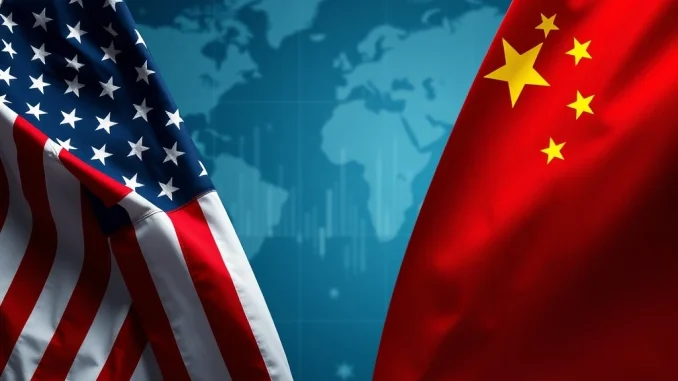
The highly anticipated summit between the United States and China recently concluded. Reports from Chinese state media outlet CCTV, cited by JoongAng Ilbo, indicated the meeting lasted approximately one hour and 40 minutes. This duration was relatively brief for a discussion involving two of the world’s largest economies. The quick wrap-up immediately prompted discussions about the meeting’s substance and future implications.
Diplomatic encounters of this magnitude typically involve extensive agendas. Therefore, the short duration suggested either highly efficient talks or a limited scope of agreement. Analysts worldwide are now scrutinizing the official readouts for any concrete outcomes. These outcomes could potentially shape international trade, technological cooperation, and global stability. The brevity itself offers few immediate clues regarding the specific topics covered or any breakthroughs achieved during the **US-China summit**.
Understanding Broader US-China Relations
The relationship between the United States and China is complex and multifaceted. It encompasses areas of both cooperation and significant competition. Historically, these two nations have engaged in extensive trade, cultural exchange, and technological development. However, recent years have seen increased friction across several fronts. This includes trade disputes, technological rivalry, and geopolitical stances.
Key areas of ongoing tension involve intellectual property rights, cybersecurity concerns, and the status of Taiwan. Furthermore, competition for global influence continues to shape their interactions. These underlying dynamics mean that any high-level meeting, regardless of its length, is observed with intense interest. The ongoing nature of these **US-China relations** directly impacts global stability. Consequently, it affects economic confidence and market liquidity.
Potential Global Economic Impact and Market Reactions
Geopolitical developments inherently influence global financial markets. The relationship between the US and China is particularly impactful due to their economic size. Positive diplomatic outcomes often foster investor confidence, leading to market rallies. Conversely, increased tensions can trigger risk-off sentiment. This causes investors to move capital into perceived safer assets.
A brief summit could be interpreted in various ways. It might suggest a lack of significant progress on contentious issues. This could sustain existing market uncertainties. Alternatively, it might indicate a focused discussion leading to discreet, incremental steps. Therefore, traditional markets, including stocks, bonds, and commodities, will react to official statements. They will also respond to the broader perception of stability. The **global economic impact** of these interactions is profound. It affects supply chains, trade policies, and corporate earnings worldwide.
Specific sectors are particularly vulnerable. Technology companies, for instance, face challenges related to export controls and intellectual property. Manufacturing industries grapple with potential tariff changes. Furthermore, energy markets can experience volatility based on geopolitical stability. Any shifts in the US-China dynamic create ripple effects across all these areas. Investors must remain vigilant for any policy announcements following the summit.
Connecting Geopolitics to Crypto Market Stability
The cryptocurrency market, while distinct, does not operate in a vacuum. It is increasingly intertwined with traditional financial markets and global macroeconomic trends. Geopolitical events, like the **US-China summit**, influence investor sentiment across all asset classes. This includes digital assets. When global economic uncertainty rises, some investors may view Bitcoin as a safe-haven asset. Others might consider it a risk asset, selling off alongside stocks.
Consequently, the direction of traditional markets often provides clues for crypto performance. Increased stability in international relations could encourage broader investment in riskier assets, including cryptocurrencies. Conversely, escalating **geopolitical tensions** could lead to a flight from all speculative assets. This includes digital currencies. The regulatory landscape for digital assets is also influenced by international cooperation or competition. For example, discussions around central bank digital currencies (CBDCs) or stablecoin regulations are often part of broader economic dialogues.
Future Outlook and Geopolitical Tensions
The conclusion of this summit marks another chapter in the ongoing US-China dialogue. It does not signify an end to their complex relationship. Both nations continue to face significant domestic and international challenges. These challenges often require some level of cooperation. However, fundamental disagreements persist. These include issues of human rights, regional security, and economic policies.
The long-term implications for the global economy remain a key concern. Sustained **geopolitical tensions** could fragment global supply chains further. This would hinder technological innovation. It could also lead to a more divided global economic order. For the cryptocurrency space, this environment presents both risks and opportunities. A fragmented global economy might accelerate the adoption of decentralized financial systems. However, it could also invite more stringent national regulations. Therefore, the path forward requires careful monitoring of diplomatic signals and policy shifts.
In conclusion, the brief **US-China summit** serves as a reminder of the interconnectedness of global affairs. Its immediate impact on markets might be subtle. However, the underlying **US-China relations** continue to shape the global economic environment. This environment directly influences the future trajectory and **crypto market stability**. Investors should remain informed about these geopolitical developments. They are crucial for navigating the evolving digital asset landscape.
Frequently Asked Questions (FAQs)
Q1: What was the main outcome of the recent US-China summit?
A1: Official reports indicated the summit concluded after approximately one hour and 40 minutes. The immediate readouts did not detail specific breakthroughs or major agreements. Analysts are awaiting further statements to understand the full scope of discussions and any incremental progress made.
Q2: Why is the duration of the US-China summit significant?
A2: The relatively short duration of the summit, involving two major global powers, has led to speculation. It could suggest either highly efficient talks on a limited agenda or a lack of significant common ground on contentious issues. Its brevity prompts closer scrutiny of any post-summit communications.
Q3: How do US-China relations impact the global economy?
A3: US-China relations profoundly affect the global economy due to their combined economic power. Tensions can disrupt supply chains, influence trade policies, and create market uncertainty. Conversely, cooperation can foster stability, boost investor confidence, and promote economic growth worldwide. This has a direct **global economic impact**.
Q4: What is the connection between geopolitical events and crypto market stability?
A4: Geopolitical events, such as the US-China summit, influence overall market sentiment. This affects traditional financial markets and, consequently, the cryptocurrency market. Increased global stability can encourage investment in digital assets, while rising **geopolitical tensions** may lead to risk aversion, impacting **crypto market stability**.
Q5: Should crypto investors be concerned about US-China relations?
A5: Crypto investors should certainly monitor US-China relations. These dynamics influence macroeconomic conditions, regulatory environments, and investor confidence. These factors can directly impact the volatility and long-term trajectory of digital assets. Staying informed helps in making strategic investment decisions.