The world of cryptocurrency is dynamic, and sometimes, unexpected events can impact your digital assets. Recently, a significant announcement from South Korean crypto exchange Upbit has sent ripples through the community: an Upbit withdrawal suspension for several digital assets. This move, prompted by a halt in network block generation for these specific cryptocurrencies, underscores the technical intricacies and potential vulnerabilities within the blockchain ecosystem. If you hold any of the affected assets, or simply want to understand the implications, read on.
Understanding the Upbit Withdrawal Suspension
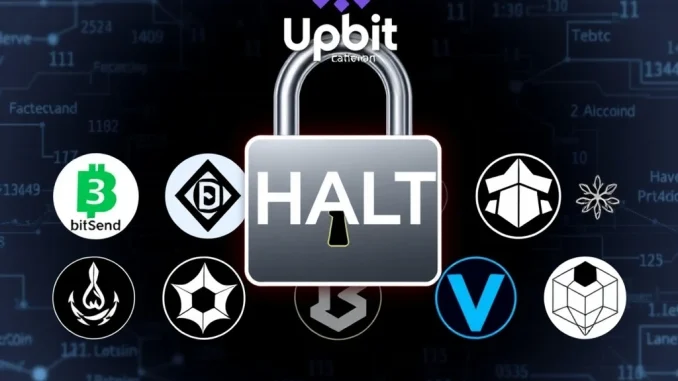
Upbit, a major player in the South Korean crypto market, made an official announcement regarding the temporary cessation of withdrawals for six distinct digital assets. This isn’t a blanket ban but a targeted response to specific technical issues.
The affected digital assets are:
- BitSend (BSD)
- Factom (FCT)
- Aion (ION)
- Memetic (MEME)
- Viacoin (VIA)
- Haven Protocol (XHV)
The core reason cited by Upbit for this Upbit withdrawal suspension is a “halt in network block generation” for each of these respective blockchain networks. This means the underlying technology supporting these cryptocurrencies is experiencing a disruption, preventing new blocks from being added and thus, transactions from being processed and confirmed.
Why Do Crypto Exchange Issues Arise from Network Halts?
When we talk about crypto exchange issues stemming from network halts, it’s important to grasp the fundamental concept of blockchain operation. A blockchain is a distributed ledger composed of ‘blocks’ of transactions. These blocks are continuously created and added to the chain through a process called ‘block generation’ or ‘mining/staking’. If this process stops, the network effectively freezes.
Reasons for a network block generation halt can include:
- Software Bugs: Flaws in the blockchain’s code can lead to instability.
- Network Congestion: Overload can sometimes cause nodes to fail or fall out of sync.
- Consensus Mechanism Failure: Issues with how network participants agree on new blocks.
- Security Incidents: Though less common for a full halt, certain attacks could disrupt block production.
- Lack of Development/Maintenance: For older or less actively developed projects, issues might not be promptly addressed.
For an exchange like Upbit, maintaining the integrity and security of user funds is paramount. When a blockchain network experiences a halt in block generation, it becomes impossible for the exchange to safely process user withdrawals or deposits for that specific asset. This leads to necessary crypto exchange issues where operations must be paused to protect users.
The Crucial Role of Network Block Generation
At the heart of every functional blockchain lies continuous network block generation. This ongoing process is what validates transactions, secures the network, and allows the digital ledger to grow. Each new block contains a batch of confirmed transactions, linking cryptographically to the previous block, forming an immutable chain.
When block generation halts, several critical functions cease:
- Transaction Processing: No new transactions can be confirmed or added to the blockchain.
- Network Security: The chain’s integrity relies on new blocks being added, making it harder to revert past transactions. A halt can, in extreme cases, expose the network to vulnerabilities if not resolved quickly.
- Asset Liquidity: Users cannot move their assets off the exchange or receive new deposits, effectively locking funds.
This technical hiccup directly impacts the usability and liquidity of the affected cryptocurrencies, making the network block generation status a critical indicator of a blockchain’s health.
Navigating a Digital Asset Halt: What Users Should Do
If you hold any of the digital assets affected by this digital asset halt on Upbit, or any other exchange experiencing similar issues, here are some actionable insights:
- Stay Informed: Regularly check Upbit’s official announcements and their social media channels for updates. Do not rely on unverified sources.
- Patience is Key: These situations are often temporary. Developers usually work diligently to resolve network issues.
- Avoid Speculation: Resist the urge to panic sell or buy based on unconfirmed rumors. The market for these specific assets may become illiquid on Upbit during the suspension.
- Review Your Portfolio: While this specific incident affects only a few assets, it’s a good reminder to diversify your crypto holdings and understand the underlying technology of each asset you invest in.
- Understand Risk: All digital assets carry inherent risks, including technical failures. This event highlights the importance of understanding these risks.
Upbit Crypto and Broader Market Implications
The Upbit crypto suspension, while specific to a few assets, serves as a reminder of the operational challenges that can arise in the cryptocurrency space. Major exchanges like Upbit prioritize user safety and regulatory compliance. Suspending withdrawals, though inconvenient, is often a necessary measure to prevent loss of funds during network instability.
Such events, while not directly impacting Bitcoin or Ethereum, can subtly influence overall market sentiment by highlighting the technical complexities of smaller, less robust blockchain networks. It reinforces the need for continuous development, maintenance, and robust infrastructure within the crypto ecosystem to ensure seamless operations and user trust. Exchanges play a crucial role in acting as guardians of user assets, and their swift action in such cases is paramount.
Conclusion
The Upbit withdrawal suspension for BitSend, Factom, Aion, Memetic, Viacoin, and Haven Protocol is a direct consequence of a halt in their respective network block generation. This incident, while disruptive for affected users, highlights the critical importance of a stable and continuously operating blockchain network for the smooth functioning of digital assets. Users are advised to remain calm, stay updated through official channels, and consider this a valuable lesson in the technical nuances and potential risks inherent in the dynamic world of cryptocurrency. Exchanges like Upbit take such measures to protect user assets, and a resolution is typically sought by the network developers as quickly as possible.
Frequently Asked Questions (FAQs)
Q1: What does “halt in network block generation” mean?
A1: A “halt in network block generation” means that the underlying blockchain network for a specific cryptocurrency has stopped creating new blocks of transactions. This effectively pauses all activity on that network, preventing new transactions from being confirmed or added to the ledger.
Q2: Why did Upbit suspend withdrawals for these specific assets?
A2: Upbit suspended withdrawals because the halt in network block generation for these assets (BitSend, Factom, Aion, Memetic, Viacoin, Haven Protocol) makes it impossible for the exchange to safely process transactions. To protect user funds and maintain operational integrity, they must temporarily pause withdrawal services.
Q3: Are my funds lost or at risk due to this suspension?
A3: Generally, no. A withdrawal suspension due to a network halt is a protective measure. Your funds are still held by Upbit, but you cannot move them until the underlying blockchain network issue is resolved and Upbit resumes services. It’s a temporary inconvenience, not typically a loss of funds.
Q4: How long will the Upbit withdrawal suspension last?
A4: The duration of the suspension depends entirely on when the respective blockchain networks (BitSend, Factom, Aion, Memetic, Viacoin, Haven Protocol) resolve their block generation issues. Upbit will resume services once they confirm the networks are stable and secure. Users should monitor Upbit’s official announcements for updates.
Q5: What should I do if I hold one of these suspended digital assets?
A5: The best course of action is to stay informed by regularly checking Upbit’s official website and announcements. Avoid panic and do not attempt to send these assets to or from Upbit until the suspension is lifted. Consider this an important reminder to understand the technical aspects of your crypto investments.
Q6: Does this issue affect all cryptocurrencies on Upbit?
A6: No, this suspension is specific to only six digital assets: BitSend (BSD), Factom (FCT), Aion (ION), Memetic (MEME), Viacoin (VIA), and Haven Protocol (XHV). Other cryptocurrencies on Upbit whose networks are operating normally are not affected by this particular suspension.