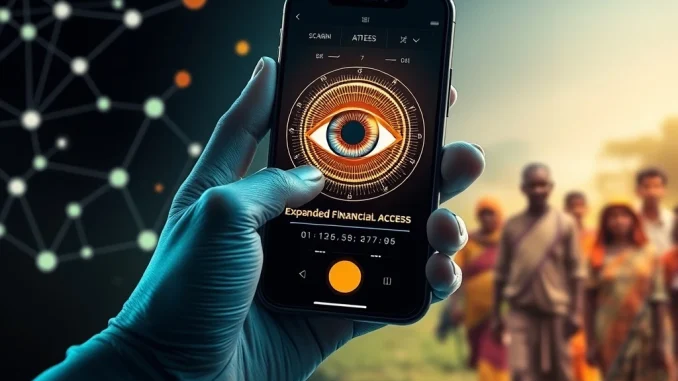
Imagine a world where your unique identity, confirmed by a simple eye scan, unlocks financial opportunities previously out of reach. This isn’t science fiction; it’s the groundbreaking reality being forged by Divine Research, a San Francisco-based fintech startup. Since late 2024, they have issued over 30,000 uncollateralized crypto loans, primarily under $1,000 in USDC, to individuals in underserved regions. This bold initiative leverages cutting-edge biometric technology to bridge the significant gap in global financial access, proving that innovation can indeed reshape economic landscapes.
How Do Iris Scans Power Uncollateralized Lending?
The core of Divine Research’s innovative approach lies in its use of biometric verification. The platform integrates with World ID, an advanced iris-scanning technology developed by OpenAI co-founder Sam Altman. This system authenticates borrowers as unique individuals, effectively minimizing identity fraud and reducing the risk of repeat defaults. By verifying a person’s uniqueness rather than their credit history or assets, Divine Research can issue loans without requiring traditional collateral.
This method offers several key advantages:
- Enhanced Security: Biometric data provides a robust layer of identity verification, making it difficult for fraudsters to exploit the system.
- Streamlined Process: The reliance on a quick scan simplifies the application process, removing bureaucratic hurdles often associated with traditional lending.
- Global Reach: It allows for financial services to be extended to populations that lack conventional identification documents or banking infrastructure.
Divine Research’s Model: Empowering the Unbanked with DeFi Lending
Divine Research targets non-traditional demographics, including local vendors, dedicated teachers, and agile gig workers, who are often excluded from conventional credit systems. Founder Diego Estevez revealed that these loans carry interest rates ranging between 20% and 30%. While the platform absorbs a 40% default rate on first-time loans, a unique mechanism is in place to mitigate losses: borrowers receive reclaimable Worldcoin tokens. This aligns with the platform’s broader integration of decentralized finance (DeFi) tools, creating a dynamic ecosystem.
Unlike traditional banks, Divine’s capital is sourced from everyday users seeking high-yield opportunities. This peer-to-peer structure ensures consistent returns for lenders, even in environments considered high-risk by conventional standards. It represents a significant departure from centralized finance, embodying the spirit of DeFi lending where capital flows directly between individuals, fostering a more inclusive financial system.
What is World ID and How Does it Fit In?
World ID is more than just an iris scanner; it’s a protocol designed to provide a global, privacy-preserving digital identity. Its integration into Divine Research’s lending model is pivotal. By confirming that each borrower is a unique human being, World ID addresses one of the biggest challenges in uncollateralized lending: identity verification and fraud prevention. This technology enables Divine to build trust in a trustless environment, a cornerstone of decentralized applications. It allows the system to identify and penalize defaulters, even without traditional collateral, by limiting their future access to the platform and associated benefits.
The Evolving Landscape of Uncollateralized Crypto Loans
The niche of uncollateralized crypto loans is rapidly evolving, with several innovative players emerging alongside Divine Research:
- 3Jane: An Ethereum-based startup, backed by Paradigm, automates lending decisions using artificial intelligence and routes defaulted loans to collectors. This highlights the growing role of AI in streamlining DeFi operations.
- Wildcat: This firm caters specifically to institutional borrowers, offering undercollateralized loans with flexible terms. This demonstrates that the demand for less restrictive lending extends beyond individual users to larger entities.
These innovations collectively reflect a significant shift away from reliance on traditional banks, which have historically excluded marginalized populations due to stringent requirements and geographical limitations. The crypto space is actively developing alternative pathways to credit, fostering greater global financial access.
Navigating Challenges and Skepticism in Expanding Financial Access
Despite these advancements, the sector faces considerable skepticism. The dramatic collapse of major crypto lenders like Celsius and Genesis in 2022, marred by criminal convictions and systemic failures, casts a long shadow over any uncollateralized lending model. These incidents underscore the critical need for robust risk management, transparency, and sound operational practices within the DeFi space.
Divine Research and similar platforms must meticulously balance innovation with stringent risk mitigation strategies. As traditional financial institutions, including giants like JPMorgan, begin to explore crypto-backed lending, the competitive landscape will intensify, and regulatory scrutiny is bound to increase. For now, Divine’s approach highlights the immense potential of biometric verification and DeFi to expand financial access on a global scale. However, scalability across diverse regulatory environments and achieving clear regulatory frameworks remain significant hurdles to overcome for widespread adoption.
The Future is Here: Empowering Through Innovation
Divine Research’s journey of issuing 30,000 uncollateralized crypto loans through iris scans marks a pivotal moment in the quest for global financial access. By leveraging technologies like World ID and embracing DeFi lending principles, they are not just providing loans; they are building a new financial paradigm. This model offers a glimpse into a future where creditworthiness is determined by unique identity rather than historical wealth, opening doors for millions worldwide. While challenges persist, the commitment to innovation and inclusion by platforms like Divine Research signals a transformative era for finance, where technology empowers individuals and communities previously left behind.
Frequently Asked Questions (FAQs)
Q1: What are uncollateralized crypto loans?
Uncollateralized crypto loans are a type of loan where borrowers do not need to provide any assets (like cryptocurrency, real estate, or other valuables) as security. Instead, lenders rely on alternative methods, such as identity verification, reputation systems, or algorithmic assessments, to determine creditworthiness and mitigate risk. Divine Research uses biometric iris scans via World ID for this purpose.
Q2: How does iris scanning technology like World ID enable these loans?
World ID uses biometric iris scanning to verify that a person is a unique human being. This technology helps prevent identity fraud and ensures that each borrower is a distinct individual, minimizing the risk of repeat defaults. By confirming uniqueness, it builds a foundation of trust that allows for lending without traditional collateral, especially in regions where conventional identification or credit systems are lacking.
Q3: What are the benefits of expanding financial access through crypto loans?
Expanding financial access through crypto loans can empower underserved populations by providing them with much-needed capital for personal or business growth. It bypasses traditional banking barriers, offers a more streamlined application process, and can foster economic inclusion for individuals like gig workers, vendors, and teachers who might otherwise be excluded from the formal financial system.
Q4: What are the risks associated with uncollateralized crypto lending?
The primary risks include higher default rates, as there’s no collateral to seize in case of non-payment. The nascent regulatory environment for DeFi also poses risks, as legal frameworks are still developing. Furthermore, the volatility of cryptocurrencies and the potential for systemic failures, as seen with past crypto lenders, highlight the importance of robust risk management and transparent operations.
Q5: How does Divine Research mitigate the high default rate on first-time loans?
Divine Research mitigates the 40% default rate on first-time loans by issuing reclaimable Worldcoin tokens to borrowers. While the exact mechanism isn’t fully detailed, this typically involves incentivizing repayment or creating a future disincentive for defaulting, as these tokens might be linked to continued access or reputation within the platform’s ecosystem.