In the ever-evolving landscape of global finance, even seemingly distant political pronouncements can send ripples through the cryptocurrency world. U.S. President Donald Trump’s recent warning about imposing Trump tariffs on countries that do not open their markets to U.S. goods and services, as reported by Walter Bloomberg, is one such statement. While directly related to traditional trade, such declarations have the potential to significantly alter investor sentiment, currency stability, and ultimately, the broader economic conditions that influence digital asset valuations. For those navigating the volatile crypto markets, understanding these macroeconomic shifts is paramount.
Understanding the `Trump Tariffs` Warning
President Trump’s statement signals a potential resurgence of aggressive protectionist US trade policy, a hallmark of his previous administration. The core message is clear: nations that maintain restrictive barriers against American products and services could face severe financial penalties in the form of substantial import taxes. This isn’t just about balancing trade deficits; it’s about leveraging economic power to force market access.
- What are ‘Massive Tariffs’? These are taxes levied on imported goods and services, making them more expensive for domestic consumers and businesses. ‘Massive’ implies a significant percentage increase, designed to deter imports and encourage domestic production or compel other nations to change their trade practices.
- What are ‘Closed Markets’? This refers to countries that impose high import duties, quotas, non-tariff barriers (like complex regulations or subsidies for domestic industries), or other restrictions that make it difficult for foreign companies, particularly from the U.S., to sell their goods and services freely.
- The Precedent: During his first term, Trump implemented tariffs on steel, aluminum, and a wide range of Chinese goods, leading to a significant trade war with Beijing. This history provides a glimpse into the potential scale and impact of future actions.
The Potential `Economic Impact` on Industries and Consumers
The imposition of Trump tariffs, especially if ‘massive,’ can have a cascading economic impact across various sectors and consumer wallets. While proponents argue they protect domestic industries and jobs, the reality is often more complex, involving both winners and losers.
Who Feels the Pinch?
The immediate effects of tariffs are rarely confined to the intended targets:
- Consumers: Imported goods become more expensive. If U.S. companies rely on imported components, their final products also become pricier, leading to higher inflation. For instance, if tariffs are placed on electronics from Asia, the cost of your next smartphone or laptop could rise.
- Businesses: Companies that import raw materials or components face increased costs, which can erode profit margins or force them to raise prices. Exporters in the U.S. may also suffer if targeted countries retaliate with their own tariffs, making American goods less competitive abroad.
- Supply Chains: Modern global supply chains are intricate. Tariffs can disrupt these networks, forcing companies to seek new suppliers or reconfigure their manufacturing processes, leading to inefficiencies and delays.
- Global Trade Flows: A significant increase in tariffs can reduce the overall volume of international trade, slowing down global economic growth and potentially triggering recessions in highly dependent economies.
Navigating the Specter of a `Trade War`
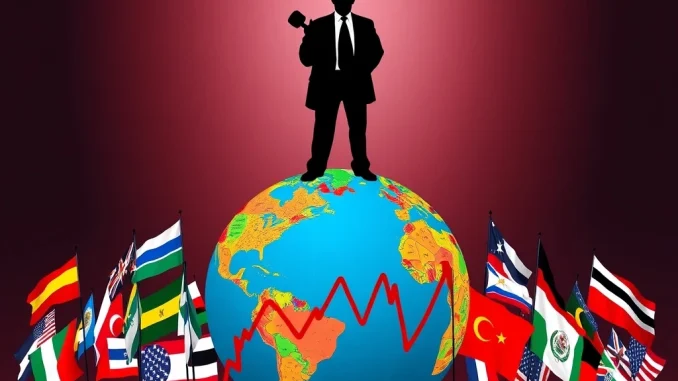
The most significant risk stemming from aggressive tariff policies is the escalation into a full-blown trade war. This occurs when countries respond to tariffs imposed on them by enacting their own retaliatory tariffs, creating a cycle of escalating protectionism.
During the previous administration, the U.S.-China trade dispute illustrated this dynamic clearly. Both sides imposed tariffs on billions of dollars worth of goods, impacting sectors from agriculture to technology. Such conflicts:
- Increase Uncertainty: Businesses delay investment decisions due to unpredictable trade environments.
- Harm International Relations: Trade disputes can sour diplomatic ties, affecting cooperation on other critical global issues.
- Distort Markets: Tariffs can lead to artificial price increases, reduced competition, and inefficient allocation of resources.
The prospect of a new trade war could significantly destabilize global markets, leading to capital flight from riskier assets and potentially impacting commodity prices.
How `US Trade Policy` Shapes the World Stage
The US trade policy, particularly under an administration prioritizing ‘America First’ principles, holds immense sway over the global economic order. The U.S. is the world’s largest economy, and its actions can set precedents or force other nations to re-evaluate their own trade strategies. A shift towards aggressive unilateral tariffs signals a departure from multilateral trade agreements and institutions like the World Trade Organization (WTO).
This approach can be seen as:
| Argument for Tariffs | Argument Against Tariffs |
|---|---|
| Protects domestic industries and jobs from unfair foreign competition. | Raises costs for consumers and businesses, potentially leading to inflation. |
| Encourages other countries to open their markets. | Risks retaliatory tariffs and a full-blown trade war. |
| Addresses national security concerns by reducing reliance on foreign supply chains. | Disrupts global supply chains and reduces overall trade volume. |
| Can be used as leverage in broader geopolitical negotiations. | Can strain international relations and undermine global cooperation. |
The long-term implications of such a policy could reshape alliances, foster new trade blocs, and even accelerate de-dollarization efforts if countries seek to reduce their reliance on the U.S. financial system.
What This Means for `Global Markets` and Digital Assets
The interconnectedness of global markets means that Trump tariffs and the potential for a trade war are not isolated events. They create ripple effects that can influence everything from stock prices to currency exchange rates, and yes, even the price of Bitcoin and other cryptocurrencies.
Indirect Impact on Crypto:
- Flight to Safety: In times of economic uncertainty and traditional market volatility (which tariffs can induce), some investors might seek ‘safe haven’ assets. While gold has traditionally filled this role, Bitcoin has increasingly been viewed as a digital alternative, potentially seeing increased demand.
- Inflationary Pressures: If tariffs lead to higher consumer prices and inflation, investors might look for assets that are perceived as inflation hedges. Cryptocurrencies, particularly those with capped supplies like Bitcoin, are sometimes considered in this light.
- Currency Devaluation: If a country targeted by tariffs sees its currency weaken due to reduced trade or economic slowdown, its citizens might turn to cryptocurrencies as an alternative store of value or a means to circumvent capital controls.
- Innovation and Decentralization: Persistent trade tensions could highlight the benefits of decentralized financial systems, which are less susceptible to unilateral government actions or cross-border trade disputes.
While the direct link between tariffs and crypto prices is complex and not always immediate, the broader climate of economic instability and shifts in US trade policy can indirectly drive interest and adoption in the digital asset space.
Conclusion: Navigating the Trade Winds
President Trump’s warning of massive tariffs is a significant development that demands attention from anyone involved in global markets. It signals a potential return to a more protectionist US trade policy, which carries substantial risks of an escalating trade war and widespread economic impact. For the cryptocurrency community, while not directly targeted, these macroeconomic shifts are crucial. Increased volatility in traditional markets, inflationary pressures, or a flight to perceived safe havens could all indirectly influence the trajectory of digital assets. Staying informed and understanding the potential ripple effects of these Trump tariffs will be key to navigating the uncertain economic landscape ahead.
Frequently Asked Questions (FAQs)
Q1: What exactly are tariffs, and how do they work?
A1: Tariffs are taxes imposed by a government on imported goods or services. They increase the cost of these imports, making them less competitive compared to domestically produced goods. The goal is often to protect domestic industries, generate revenue, or exert political pressure.
Q2: How could a new trade war impact the average consumer?
A2: A trade war typically leads to higher prices for imported goods and potentially for domestic goods that use imported components. This can result in increased inflation, reduced purchasing power, and fewer choices for consumers. It can also lead to job losses in sectors affected by reduced exports or supply chain disruptions.
Q3: Why would countries keep their markets ‘closed’ to U.S. goods?
A3: Countries might keep their markets closed for various reasons, including protecting nascent domestic industries, maintaining strategic control over certain sectors, generating government revenue through import duties, or simply due to complex regulatory environments. Some may also do so as a retaliatory measure or to support specific national economic strategies.
Q4: Is there a direct link between tariffs and cryptocurrency prices?
A4: While there isn’t a direct, immediate cause-and-effect link, tariffs and the resulting economic uncertainty can indirectly influence cryptocurrency prices. Factors like increased market volatility, inflation concerns, or a search for alternative assets during traditional market downturns can drive interest and investment into cryptocurrencies like Bitcoin, which are often seen as decentralized and less susceptible to national economic policies.
Q5: What is the ‘America First’ trade policy?
A5: ‘America First’ in trade refers to a protectionist approach where the primary goal is to prioritize U.S. economic interests, jobs, and industries over global trade agreements or the interests of other nations. This often involves imposing tariffs, renegotiating trade deals, and reducing reliance on foreign supply chains.