In today’s interconnected global economy, policy decisions in one nation can send ripple effects across continents. These shifts impact various markets, including the dynamic world of cryptocurrencies. Investors in digital assets, much like those in traditional markets, closely monitor geopolitical and economic shifts. A recent development, involving new Trump tariffs on Indian imports, highlights such a significant economic shift. Understanding these broader economic movements is crucial for all market participants.
Understanding the New Trump Tariffs on Indian Imports
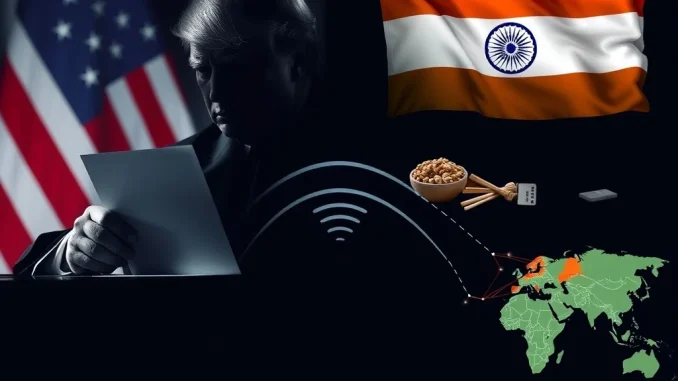
U.S. President Donald Trump recently signed an executive order. This order imposes an additional 25% tariff on goods imported from India. Walter Bloomberg reported this significant move on X. The announcement signals a notable escalation in trade tensions between the two nations. Furthermore, it immediately sparked discussions about its potential economic impact on both sides. Experts are also analyzing its broader effects on global trade at large. This action marks a direct challenge to existing trade frameworks.
Tariffs are essentially taxes imposed on imported goods. Governments use them for various reasons. They can protect domestic industries from foreign competition. Additionally, they can generate revenue for the government. Sometimes, they serve as a bargaining chip in international negotiations. This 25% tariff specifically targets a range of products. The exact list of affected goods will determine the full scope of its impact. However, the general sentiment indicates a move towards protectionism.
Historical Context and Rising Trade War Tensions
Trade relations between the United States and India have often been complex. Both nations have engaged in disputes over various products and policies. India, for instance, previously faced U.S. concerns regarding its intellectual property rights and market access. Conversely, India has voiced concerns about U.S. visa policies and agricultural subsidies. The current imposition of Trump tariffs escalates these existing tensions. It introduces a new layer of complexity to their bilateral relationship.
This move also fits into a broader pattern. Former President Trump often utilized tariffs as a key tool in his foreign policy. He aimed to renegotiate trade agreements he deemed unfair. This strategy frequently led to a trade war with major economies. China, for example, experienced significant tariff impositions during his previous term. Therefore, this action against India aligns with his past approach. It suggests a renewed focus on aggressive trade practices. Many observers now anticipate India’s response to these new measures.
Immediate Economic Impact on India
The imposition of a 25% tariff will likely have immediate consequences for India. Indian exporters will face higher costs when selling goods to the U.S. This increased cost could make their products less competitive. Consequently, U.S. buyers might seek alternative suppliers. Key sectors like textiles, handicrafts, and certain agricultural products could feel the pinch most acutely. India’s export-oriented industries may experience a significant downturn. This could lead to various economic challenges.
Potential ramifications for India include:
- Reduced Exports: Indian businesses may see a sharp decline in sales to the U.S. market.
- Job Losses: Industries reliant on U.S. exports might reduce their workforce.
- Currency Depreciation: A fall in exports can weaken the Indian Rupee against the U.S. Dollar.
- Supply Chain Disruptions: Indian manufacturers might need to re-evaluate their sourcing and distribution.
The Indian government will likely formulate a response. This could involve challenging the tariffs at the World Trade Organization. They might also impose retaliatory tariffs on U.S. goods. Such actions could further escalate the trade war, creating a cycle of punitive measures.
The Economic Impact on the United States and Global Trade
While tariffs aim to protect domestic industries, they often carry a cost for the imposing nation. U.S. consumers might face higher prices for goods previously imported from India. This is because importers could pass on the tariff costs. Furthermore, U.S. businesses relying on Indian components or finished goods could see their supply chains disrupted. They might need to find new, potentially more expensive, sources.
The tariffs also affect the broader landscape of global trade. They signal a potential shift towards protectionist policies. This could encourage other nations to adopt similar measures. Such a trend could undermine multilateral trade agreements. It might also lead to a fragmentation of global supply chains. A sustained period of trade tensions could slow down global economic growth. It also introduces significant uncertainty for businesses and investors worldwide.
Key potential effects on the U.S. economy include:
- Higher Consumer Prices: Imported goods become more expensive.
- Supply Chain Realignments: Businesses may need to diversify sourcing.
- Reduced Trade Volume: Overall trade between the two nations could shrink.
- Inflationary Pressures: Increased costs of goods can contribute to inflation.
Ultimately, the long-term economic impact will depend on the duration and scope of these tariffs. It also depends on the retaliatory measures taken by India. The global financial markets will closely watch these developments.
Indirect Implications for Cryptocurrency Markets
While the imposition of Trump tariffs on Indian imports does not directly impact cryptocurrency prices, its broader economic ramifications are noteworthy. Global trade disputes create uncertainty. This uncertainty can influence investor sentiment across all asset classes. When traditional markets face volatility due to geopolitical or economic tensions, some investors seek alternative assets. Cryptocurrencies, particularly Bitcoin, have historically been viewed by some as a potential hedge against economic instability or inflation. However, this view remains debated.
A prolonged trade war could:
- Increase Volatility: Traditional markets may become more volatile, leading some investors to consider crypto.
- Drive Demand for Safe Havens: If economic stability declines, some investors might turn to perceived safe-haven assets, including gold or potentially cryptocurrencies.
- Influence Currency Fluctuations: Tariffs can impact fiat currency values. This might make digital currencies more appealing to some.
It is important to note that the crypto market is complex. Many factors influence its movements. Global economic shifts are just one piece of the puzzle. Nevertheless, major trade policy changes contribute to the overall economic narrative. This narrative invariably influences investor psychology. Therefore, the ripple effects of these tariffs could indirectly play a role in the broader investment landscape.
Looking Ahead: The Future of US-India Trade and Global Dynamics
The new Trump tariffs mark a significant turning point in US-India trade relations. The immediate future will reveal India’s official response. It will also show the extent of the economic fallout. This situation underscores the fragile nature of global trade agreements. It highlights the constant interplay between politics and economics. Businesses on both sides must now adapt to this new reality. They need to re-evaluate their supply chains and market strategies. Policymakers face the challenge of mitigating adverse effects. They must also navigate complex diplomatic pathways.
Ultimately, the resolution of this dispute will have lasting implications. It will affect not only the U.S. and India but also the broader international trading system. All market participants, from traditional investors to those in the crypto space, must remain vigilant. Monitoring these macroeconomic shifts is essential. They offer insights into potential future market trends and opportunities.
Frequently Asked Questions (FAQs)
Q1: What exactly are the new Trump tariffs on Indian imports?
A1: U.S. President Donald Trump signed an executive order imposing an additional 25% tariff on goods imported from India. This means a 25% tax will be added to the cost of certain Indian products entering the U.S. market.
Q2: Which goods are affected by these tariffs?
A2: The initial report from Walter Bloomberg on X did not specify the exact list of goods. Typically, tariffs target a range of products where the imposing country seeks to protect domestic industries or gain leverage in trade negotiations.
Q3: How might these Trump tariffs impact the Indian economy?
A3: India’s economy could face reduced exports to the U.S., potential job losses in export-oriented sectors, and a weaker Rupee. Indian businesses may struggle to compete due to higher costs.
Q4: What could be the economic impact on the United States?
A4: U.S. consumers might experience higher prices for goods previously imported from India. U.S. businesses could face supply chain disruptions and increased costs if they rely on Indian components, potentially leading to inflationary pressures.
Q5: Is there any direct link between these tariffs and cryptocurrency markets?
A5: There is no direct, immediate link. However, global economic uncertainties and trade tensions, like this new trade war development, can influence overall investor sentiment. This might indirectly lead some investors to consider alternative assets like cryptocurrencies as hedges against traditional market volatility.
Q6: What is the significance of this move in terms of global trade?
A6: This move signifies a potential shift towards increased protectionism and bilateral trade disputes. It could challenge existing multilateral trade frameworks and lead to further fragmentation of global supply chains, impacting global economic stability.