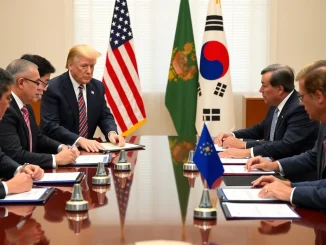
In the dynamic world of cryptocurrency, market movements often mirror broader global economic shifts. A recent **US appeals court ruling** has sent ripples through financial circles. This decision declared most of the **Trump administration tariffs illegal**, sparking significant discussion. While not directly crypto-related, such major economic news impacts investor sentiment and global trade flows. Therefore, understanding these developments is crucial for any market participant.
Understanding the Landmark **US Appeals Court Ruling**
A significant development recently emerged from a U.S. appeals court. The court ruled that most tariffs imposed by the **Trump administration tariffs illegal**. Walter Bloomberg first reported this critical news on X. This decision marks a pivotal moment in ongoing trade disputes. However, the court also clarified an important point. These tariffs may remain in place for now. This continuation is pending further litigation. The legal process is complex and often takes time. Therefore, immediate changes to trade practices are unlikely. This ruling affects numerous imported goods. It also influences various international trade relationships. Businesses must remain aware of these legal nuances. The court’s stance underscores the legal challenges surrounding past trade policies.
The Genesis of **Trump Tariffs Illegal**: A Brief History
Former President Donald Trump initiated these tariffs years ago. His administration aimed to protect domestic industries. They sought to address perceived unfair trade practices, particularly from China. These tariffs covered a wide range of products. Steel and aluminum imports faced significant duties. Additionally, many goods from China saw increased taxes. The stated goal was to rebalance trade relationships. However, these measures immediately faced legal challenges. Opponents argued that the tariffs exceeded presidential authority. They contended that proper legal procedures were not followed. The latest appeals court decision directly addresses these long-standing arguments. It questions the legal basis of those initial actions. This legal scrutiny highlights the checks and balances within the U.S. system. Consequently, the debate over presidential power in trade policy continues.
Implications of the **Appeals Court Ruling** on **US Trade Policy**
The court’s decision carries substantial weight for future **US trade policy**. It sets a precedent regarding executive power in trade matters. Future administrations might face stricter legal oversight. They could find it harder to unilaterally impose broad tariffs. This ruling reinforces the role of Congress in trade legislation. Lawmakers may gain more influence over such decisions. For businesses, the situation creates continued uncertainty. While tariffs remain, their long-term future is now in doubt. Companies involved in import and export activities should monitor developments closely. They might need to adjust supply chains or pricing strategies. Furthermore, international partners will observe this closely. It could influence their perception of U.S. trade reliability. The ruling emphasizes the need for legally sound trade actions. It also highlights the complexities of global commerce.
Potential **Global Trade Impact** and Economic Ramifications
This ruling extends beyond U.S. borders. It has potential **global trade impact**. Other nations that were subject to these tariffs will take note. They might seek recourse or adjustments in trade agreements. The ongoing litigation could prolong economic uncertainty. Markets generally dislike unpredictability. Therefore, prolonged legal battles might create headwinds for global economic growth. This broader economic climate can indirectly affect cryptocurrency markets. Investor confidence often correlates with global stability. Trade disputes, even if legally challenged, can disrupt this confidence. A resolution, whether tariffs are removed or legally affirmed, would provide clarity. However, until then, businesses and investors operate under a cloud of legal ambiguity. The decision underscores the interconnectedness of legal, political, and economic spheres globally. It serves as a reminder that major policy shifts have wide-ranging consequences.
What’s Next for the **Economic Tariffs** Declared Illegal?
The journey for these **economic tariffs** is far from over. The appeals court ruling allows them to stay in place temporarily. This means further legal proceedings will occur. The Trump administration, or current administration defending the policy, might appeal to a higher court. Alternatively, new legal arguments could emerge. Businesses and trade organizations will continue their advocacy. They will push for a definitive resolution. The ultimate outcome could involve the tariffs being permanently removed. It might also see them upheld under different legal reasoning. Stakeholders should prepare for various scenarios. Keeping informed about court filings and governmental statements is essential. The process highlights the enduring power of judicial review. It ensures that even executive actions face legal scrutiny. This ongoing legal saga demands careful attention from all parties involved in international trade.
The **US appeals court ruling** declaring most **Trump tariffs illegal** is a significant legal and economic event. While the tariffs remain active during litigation, the decision casts a long shadow over their future. This development impacts **US trade policy** and carries potential **global trade impact**. For cryptocurrency enthusiasts, understanding such macroeconomic shifts is vital. Global economic stability, trade relations, and investor confidence all influence digital asset markets. Therefore, monitoring this evolving situation remains important. It provides insights into the broader financial landscape that shapes crypto’s future.
Frequently Asked Questions (FAQs)
1. What did the US appeals court rule regarding Trump administration tariffs?
The US appeals court ruled that most of the tariffs imposed by the Trump administration were illegal.
2. Are the tariffs immediately removed after this ruling?
No, the court stated that the tariffs may remain in place for the time being while the litigation process continues.
3. Why were these tariffs considered illegal?
The ruling suggests that the tariffs likely exceeded presidential authority or did not follow proper legal procedures when they were initially implemented.
4. What is the potential impact of this ruling on US trade policy?
The ruling could set a precedent, potentially limiting the executive branch’s power to impose tariffs unilaterally in the future and reinforcing Congress’s role in trade legislation.
5. How does this news indirectly affect cryptocurrency markets?
While not directly related, major economic news like this impacts global trade stability, investor confidence, and overall economic sentiment. These factors can indirectly influence the broader financial landscape and, consequently, cryptocurrency markets.
6. What happens next in the legal process?
Further litigation will occur. This could involve appeals to higher courts or new legal arguments. Businesses and governments will monitor the situation for a definitive resolution.