World Liberty Financial (WLFI) is poised to revolutionize the real estate market. The firm recently unveiled ambitious plans for Trump real estate tokenization. This groundbreaking initiative aims to open exclusive properties to a broader investor base. Bloomberg reported this development, citing comments from WLFI CEO Jack Witkoff. He spoke at the prestigious TOKEN2049 conference. Witkoff detailed the firm’s objective: to allow investors to purchase a single token representing assets like the Trump Tower in Dubai through an exchange. Consequently, this move challenges traditional investment barriers. Witkoff emphasized that access to high-quality assets should not be limited to a select few. This vision marks a significant step towards democratizing investment opportunities.
Understanding Asset Tokenization: A New Era for Investment
The concept of asset tokenization lies at the heart of WLFI’s strategy. Essentially, tokenization involves converting real-world assets into digital tokens on a blockchain. Each token represents a fractional ownership share of the underlying asset. For instance, a single token could represent a small percentage of a large property. This process brings several key advantages. Firstly, it enhances liquidity, as tokens can be traded more easily than traditional property shares. Secondly, it reduces entry barriers for investors. Small amounts of capital can now access previously exclusive markets. Furthermore, blockchain technology ensures transparency and security for all transactions. This digital ledger provides an immutable record of ownership. Consequently, it builds trust within the investment ecosystem. Tokenization is transforming various sectors, from art to commodities. Its application in real estate holds immense potential.
The Vision for Trump Tower Dubai: Fractional Ownership
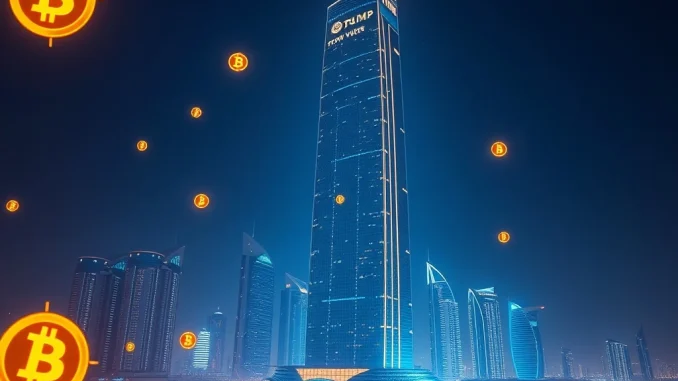
WLFI’s immediate focus includes properties such as the iconic Trump Tower Dubai. Jack Witkoff specifically highlighted this landmark. He envisions a future where investors can acquire a digital token representing a portion of such a high-value asset. This mechanism allows for fractional ownership. Therefore, an individual investor does not need to purchase an entire multi-million dollar property. Instead, they can buy a token, which signifies a share of its value. This approach significantly lowers the investment threshold. It makes luxury real estate accessible to a wider demographic. The firm plans to facilitate these transactions through a dedicated exchange. This platform will ensure seamless buying and selling of these digital tokens. Moreover, it aims to create a more dynamic and inclusive real estate market.
WLFI’s Strategic Move and Jack Witkoff’s Rationale
WLFI, or World Liberty Financial, positions itself as a pioneer in this emerging field. CEO Jack Witkoff articulated the firm’s core philosophy. He firmly believes that high-quality assets should not remain exclusive. This sentiment underpins WLFI’s push into real estate tokenization. The company’s goal extends beyond just facilitating transactions. It seeks to reshape how people invest in tangible assets. Witkoff’s comments at TOKEN2049 underscore a broader trend. Many financial institutions are exploring blockchain’s potential. They recognize its ability to streamline processes and broaden participation. WLFI’s initiative represents a bold step. It bridges traditional finance with innovative digital solutions. Consequently, this strategy could set a new standard for asset accessibility.
Broadening Access: The Future of Real Estate Tokenization
The proposed real estate tokenization by WLFI could herald a new era for property investment. Traditionally, real estate has been illiquid and capital-intensive. Tokenization directly addresses these challenges. It transforms property into a divisible and tradable digital asset. This innovation opens doors for retail investors globally. They can now participate in high-value real estate ventures. Furthermore, it offers diversification benefits for existing portfolios. Investors can spread their capital across various tokenized properties. This reduces risk concentration. The transparency of blockchain also enhances investor confidence. All ownership records are publicly verifiable and secure. Thus, tokenization provides a compelling alternative to conventional real estate investment models. It promises a more democratic and efficient market.
Navigating the Path Ahead for Tokenized Assets
While the prospects are exciting, tokenizing real estate involves complex considerations. Regulatory frameworks are still evolving across different jurisdictions. Ensuring legal compliance remains paramount for WLFI. Furthermore, market acceptance and investor education are crucial. Many potential investors may be unfamiliar with digital assets. Building trust and providing clear guidance will be essential. However, the benefits far outweigh these challenges. Tokenization offers unprecedented opportunities for liquidity and accessibility. It can unlock significant value in previously dormant assets. As the digital asset landscape matures, initiatives like WLFI’s will likely become more common. They represent a fundamental shift in how we perceive and interact with ownership.
WLFI’s plan to tokenize Trump family real estate marks a pivotal moment. It highlights the growing convergence of traditional finance and blockchain technology. This move could significantly democratize access to high-value assets. Investors might soon own a piece of iconic properties through a single digital token. This vision, articulated by Jack Witkoff, promises a more inclusive investment future.
Frequently Asked Questions (FAQs)
What is Trump real estate tokenization?
Trump real estate tokenization refers to WLFI’s plan to convert real estate assets held by the Trump family into digital tokens on a blockchain. This allows for fractional ownership and easier trading.
Which properties are included in this asset tokenization plan?
WLFI CEO Jack Witkoff specifically mentioned the Trump Tower in Dubai as one of the properties targeted for tokenization. Other properties may be included in the future.
How can investors purchase these tokens?
Investors will be able to purchase a single token representing a share of the property through an exchange. This exchange will facilitate the buying and selling of these digital assets.
What are the main benefits of real estate tokenization?
The primary benefits include increased liquidity, fractional ownership, lower investment barriers, enhanced transparency through blockchain, and broader access to high-quality assets for a wider range of investors.
Who is Jack Witkoff and what is WLFI?
Jack Witkoff is the CEO of World Liberty Financial (WLFI). WLFI is the firm proposing to tokenize Trump family real estate, aiming to democratize access to exclusive properties.
Is this a regulated investment?
The regulatory landscape for tokenized assets is still developing. WLFI will need to navigate various legal and compliance requirements, which can vary by jurisdiction.