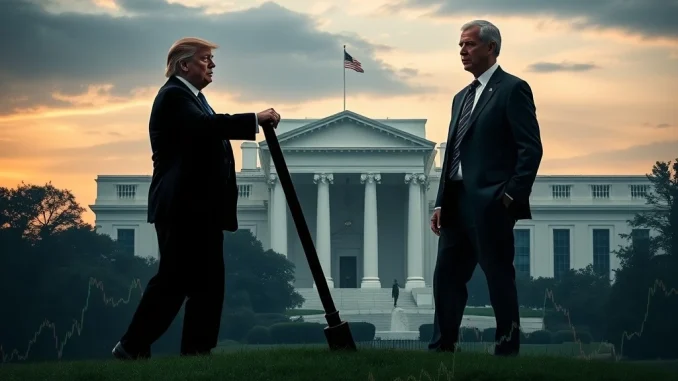
The financial world is buzzing with a high-stakes standoff. Former President Donald Trump is relentlessly pushing Federal Reserve Chair Jerome Powell for aggressive interest rate cuts, a move he argues is vital for the economy. This pressure cooker situation isn’t just a political spectacle; it’s sending ripples across global markets, especially for assets like Bitcoin and Ethereum. As investors and crypto enthusiasts watch closely, the question remains: how will this unprecedented political pressure shape monetary policy and, by extension, the future of the crypto market?
Donald Trump’s Stance: A Call for Immediate Action on Interest Rate Cuts
President Donald Trump has intensified his public campaign, demanding the Federal Reserve implement significant interest rate cuts. His rhetoric has been direct and sharp, framing the move as essential to addressing pressing economic challenges, including high borrowing costs and housing affordability. During a July 15, 2025, visit to the Federal Reserve, Trump reportedly labeled Powell a “numbskull” for resisting “large reduction” demands.
- Trump argues that lowering rates by over three percentage points could save the nation $1 trillion annually in costs.
- He believes such cuts would significantly stimulate economic growth.
- The president has criticized Powell’s policy as “too late” and lacking the “courage” to act decisively.
This aggressive stance, leveraging social media and press conferences, clearly aims to sway public opinion and, ultimately, the Fed’s decisions, potentially ahead of future election cycles.
Jerome Powell’s Resolve: Upholding Federal Reserve Independence
Despite the public onslaught from Donald Trump, Jerome Powell has maintained a firm and consistent stance. The Federal Reserve Chair insists that the central bank’s decisions must remain strictly data-driven and independent of political influence. This commitment to autonomy is a cornerstone of modern central banking, designed to ensure monetary policy serves long-term economic stability rather than short-term political gains.
- Powell has reportedly stated in private conversations with allies that the central bank must avoid politicizing monetary policy.
- His primary goal is to preserve the Fed’s credibility on the global stage.
- The Fed’s mandate is to achieve maximum employment and price stability, guided by economic indicators, not political directives.
This unwavering resolve highlights the inherent tension between political aspirations and institutional independence, a dynamic that has significant implications for market confidence.
The Market’s Reaction: Pricing in Potential Interest Rate Cuts
Trump’s persistent public campaign has undeniably sparked significant market speculation about potential policy shifts. Investors are now actively adjusting their expectations, pricing in a higher probability of aggressive interest rate cuts by the year-end.
According to recent futures data:
- The probability of a 75-basis-point rate cut by year-end has jumped to 60%.
- This is a notable increase from just 40% in late June.
This shift in market sentiment demonstrates how powerful political rhetoric can be, even when the central bank maintains its independent posture. The market’s willingness to price in such a significant move reflects a belief that, despite Powell’s resistance, the pressure might eventually yield results, or at least create enough uncertainty to warrant hedging.
Federal Reserve Autonomy Under Fire: A Critical Debate
The escalating tension between the White House and the Federal Reserve under Jerome Powell reignites a crucial and long-standing debate about the central bank’s autonomy. Is the Fed truly independent, or can sustained political pressure ultimately force its hand? This standoff underscores a key challenge for central banks globally: balancing economic realities with intense external scrutiny.
Historically, the relationship between presidents and the Fed has often been fraught, but public calls for specific policy actions of this magnitude are less common. The debate centers on:
- The importance of maintaining the Fed’s non-partisan credibility to effectively manage the economy.
- The potential for politicizing monetary policy to lead to sub-optimal economic outcomes.
- The delicate act of communication and expectation management by both political leaders and central bankers.
This dynamic tension has broader implications for how financial markets perceive the stability and predictability of U.S. economic policy.
Navigating the Crypto Market Impact: Opportunities and Risks
For the crypto market, the implications of potential interest rate cuts are particularly significant. Cryptocurrencies like Bitcoin (BTC) and Ethereum (ETH) are highly sensitive to macroeconomic shifts, and changes in interest rates can profoundly influence investor sentiment and capital flows. Historical patterns suggest interesting correlations:
- Bullish movements in BTC have often been observed during periods of Fed rate cuts, as lower rates can make riskier assets more attractive.
- Conversely, periods of rising rates or economic uncertainty tend to dampen crypto enthusiasm.
The current situation presents both potential opportunities and increased risks for crypto investors:
- Potential for Upside: If aggressive rate cuts materialize, even under political pressure, they could act as a catalyst for renewed interest and investment in digital assets, potentially leading to price rallies.
- Increased Volatility: The uncertainty surrounding the Fed’s independence and the unpredictable nature of political influence could lead to heightened volatility in an already dynamic market.
- Market Sensitivity: The ongoing debate underscores how closely crypto assets are tied to broader economic narratives, making it crucial for investors to monitor macro developments.
Investors in the crypto market are closely watching how this high-stakes game plays out, weighing the potential for a bullish surge against the inherent risks of a politically charged financial environment.
Conclusion: The Enduring Standoff and Its Global Ripples
The standoff between Donald Trump and Jerome Powell over interest rate cuts is far more than a political spat; it’s a defining moment for monetary policy and its ripple effects across the global economy, including the volatile crypto market. While Jerome Powell remains resolute in his adherence to data-driven decisions and the independence of the Federal Reserve, the White House-Fed dynamic underscores a constant and critical challenge for central banks: balancing economic realities with intense external scrutiny and political demands. The coming months will reveal how this tension resolves and its ultimate impact on market stability, investor confidence, and the trajectory of digital assets. For anyone invested in the future of finance, this unfolding drama is essential to watch.
Frequently Asked Questions (FAQs)
Q1: Why is Donald Trump pressuring Jerome Powell for interest rate cuts?
Donald Trump is pressuring Jerome Powell to implement aggressive interest rate cuts, arguing that such moves are essential to address economic challenges like high borrowing costs and housing affordability. He believes significant cuts could save the nation trillions and stimulate economic growth.
Q2: How is the market reacting to Trump’s pressure on the Federal Reserve?
The market has reacted with increased speculation. Investors are now pricing in a 60% probability of a 75-basis-point rate cut by year-end, up from 40% in late June, according to futures data. This indicates a belief that the pressure might lead to policy shifts.
Q3: What is Jerome Powell’s stance on the Federal Reserve’s independence?
Jerome Powell has maintained a firm stance that the Federal Reserve’s decisions must remain data-driven and independent of political influence. He believes avoiding the politicization of monetary policy is crucial to preserving the central bank’s credibility.
Q4: How do interest rate cuts typically affect cryptocurrencies like Bitcoin and Ethereum?
Cryptocurrencies like Bitcoin (BTC) and Ethereum (ETH) are sensitive to macroeconomic shifts. Historically, bullish movements in BTC have often coincided with Fed interest rate cuts. Lower interest rates can make riskier assets, including cryptocurrencies, more attractive to investors seeking higher returns.
Q5: What are the broader implications of this standoff between Trump and Powell?
The tension between Trump and Powell highlights a critical challenge for central banks: balancing economic realities with external scrutiny and political demands. It raises debates about the Federal Reserve’s autonomy and could influence asset volatility across various markets, including the crypto market.