Geopolitical developments often send significant ripples across global financial markets. This includes the dynamic and often volatile cryptocurrency space. Investors and analysts frequently monitor shifts in international relations, as these can impact market sentiment and asset valuations. Therefore, a recent statement from former **US President Trump** regarding international conflict resolution warrants close attention. He suggested that a **fast peace deal** holds more merit than a prolonged ceasefire. This perspective offers a crucial insight into potential future diplomatic strategies and their broader implications for global **geopolitical stability**.
Trump Peace Deal: Prioritizing Swift Resolution
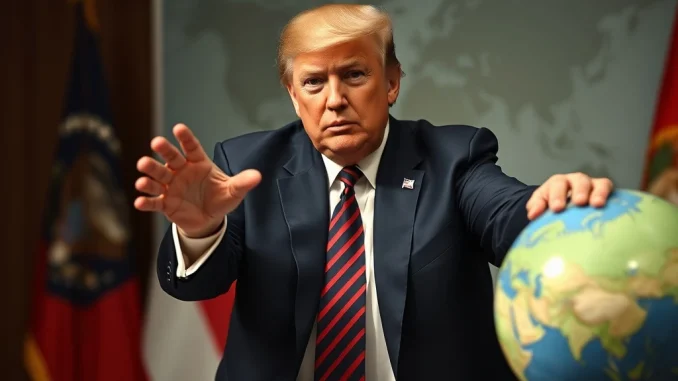
Former **US President Trump** recently articulated a clear preference for rapid diplomatic solutions. According to Walter Bloomberg on X, citing Axios, President Trump stated that a **fast peace deal** is superior to a ceasefire. This statement was made during a call. It highlights a specific approach to conflict resolution. Such a stance prioritizes decisive action in international diplomacy. This view suggests that prolonged pauses in conflict, while seemingly beneficial, might not always lead to lasting peace.
A ceasefire, for instance, typically involves a temporary cessation of hostilities. It aims to create space for negotiations. However, ceasefires do not resolve underlying issues. They often leave conflicts simmering. A comprehensive peace deal, conversely, seeks to address the root causes of conflict. It establishes terms for a lasting resolution. This distinction is vital for understanding the former President’s position. He appears to favor a definitive end to disputes rather than temporary pauses.
The emphasis on a **fast peace deal** suggests a desire to avoid protracted negotiations. It also aims to prevent the re-escalation of violence. This approach could streamline diplomatic efforts. It might also reduce the human and economic costs of ongoing conflicts. Many observers note the complexities inherent in achieving such swift agreements. However, the stated preference underscores a strategic viewpoint on **international relations**.
Understanding the Nuance: Peace Deal vs. Ceasefire
To fully grasp President Trump’s statement, it is essential to differentiate between a peace deal and a ceasefire. While both aim to reduce violence, their scope and intent vary significantly. A ceasefire is a temporary agreement. It stops active fighting for a specific period. This pause often allows for humanitarian aid. It can also facilitate initial discussions between warring parties. However, a ceasefire does not resolve core disputes. It often lacks mechanisms for long-term stability.
Conversely, a peace deal represents a comprehensive agreement. It formally ends a conflict. This type of deal addresses fundamental issues. It outlines terms for coexistence, borders, governance, and resource sharing. Peace deals typically involve extensive negotiations. They require significant concessions from all sides. Therefore, achieving a **fast peace deal** is inherently challenging. It demands strong political will and effective mediation. President Trump’s call highlights a strategic preference for conclusive outcomes. He values definitive resolutions over interim measures. This approach seeks to build lasting **geopolitical stability**.
The historical record shows that ceasefires can sometimes become prolonged. They may fail to transition into genuine peace. This can leave populations in a state of limbo. It also keeps regional tensions high. A **Trump peace deal** philosophy, therefore, leans towards accelerating the process. It aims to move directly to a permanent solution. This avoids the potential pitfalls of extended periods of instability. This perspective shapes how future US foreign policy might approach global conflicts. It underscores a desire for clear, actionable results in **international relations**.
Implications for Global Geopolitical Stability
The notion of prioritizing a **fast peace deal** carries significant implications for global **geopolitical stability**. When conflicts are resolved quickly, it can reduce humanitarian crises. It can also stabilize regional economies. Prolonged conflicts, by contrast, often lead to widespread displacement. They disrupt trade routes and undermine economic development. Therefore, a swift resolution could foster a more predictable global environment. This benefits all nations, including those far from the immediate conflict zones.
From an economic perspective, greater stability generally encourages investment. It also promotes growth. Unresolved conflicts create uncertainty. This deters foreign capital and impacts supply chains. For example, disruptions in key regions can affect commodity prices. They can also influence global shipping. These effects can ripple into various sectors. This includes the digital asset market. Therefore, discussions around **geopolitical stability** are relevant to a broad audience. This includes those interested in the broader financial landscape.
A proactive approach to conflict resolution, as advocated by **US President Trump**, could reshape diplomatic strategies worldwide. Other nations might consider adopting similar expedited processes. This could lead to more efficient conflict resolution. However, the complexity of many international disputes means that ‘fast’ does not always equate to ‘effective’ or ‘just.’ The pursuit of a **fast peace deal** must balance speed with thoroughness. It must also ensure fairness to all parties involved. This balance is crucial for achieving genuine and lasting **international relations**.
Examining the Challenges of a Fast Peace Deal
While the concept of a **fast peace deal** is appealing, its implementation faces numerous challenges. Complex conflicts often involve multiple factions. They have deep-rooted historical grievances. Reaching a comprehensive agreement quickly requires immense diplomatic skill. It also demands significant concessions from all sides. Often, external mediators play a crucial role. They help bridge divides and build trust. Yet, even with strong mediation, internal political dynamics can hinder progress.
Furthermore, the terms of a rapid agreement might not fully address all underlying issues. This could lead to future instability. For instance, if a deal is rushed, it might overlook critical concerns of minority groups. It could also fail to establish robust governance structures. Such oversights can sow the seeds for renewed conflict. Therefore, the speed of a resolution must be weighed against its long-term viability. This ensures that the peace is truly sustainable. This consideration is vital for achieving lasting **geopolitical stability**.
The role of international law and human rights also becomes paramount. Any **Trump peace deal** framework would need to respect these principles. This ensures legitimacy and widespread acceptance. Moreover, enforcing a fast agreement can be difficult. It requires ongoing commitment from all signatories and international oversight. These factors illustrate the intricate nature of achieving a truly effective and swift resolution. The pathway to genuine **international relations** is often paved with careful negotiation, not just speed.
The Broader Context of International Relations
The discussion surrounding a **fast peace deal** fits into the broader context of **international relations**. Nations constantly navigate complex alliances and rivalries. They also contend with global challenges. These include economic competition, climate change, and pandemics. Conflict resolution is a cornerstone of this intricate web. The approach taken by major global powers, such as the United States, significantly influences the international landscape. Therefore, statements from figures like **US President Trump** resonate widely.
Diplomatic efforts are ongoing across many fronts. Various international bodies and regional organizations play key roles. They work to prevent, mediate, and resolve conflicts. The emphasis on speed, as articulated by President Trump, could signal a more interventionist or decisive foreign policy stance. This might encourage other nations to accelerate their own diplomatic initiatives. It could also prompt a re-evaluation of traditional negotiation timelines. This shift could potentially lead to more dynamic global diplomacy.
Ultimately, the goal of any peace initiative is to achieve lasting peace. It also aims to improve human welfare. Whether a **fast peace deal** or a more gradual approach is superior depends on specific circumstances. Each conflict presents unique challenges. The debate over speed versus thoroughness will likely continue. This ongoing discussion shapes the future of **geopolitical stability** and how nations interact on the global stage.
Understanding US President Trump’s Diplomatic Stance
Former **US President Trump’s** recent remarks underscore a consistent theme in his approach to foreign policy. He often advocates for direct, decisive action. This contrasts with more drawn-out diplomatic processes. His statement regarding a **fast peace deal** over a ceasefire reflects this preference. It suggests a desire to minimize prolonged periods of uncertainty and conflict. Such an approach aims to bring about conclusive outcomes more quickly. This can reduce the human and economic toll of ongoing hostilities.
This perspective also highlights a focus on tangible results. It prioritizes the establishment of a formal peace agreement. This is seen as more beneficial than a temporary truce. A ceasefire, while providing immediate relief, can sometimes prolong the underlying conflict. It can also create a false sense of security. Therefore, the call for a swift resolution aims to push parties towards a definitive settlement. This promotes a more stable environment.
The implications of this stance extend to how future US foreign policy might engage with global disputes. It could lead to increased pressure for rapid negotiations. It might also encourage more assertive mediation efforts. Ultimately, the goal is to enhance **geopolitical stability**. This is achieved by moving from conflict to resolution with greater speed and efficiency. This emphasis on decisive action continues to shape discussions around **international relations** and peace-building efforts.
Frequently Asked Questions (FAQs)
Q1: What is the main difference between a peace deal and a ceasefire?
A peace deal is a comprehensive, formal agreement that permanently ends a conflict by addressing its root causes and establishing terms for long-term coexistence. A ceasefire, conversely, is a temporary cessation of hostilities, typically used to create a pause in fighting, often for negotiations or humanitarian aid, but it does not resolve the underlying issues.
Q2: Why did US President Trump state a preference for a fast peace deal?
US President Trump’s preference for a fast peace deal suggests a desire for decisive action in international diplomacy. He believes that a swift, conclusive resolution is better than a prolonged ceasefire, which might not lead to lasting peace and could allow conflicts to linger or re-escalate.
Q3: How could a fast peace deal impact global geopolitical stability?
A fast peace deal could significantly enhance global geopolitical stability by reducing humanitarian crises, stabilizing regional economies, and fostering a more predictable international environment. Prolonged conflicts create uncertainty, deter investment, and disrupt global trade, all of which are mitigated by swift resolutions.
Q4: What challenges are associated with achieving a fast peace deal?
Achieving a fast peace deal is challenging due to the complexity of conflicts, deep-rooted grievances, and the need for significant concessions from all parties. Rushed agreements might also fail to address all underlying issues, potentially leading to future instability if critical concerns are overlooked.
Q5: How do geopolitical events like this affect financial markets, including cryptocurrency?
Geopolitical events, particularly those affecting stability, can significantly impact financial markets. Increased stability generally encourages investment and growth, while uncertainty from prolonged conflicts deters capital. While indirect, this broader market sentiment can ripple into the cryptocurrency space, influencing investor behavior and asset valuations.