Donald Trump’s recent suggestion about imposing **Trump NATO tariffs** on China has ignited significant global debate. This bold proposal, aimed at leveraging Beijing’s considerable influence to hasten **Ukraine war resolution**, could dramatically reshape global economic and political landscapes. For those closely observing international market shifts and geopolitical strategies, understanding such an impactful suggestion is crucial.
Understanding the Trump NATO Tariffs Proposal
Former U.S. President Donald Trump recently outlined a controversial strategy. He proposed that NATO member countries should impose substantial tariffs on goods from China. Specifically, these tariffs would range from 50% to an astonishing 100%. Furthermore, Trump stated these punitive measures would be temporary. He suggested they would remain in effect only until the ongoing conflict between Russia and Ukraine concludes. This condition is a key aspect of his plan. Trump believes China possesses significant economic and political sway over Russia. Therefore, these powerful tariffs aim to weaken China’s position. He argues this would compel Beijing to exert pressure on Moscow, ultimately facilitating an end to the war.
Analyzing China Russia Influence Dynamics
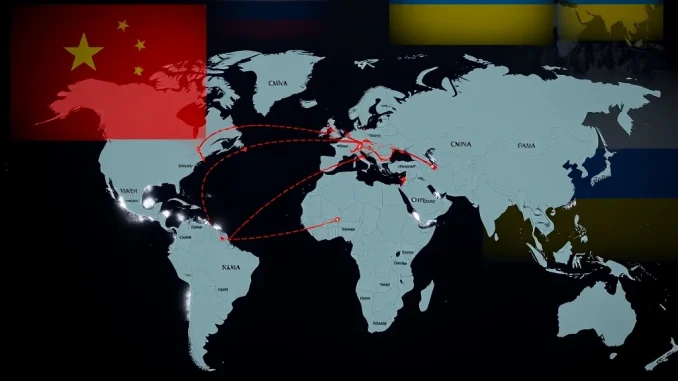
The relationship between China and Russia has deepened considerably, particularly since Russia’s full-scale invasion of Ukraine. China has become a vital economic lifeline for Russia, especially as Western nations imposed their own sanctions. For instance, China’s purchases of Russian oil and gas have provided crucial revenue for Moscow. Moreover, the two nations share a strategic partnership, often engaging in joint military exercises and aligning diplomatically on various international issues. This close relationship forms the basis of Trump’s argument. He contends that this strong bond gives China substantial **China Russia influence**. This influence could, in theory, be used to sway Russia’s actions in Ukraine. However, the exact extent of this leverage and China’s willingness to use it for conflict resolution remain complex questions.
Pathways to Ukraine War Resolution
Trump’s proposal offers an unconventional pathway toward **Ukraine war resolution**. His theory suggests that immense economic pressure on China would translate into direct pressure on Russia. This represents an indirect approach to ending the conflict. Traditionally, efforts to resolve the Ukraine war have focused on direct military aid to Ukraine, diplomatic negotiations, and sanctions directly targeting Russia. This new strategy, however, shifts the focus. It aims to use a third party, China, as a lever. Critics often question whether China would prioritize ending the war over its strategic partnership with Russia. Also, NATO is primarily a military alliance. Its direct involvement in imposing economic tariffs on a non-member nation like China would mark a significant expansion of its traditional role.
The Potential for Global Trade Sanctions
Implementing such high **global trade sanctions** would trigger profound economic consequences worldwide. For China, facing 50-100% tariffs from major economies would represent an enormous economic blow. This could severely disrupt its export-driven economy and global supply chains. Consequently, consumers in NATO countries would likely face significantly higher prices for a vast array of goods. Businesses would also need to seek out new suppliers, leading to further market instability. Furthermore, China could retaliate by imposing its own counter-tariffs on NATO member states. This scenario risks escalating into a full-blown trade war. Such an event would undoubtedly have ripple effects across the global economy, potentially leading to inflation and a slowdown in economic growth. The proposal also sets a powerful precedent. It suggests using trade as a direct weapon in international conflicts, fundamentally altering established norms.
Examining Economic Leverage China Holds
China’s position as the world’s manufacturing hub gives it immense **economic leverage China** holds over global markets. Many nations rely heavily on Chinese-made goods, from consumer electronics to industrial components. Its vast internal market also presents attractive opportunities for international businesses. Imposing severe tariffs, as Trump suggests, would expose vulnerabilities for all parties involved. While NATO countries aim to pressure China, they themselves depend on its production capabilities. Conversely, China also relies on access to international markets for its economic prosperity. Moreover, China controls a significant portion of the world’s critical minerals. These are essential for various advanced technologies. Therefore, any disruption to trade with China could have far-reaching technological and economic consequences globally.
Geopolitical Implications and Future Outlook
The geopolitical implications of Trump’s tariff proposal are extensive and complex. Such aggressive economic measures could inadvertently push China even closer to Russia. This might solidify an anti-Western bloc. It could also expand NATO’s mandate beyond its traditional military alliance role into economic coercion. This raises questions about international law and the ethics of using trade as a primary tool in conflict resolution. The long-term impact on global trade relationships and diplomatic norms would be significant. International relations could become more transactional and confrontational. The outcome of such a strategy remains highly speculative. It would depend on numerous factors, including China’s response, NATO’s unity, and the evolving dynamics of the Ukraine conflict.
Ultimately, Donald Trump’s suggestion of **Trump NATO tariffs** on China to end the Ukraine war is a bold, albeit controversial, proposition. It highlights the intricate web of global economics and geopolitics. The debate surrounding this idea underscores the challenges in achieving **Ukraine war resolution** and the potential for **global trade sanctions** to reshape international relations. The effectiveness of leveraging **China Russia influence** through economic pressure remains a subject of intense discussion among policymakers and economists worldwide.
Frequently Asked Questions (FAQs)
What exactly is Trump’s proposal regarding NATO and China?
Donald Trump proposed that NATO member countries should impose tariffs of 50% to 100% on goods imported from China. He suggested these tariffs would be lifted once the Russia-Ukraine war concludes. The aim is to pressure China into using its influence over Russia to end the conflict.
Why does Trump believe China can influence Russia?
Trump believes China holds significant influence over Russia due to their deepening economic and strategic partnership. China has become a major buyer of Russian energy and a key diplomatic ally, providing Russia with crucial support amidst Western sanctions. This **China Russia influence** is seen as a potential lever for peace.
What are the potential economic consequences of such tariffs?
Implementing such high **Trump NATO tariffs** could lead to severe economic disruption. China would face a significant blow to its export economy. NATO countries could experience higher consumer prices and supply chain issues. There is also a risk of retaliatory tariffs from China, potentially escalating into a global trade war and causing economic slowdown.
Is it common for NATO to impose economic tariffs?
No, NATO is primarily a military and political alliance focused on collective defense. Imposing widespread economic tariffs on a non-member country like China would be a significant departure from its traditional role. Such a move would represent an expansion of its mandate into economic coercion.
How might this proposal affect the **Ukraine War Resolution**?
The proposal aims to indirectly facilitate **Ukraine war resolution** by pressuring China to influence Russia. The theory is that if China faces severe economic consequences, it might compel Moscow to de-escalate or end the conflict. However, the effectiveness of this indirect approach and China’s willingness to comply are highly debated.
What are the main criticisms of Trump’s tariff proposal?
Critics argue that the tariffs could harm NATO economies, trigger a trade war, and push China closer to Russia, potentially worsening geopolitical tensions. They also question the feasibility of China using its influence in the way Trump suggests and whether such economic measures are an appropriate tool for conflict resolution.