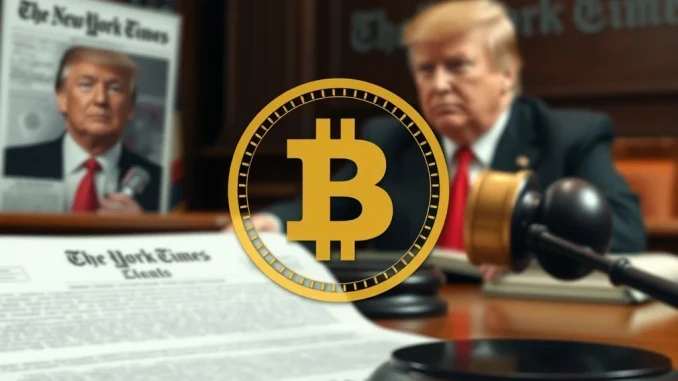
A significant legal battle has erupted, capturing widespread attention across political and financial sectors. President Donald Trump has initiated a massive $15 billion defamation lawsuit against The New York Times. This legal action stems from the newspaper’s reporting on his memecoin, as initially reported by Decrypt. This development marks a pivotal moment, intertwining high-stakes politics with the volatile world of digital assets. Consequently, the cryptocurrency community watches closely for updates.
Understanding the Donald Trump Lawsuit
The lawsuit asserts that The New York Times maliciously published false information. This alleged false reporting, according to the complaint, severely damaged the reputation of President Trump’s memecoin. Furthermore, it claims significant economic losses. These losses reportedly impact the value of Trump’s brand, real estate, and other extensive business interests. The complaint specifically targets the newspaper’s coverage, suggesting a deliberate intent to harm. Therefore, this legal challenge underscores the growing scrutiny around public figures and their involvement in the crypto space.
The core of the allegation centers on defamation. Trump’s legal team argues that the newspaper’s articles presented misleading or incorrect facts. This, they claim, directly led to a devaluation of his associated digital assets and broader financial portfolio. Such a large claim, $15 billion, highlights the perceived extent of the damage. It also signals the seriousness with which the former President views the newspaper’s reporting. Legal experts are now analyzing the merits of the case.
Allegations of NYT Defamation and Economic Impact
The lawsuit details how The New York Times’ reporting allegedly caused substantial financial harm. President Trump’s filing states the articles created a negative perception. This perception, in turn, purportedly eroded investor confidence in his ventures, including his memecoin. Consequently, the value of these assets suffered. The legal team seeks to prove a direct correlation between the newspaper’s publications and the reported economic decline. This is a crucial element in any defamation claim involving financial damages. Therefore, proving malicious intent and direct causation will be key for the plaintiff.
The specific claims include:
- **Reputational Damage:** The articles allegedly tarnished President Trump’s public image and business credibility.
- **Economic Losses:** Direct financial impact on his memecoin’s value and other business holdings.
- **Malicious Intent:** The lawsuit argues The New York Times acted with actual malice, knowingly publishing false information or with reckless disregard for the truth.
These allegations paint a picture of deliberate harm. Proving such intent in a court of law can be challenging. However, the sheer scale of the claimed damages makes this a landmark case. It potentially sets new precedents for media responsibility regarding cryptocurrency reporting.
The Role of Trump Memecoin in the Controversy
Memecoins have emerged as a unique, often volatile, segment of the cryptocurrency market. These digital tokens frequently derive their value from internet memes, social media trends, or celebrity endorsements. In this instance, the focus is on a **Trump memecoin**. This type of asset typically sees price fluctuations based on public sentiment and speculative trading. The New York Times’ reporting, according to the lawsuit, negatively influenced this sentiment. This, in turn, led to the alleged economic losses. The case thus brings the often-unregulated world of memecoins into a traditional legal spotlight.
For many, the concept of a memecoin tied to a political figure is novel. These tokens often leverage existing fan bases or political movements for viral adoption. However, their inherent volatility makes them susceptible to external influences, including media coverage. The lawsuit underscores the potential legal ramifications when such digital assets are involved. It raises questions about how traditional media outlets report on these emerging financial instruments. Additionally, it highlights the perceived impact of such reporting on the assets’ creators.
Wider Implications for Trump Crypto and Media Reporting
This **memecoin lawsuit** extends beyond just Donald Trump and The New York Times. It has broader implications for the entire **Trump crypto** ecosystem. As more public figures venture into the digital asset space, similar legal challenges could arise. The outcome of this case may influence how media organizations approach reporting on cryptocurrencies, especially those linked to high-profile individuals. It could also set a precedent for how damages are assessed in cases involving intangible digital assets.
The cryptocurrency market, by its nature, is highly sensitive to news and public perception. Negative reporting can trigger rapid price declines. Conversely, positive news can fuel rallies. This lawsuit brings to the forefront the power of media in shaping market dynamics within the crypto sector. Consequently, both media organizations and crypto project creators will likely observe this case closely. It will help them understand the evolving legal landscape surrounding digital assets and public discourse.
Navigating the Legal Landscape of Defamation
Defamation lawsuits, particularly those involving public figures and media outlets, are complex. To succeed, President Trump’s legal team must demonstrate several key points:
- The New York Times published a false statement of fact.
- The statement was about President Trump.
- The statement was published to a third party.
- The publication caused damage to President Trump’s reputation.
- Crucially, for a public figure, actual malice must be proven. This means the newspaper published the information knowing it was false or with reckless disregard for the truth.
Meeting the ‘actual malice’ standard is often the highest hurdle in such cases. The defense will likely argue their reporting was factual, protected by journalistic privilege, and lacked malicious intent. Therefore, the legal proceedings promise to be contentious and closely watched. The case will undoubtedly provide significant insights into the intersection of media law, public figures, and digital assets.
The Future of Memecoins and Celebrity Endorsements
The legal action initiated by Donald Trump could have lasting effects on the memecoin market. It might make public figures more cautious about endorsing or launching their own digital assets. Conversely, it could also lead to more robust legal frameworks protecting creators from what they perceive as false media reporting. The controversy surrounding the **Trump memecoin** highlights the inherent risks and rewards associated with these highly speculative assets. It underscores the need for transparency and responsible reporting in the fast-paced crypto world.
Ultimately, this lawsuit represents a significant clash between traditional media and the burgeoning digital economy. The outcome will undoubtedly shape future interactions and legal interpretations. It will impact how news organizations cover cryptocurrencies and how public figures engage with blockchain technology. This ongoing legal battle will certainly remain a topic of intense discussion and analysis.
Frequently Asked Questions (FAQs)
What is the core allegation in Donald Trump’s lawsuit against The New York Times?
President Donald Trump alleges that The New York Times published false and defamatory information concerning his memecoin. He claims this reporting caused significant economic losses to his brand, real estate, and other business interests.
How much is Donald Trump suing The New York Times for?
Donald Trump has filed a $15 billion defamation lawsuit against The New York Times.
What is a Trump memecoin?
A Trump memecoin is a type of cryptocurrency token, often highly speculative, whose value is typically derived from internet memes, social media trends, or the public persona of Donald Trump. Its price can be highly volatile and influenced by public sentiment.
Why is the lawsuit significant for the cryptocurrency market?
This lawsuit is significant because it brings a high-profile legal battle into the often-unregulated memecoin space. Its outcome could influence how media reports on celebrity or political cryptocurrencies and how damages are assessed for digital assets.
What does ‘actual malice’ mean in the context of this NYT defamation lawsuit?
In a defamation case involving a public figure like Donald Trump, ‘actual malice’ means the defendant (The New York Times) published the information either knowing it was false or with reckless disregard for whether it was true or false. Proving this is a high legal standard.
What are the potential outcomes of this memecoin lawsuit?
Potential outcomes range from a dismissal of the lawsuit, a settlement between the parties, or a court ruling in favor of either Trump or The New York Times. The legal process will likely be lengthy and could set precedents for media reporting on digital assets.