In the volatile landscape of global politics, statements from world leaders often send ripples across financial markets, including the burgeoning cryptocurrency sector. Recently, former U.S. President Donald Trump issued a significant warning. His words suggest a potential shift in U.S. policy regarding the ongoing conflict in the Middle East. For cryptocurrency enthusiasts, understanding these geopolitical tremors is crucial. Such events can influence market sentiment and asset valuations. This article delves into Trump’s pronouncement and explores its far-reaching implications.
Trump Gaza Intervention: A Stern Warning Issued
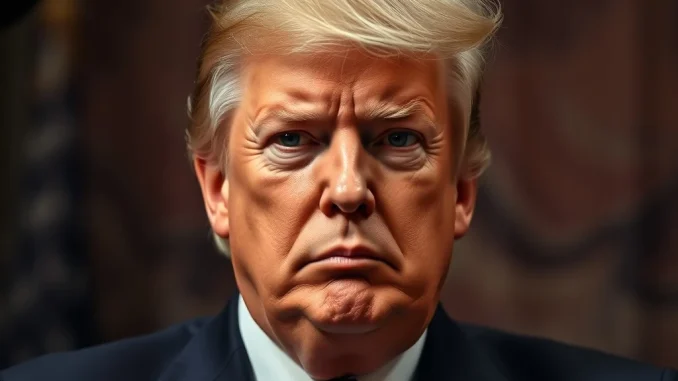
According to reports from Walter Bloomberg, former U.S. President Donald Trump recently articulated a stern warning. He stated that continued killings by Hamas in the Gaza Strip would constitute a breach of existing agreements. Trump emphasized a potential lack of alternative for the United States. He suggested that intervention to neutralize the threat could become inevitable. This declaration underscores a firm stance. It also highlights the complexities of Middle Eastern geopolitics. Such a statement from a former commander-in-chief carries significant weight. It signals potential future actions or shifts in foreign policy rhetoric.
The implications of this warning are profound. It suggests a low tolerance for continued violence in the region. Moreover, it hints at a more assertive American role. Observers are now considering various scenarios. These range from diplomatic pressures to more direct engagement. The international community watches closely. They assess the potential ramifications of such a declaration. This includes global security and economic stability. Therefore, understanding the nuances of this statement is paramount. It affects both political analysts and market participants.
Hamas Killings Gaza: The Context of the Conflict
The Gaza Strip remains a focal point of protracted conflict. It involves Israel, Hamas, and other factions. Hamas, a Palestinian Sunni-Islamist fundamentalist organization, controls Gaza. They have been designated as a terrorist organization by several countries. These include the United States and the European Union. The conflict often involves periods of intense violence. This results in significant civilian casualties. Trump’s warning directly addresses these ongoing hostilities. He points to the continued loss of life as a critical trigger for potential U.S. action.
The history of the region is complex. It is marked by disputes over land, sovereignty, and security. Various ceasefires and agreements have been attempted. Many have failed to achieve lasting peace. The former President’s statement brings renewed attention to these broken agreements. It suggests a limit to the international community’s patience. The situation demands careful diplomatic navigation. It also requires a robust humanitarian response. The human cost of the conflict is immense. Thus, any talk of intervention raises significant concerns.
Understanding US Middle East Policy Shifts
U.S. Middle East policy has historically balanced several objectives. These include:
- Promoting regional stability.
- Ensuring Israel’s security.
- Countering terrorism.
- Protecting oil interests.
During his presidency, Donald Trump pursued a distinct approach. He brokered the Abraham Accords. These normalized relations between Israel and several Arab nations. His recent warning could signify a return to a more interventionist posture. This contrasts with some of his previous ‘America First’ rhetoric. Such a shift could reshape regional alliances. It might also alter diplomatic strategies. The Middle East is a strategically vital region. Therefore, any change in U.S. policy sends significant signals globally. This impacts geopolitical calculations worldwide.
A potential U.S. intervention, even if rhetorical, can have multiple facets. It might involve:
- Increased diplomatic pressure on Hamas.
- Enhanced military aid to regional allies.
- Targeted operations against specific threats.
- Broader military engagement if conditions escalate.
The precise nature of any intervention remains speculative. However, the intent behind the warning is clear. It aims to deter further violence. It also seeks to enforce compliance with agreements. This evolving policy landscape warrants close observation. It holds implications for global security and economic stability.
Geopolitical Impact Crypto: How Global Events Affect Digital Assets
The world of cryptocurrency, while decentralized, is not immune to global events. Geopolitical instability often creates uncertainty in traditional markets. This can lead investors to seek safe-haven assets. Conversely, it can also trigger a broad risk-off sentiment. Bitcoin, often dubbed ‘digital gold,’ has historically shown mixed reactions to crises. Sometimes, it acts as a hedge against inflation and instability. At other times, it moves in tandem with risk assets like stocks. A potential U.S. intervention in Gaza would undoubtedly be a major geopolitical event.
Such an event could impact crypto markets in several ways:
- Increased Volatility: Heightened uncertainty typically leads to price swings.
- Safe-Haven Demand: Some investors might flock to Bitcoin, viewing it as a non-sovereign store of value.
- Risk-Off Selling: Others might liquidate all risky assets, including cryptocurrencies, to hold cash.
- Regulatory Scrutiny: Geopolitical tensions can sometimes lead to increased calls for stricter crypto regulations.
The overall sentiment would depend on the perceived severity and duration of the conflict. It would also depend on the global economic response. Traders and investors must monitor these developments closely. They should prepare for potential market shifts. The interconnectedness of global finance means no asset class operates in a vacuum. Therefore, understanding the broader geopolitical context is vital for crypto investors.
Navigating Global Market Stability Amidst Tensions
Global market stability is a delicate balance. It relies on a complex interplay of economic indicators, political decisions, and geopolitical events. A significant intervention by the U.S. in the Middle East could disrupt this balance. Energy prices, for instance, are highly sensitive to Middle East stability. Spikes in oil prices can trigger inflation. This affects consumer spending and corporate profits globally. Moreover, investor confidence can erode quickly. This leads to capital flight from emerging markets.
Central banks might react to such instability. They could adjust interest rates or implement quantitative easing measures. These actions, in turn, influence the attractiveness of different asset classes. Bond yields might fluctuate. Stock markets could experience downturns. For the crypto market, these broader economic shifts are critical. They determine the macroeconomic environment in which digital assets operate. A stable global environment generally fosters risk-on investing. Conversely, instability often pushes investors towards caution. Therefore, the implications of Trump’s warning extend far beyond regional borders. They touch upon the very foundations of global financial stability. Investors must remain vigilant and adapt their strategies accordingly.
The Broader Implications of US Intervention in Gaza
A U.S. intervention, as warned by Donald Trump, carries significant geopolitical weight. It could signal a renewed commitment to enforcing international agreements. It might also reflect a determination to protect regional allies. However, it also presents substantial risks. An intervention could:
- Escalate regional conflicts, drawing in more actors.
- Lead to humanitarian crises due to increased fighting.
- Strain diplomatic relations with countries holding differing views.
- Incur significant economic costs for the intervening nation.
The Middle East is a region with intricate historical grievances and alliances. Any external intervention risks unintended consequences. It could destabilize fragile peace efforts. It might also empower extremist groups. Therefore, the global community would scrutinize any U.S. action. The focus would be on its legality, proportionality, and long-term effectiveness. The ripple effects would be felt across various sectors. These include energy markets, international trade, and global security frameworks.
Potential Impact on International Relations and Alliances
A direct U.S. intervention could profoundly impact international relations. Allies might either support or condemn such a move. This depends on their own national interests and diplomatic stances. Regional powers would certainly reassess their positions. This could lead to new alliances or deepened rivalries. The role of international bodies, like the United Nations, would also come under focus. They would face pressure to mediate or respond. This complex web of international dynamics highlights the gravity of Trump’s statement. It is not merely a regional issue. Instead, it is a global concern with far-reaching diplomatic consequences.
The warning itself serves as a powerful deterrent. It aims to prevent further escalation of violence by Hamas. Whether it achieves this goal remains to be seen. However, its utterance alone has injected a new layer of uncertainty into the geopolitical landscape. This uncertainty, in turn, contributes to market fluctuations. It underscores the need for continuous monitoring by all global stakeholders, including cryptocurrency investors.
Conclusion: Monitoring Geopolitical Shifts for Market Insights
Donald Trump’s warning regarding potential U.S. intervention in Gaza represents a critical development. It highlights the ongoing volatility in the Middle East. Furthermore, it underscores the complex challenges of international diplomacy. While seemingly distant from the world of digital assets, such geopolitical shifts have tangible effects. They influence global market stability, investor sentiment, and asset valuations, including cryptocurrencies. Bitcoin, often seen as a barometer of market sentiment, could react significantly. Its price movements will reflect the prevailing risk appetite or aversion.
Therefore, staying informed about these developments is not just for political analysts. It is essential for anyone involved in financial markets. This includes those navigating the dynamic crypto space. The interplay between geopolitics and finance is undeniable. It necessitates a holistic understanding of global events. As the situation evolves, continuous monitoring will be crucial. It will help investors make informed decisions. The future trajectory of the Middle East conflict, and the U.S. response, will undoubtedly shape global dynamics for years to come.
Frequently Asked Questions (FAQs)
Q1: What exactly did Donald Trump say about U.S. intervention in Gaza?
Donald Trump stated that if Hamas continues its killings in the Gaza Strip, it would breach existing agreements. He warned that the U.S. would then have no choice but to intervene to stop them.
Q2: Why is this statement significant for global markets?
Statements from major global leaders regarding potential military intervention can create significant geopolitical instability. This often leads to increased volatility in traditional financial markets and can impact investor confidence worldwide.
Q3: How might a U.S. intervention in Gaza affect cryptocurrency markets?
A U.S. intervention could lead to increased volatility in crypto markets. Bitcoin might see demand as a safe-haven asset, or conversely, a broad risk-off sentiment could cause selling across all cryptocurrencies. The specific impact would depend on the severity and perception of the conflict.
Q4: What is Hamas’s role in the Gaza Strip?
Hamas is a Palestinian Sunni-Islamist fundamentalist organization that currently controls the Gaza Strip. It is designated as a terrorist organization by several countries, including the U.S. and the EU, and is a key party in the Israeli-Palestinian conflict.
Q5: What are the broader implications of such a U.S. policy shift?
A U.S. intervention could escalate regional conflicts, lead to humanitarian crises, strain international diplomatic relations, and incur significant economic costs. It would also signal a potentially more assertive U.S. foreign policy stance in the Middle East.
Q6: How can investors prepare for geopolitical impacts on their crypto portfolios?
Investors should stay informed about global geopolitical developments. They should consider diversifying their portfolios, maintaining a portion in less volatile assets, and avoiding emotional trading decisions during periods of high uncertainty. Monitoring market reactions to similar past events can also provide insights.