In the dynamic world of cryptocurrency, market movements are often intertwined with broader macroeconomic shifts. A recent revelation from Walter Bloomberg on X suggests a potentially significant development on the horizon: former U.S. President Donald Trump is reportedly set to name new key figures to the Federal Reserve (Fed) and the Bureau of Labor Statistics (BLS). For crypto enthusiasts, this isn’t just political news; it’s a signal that could profoundly influence the very currents that drive digital asset valuations.
Trump Fed Appointments: A Glimpse into Future Policy
According to the latest buzz from Walter Bloomberg, U.S. President Donald Trump will soon appoint a replacement for Federal Reserve Governor Adriana Kugler and name a new Bureau of Labor Statistics (BLS) chief. The critical detail? These candidates are reportedly ‘rate-cut-friendly.’ This implies a strategic move to potentially influence monetary policy towards a more accommodative stance, which could have ripple effects across all financial markets, including the volatile realm of digital assets. Such high-profile Trump Fed appointments are always closely watched, given the immense power these roles hold over the nation’s economic direction.
Understanding the Federal Reserve’s Pivotal Role
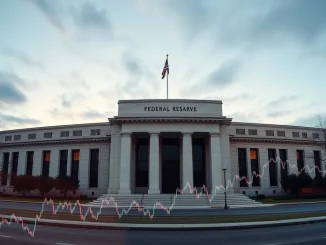
Why does the Federal Reserve matter so much? The Fed is the central bank of the United States, tasked with maintaining a stable financial system and conducting monetary policy. Its dual mandate is to achieve maximum employment and stable prices (low inflation). This is primarily done by adjusting the federal funds rate, which influences borrowing costs throughout the economy. When the Fed raises interest rates, it typically aims to cool down an overheating economy and curb inflation. Conversely, cutting rates is meant to stimulate economic growth.
Here’s a quick breakdown of the Fed’s core functions:
- Monetary Policy: Setting interest rates and controlling the money supply.
- Financial Stability: Supervising banks and maintaining the stability of the financial system.
- Payments System: Providing banking services to financial institutions and the U.S. government.
The appointment of a new Fed Governor, especially one with a specific policy leaning, can shift the balance within the Federal Open Market Committee (FOMC), the Fed’s primary monetary policy-making body. This shift can dictate the pace and direction of future rate decisions.
The Impact on Interest Rates: What to Expect?
The term ‘rate-cut-friendly’ is music to the ears of many investors, particularly those in riskier assets like cryptocurrencies. It suggests that the incoming appointees might favor lowering interest rates sooner or more aggressively than current policymakers. Lower interest rates generally translate to cheaper borrowing costs for businesses and consumers, stimulating economic activity. For the crypto market, this often means:
- Increased Liquidity: When traditional investments offer lower returns, investors often seek higher yields in risk assets like crypto.
- Reduced Cost of Capital: Businesses, including those in the crypto space, can borrow more cheaply for expansion and innovation.
- Weakened Dollar: Lower rates can lead to a weaker U.S. dollar, making dollar-denominated assets like Bitcoin more attractive to international investors.
Consider the contrast between ‘hawkish’ and ‘dovish’ monetary policy stances:
| Policy Stance | Interest Rates | Economic Impact | Crypto Market Impact |
|---|---|---|---|
| Hawkish (Anti-inflation) | Increase or maintain high | Slows growth, strengthens dollar, fights inflation | Negative (less liquidity, higher cost of capital, risk-off sentiment) |
| Dovish (Pro-growth) | Decrease or maintain low | Stimulates growth, weakens dollar, higher inflation risk | Positive (more liquidity, lower cost of capital, risk-on sentiment) |
A move towards dovish appointments could signal a significant shift from the tightening cycle seen in recent years, potentially ushering in a new era for asset valuations.
The Significance of the BLS Chief in Economic Policy
While the Federal Reserve sets monetary policy, its decisions are heavily reliant on economic data. This is where the BLS chief comes into play. The Bureau of Labor Statistics is the principal fact-finding agency for the U.S. government in the broad field of labor economics and statistics. It collects, processes, analyzes, and disseminates essential statistical data to the American public, Congress, and other federal agencies. Key reports include:
- Consumer Price Index (CPI): Measures inflation.
- Producer Price Index (PPI): Measures inflation at the wholesale level.
- Employment Situation Report: Includes non-farm payrolls, unemployment rate, and wage growth.
The BLS chief oversees the integrity and methodology of these crucial reports. While the data itself is objective, the way it’s collected, presented, and interpreted can subtly influence public and policy-maker perceptions. A new chief could potentially bring a different emphasis or focus to how this vital economic policy data is handled, which in turn feeds into the Fed’s decision-making process. Any perceived shift in how inflation or employment data is presented could have a significant impact on market sentiment.
Navigating Economic Policy Shifts: What This Means for Crypto
For those invested in or considering the crypto market, these potential appointments are more than just political maneuvers; they are fundamental economic indicators. A shift towards lower interest rates and a more growth-oriented economic policy could create a tailwind for digital assets, which have historically performed well in environments of ample liquidity and lower borrowing costs. However, it’s also crucial to consider the challenges:
- Market Volatility: Uncertainty surrounding appointments and policy shifts can lead to short-term volatility.
- Inflation Concerns: Aggressive rate cuts, if not managed carefully, could reignite inflation, which might prompt a reversal in policy later.
- Global Economic Factors: U.S. policy is one piece of a larger global puzzle. Geopolitical events and international economic trends will also play a role.
Actionable Insights for Crypto Investors:
- Stay Informed: Keep a close eye on official announcements regarding these appointments and subsequent statements from the Fed and BLS.
- Monitor Economic Data: Pay attention to CPI, PPI, and employment reports. Understand how these are interpreted by the market.
- Diversify: While lower rates can be beneficial, the crypto market remains inherently volatile. Diversification can help mitigate risks.
- Long-Term Perspective: Short-term reactions to news can be sharp. Focus on the long-term implications of sustained economic policy shifts.
Conclusion
The impending Trump Fed appointments and the naming of a new BLS chief represent a potentially pivotal moment for U.S. economic policy. With a stated aim for ‘rate-cut-friendly’ candidates, these changes could signal a significant shift towards more accommodative monetary conditions. For the cryptocurrency market, this development is particularly noteworthy, as lower interest rates and increased liquidity often create a more favorable environment for risk assets. While the precise impact remains to be seen, staying informed about these high-level economic shifts will be key for navigating the evolving landscape of digital finance.
Frequently Asked Questions (FAQs)
Q1: Who is Adriana Kugler, and why is her replacement significant?
A1: Adriana Kugler is a current Federal Reserve Governor. Her replacement is significant because Fed Governors are voting members of the Federal Open Market Committee (FOMC), which sets the federal funds rate. A new appointment, especially one described as ‘rate-cut-friendly,’ could alter the committee’s overall stance on monetary policy.
Q2: What is the Federal Reserve’s main goal when setting interest rates?
A2: The Federal Reserve’s main goal, often referred to as its dual mandate, is to achieve maximum employment and stable prices (low and stable inflation). Interest rate adjustments are a primary tool used to achieve these objectives.
Q3: How do changes in interest rates typically affect the cryptocurrency market?
A3: Generally, lower interest rates tend to be positive for the cryptocurrency market. This is because lower rates make traditional investments like bonds less attractive, encouraging investors to seek higher returns in riskier assets like crypto. They also increase overall market liquidity and reduce the cost of borrowing for crypto-related businesses.
Q4: What does ‘rate-cut-friendly’ mean in the context of these appointments?
A4: ‘Rate-cut-friendly’ suggests that the candidates being considered for the Fed and BLS roles would likely favor lowering interest rates or adopting a more accommodative monetary policy stance. This contrasts with a ‘hawkish’ approach, which prioritizes fighting inflation, often through higher rates.
Q5: What is the Bureau of Labor Statistics (BLS), and why is its chief important?
A5: The Bureau of Labor Statistics (BLS) is the primary U.S. government agency responsible for collecting and disseminating key economic data, such as inflation (CPI) and employment figures (non-farm payrolls). The BLS chief oversees the integrity and methodology of these reports, which are crucial inputs for the Federal Reserve’s monetary policy decisions and overall economic analysis.
Q6: When are these Trump Fed appointments expected to be announced?
A6: According to the initial report from Walter Bloomberg, the appointments are expected ‘this week.’ However, the exact timing of such high-profile government appointments can sometimes vary and is subject to official announcements from the White House.