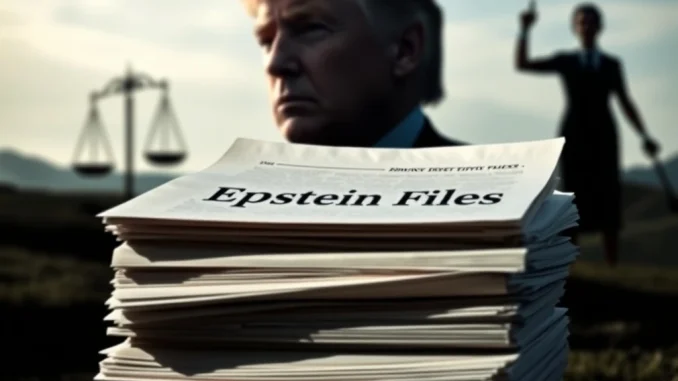
In the ever-evolving landscape of global news, where every headline can send ripples across markets and public sentiment, a significant political development has emerged. The revelation that former President Donald Trump’s name appeared in investigative records tied to the Jeffrey Epstein sex-trafficking case, with the Justice Department declining further action, has ignited a firestorm. While not directly a cryptocurrency story, the implications of such high-profile political events often resonate with broader themes of regulatory scrutiny, governmental trust, and the pursuit of truth – elements that deeply influence investor confidence across all asset classes, including digital currencies. This unfolding narrative surrounding the Trump Epstein files demands attention, not just for its political intrigue but for what it signals about transparency and accountability in the highest echelons of power.
Understanding the Core Revelation: Trump Epstein Files Come to Light
The political sphere was recently rocked by a Wall Street Journal report confirming that President Donald Trump’s name appeared in investigative records linked to the infamous Jeffrey Epstein sex-trafficking case. This disclosure, reportedly communicated to Trump by Attorney General Pam Bondi in May 2025, immediately intensified public and political scrutiny.
- The Briefing: Bondi, alongside Deputy Attorney General Todd Blanche, issued a joint statement affirming that Trump was briefed on these findings during routine updates.
- DOJ’s Stance: Crucially, their statement emphasized that “nothing in the files warranted further investigation or prosecution.” This firm stance from the Justice Department has become a central point of contention.
- Withholding Documents: The DOJ has refrained from confirming or denying specific details about the files’ contents, citing grave concerns over the presence of child pornography within the materials as a reason for withholding additional documents. This protective measure, while understandable, has fueled calls for greater transparency.
This initial revelation sets the stage for a complex legal and political battle, highlighting the delicate balance between privacy, national security, and public interest, especially concerning the sensitive nature of the Trump Epstein files.
The Intensifying Scrutiny of the DOJ Epstein Investigation
Following the initial reports, the focus quickly shifted to the DOJ Epstein investigation and the broader administration’s handling of these sensitive documents. Democratic leaders were swift to demand full transparency, expressing deep concerns about the potential for political interference or cover-ups.
Critics argue that the administration’s reluctance to release the full contents of the files undermines the principles of accountability, especially given the gravity of the Epstein case. Meanwhile, supporters of the administration dismiss the heightened attention as a partisan effort aimed at discrediting the president.
Trump himself has acknowledged a prior relationship with Epstein, even famously calling him a “terrific guy” in the past. However, he has consistently denied flying on Epstein’s private jet or engaging in any wrongdoing. Public records, including a 2016 deposition from an Epstein accuser, have indeed shown Trump’s name linked to the financier’s activities, but it is important to note that no evidence of criminal conduct on Trump’s part has ever been presented.
This ongoing debate underscores the profound challenges in navigating high-profile investigations, particularly when they involve prominent political figures and sensitive allegations.
Why is Political Transparency a Key Demand?
The demand for political transparency has become a rallying cry for many lawmakers and the public alike in the wake of the Epstein files revelation. The perceived lack of openness from the administration has led to significant legislative action and public outcry.
- Congressional Action: House Speaker Mike Johnson abruptly ended the summer recess, a move speculated by some to preempt a potential vote on releasing Epstein-related documents. This highlights the intense political pressure building around the issue.
- Bipartisan Subpoena: A bipartisan subcommittee took a decisive step, approving a subpoena for all Justice Department files related to the case. This measure saw three Republicans join five Democrats, signaling broad concern across the political spectrum.
- DOJ’s Resistance: Despite these demands, the Justice Department has yet to comply with such subpoenas, maintaining its stance on withholding the documents. Federal courts have also previously rejected requests to unseal grand jury transcripts, citing legal restrictions.
- Public Opinion: A recent Reuters/Ipsos poll revealed that over two-thirds of Americans believe the administration is concealing information about Epstein’s clients. This strong public sentiment adds significant weight to the calls for greater openness.
The persistent push for disclosure illustrates a fundamental tension between governmental discretion and the public’s right to know, making political transparency a defining issue in this unfolding saga.
Navigating the Justice Department’s Stance and Conflicting Narratives
The Justice Department’s position has been firm: no further action is warranted regarding Trump’s name in the Epstein files. However, this stance is met with skepticism and internal inconsistencies that further complicate the narrative.
White House spokesman Steven Cheung has consistently dismissed the reports as “fake news,” echoing the administration’s broader narrative that the issue is a manufactured story by “liberal media.” This strategy aims to discredit the reports and minimize their impact.
Yet, a duality has emerged in the administration’s approach:
- Directives for Release: Trump recently directed the DOJ to seek the release of sealed transcripts related to the Epstein case. This move suggests a desire for greater openness on his part.
- Legal Team’s Challenges: Simultaneously, his legal team continues to challenge media accounts of his interactions with Epstein. This creates a puzzling contradiction: a call for transparency from the president while his legal representatives dispute specific details.
These conflicting narratives raise significant questions about how the administration plans to reconcile its public statements with its legal actions as public scrutiny persists. The credibility of the Justice Department’s handling of the case remains under intense scrutiny.
The Broader Implications of the Epstein Case
The Epstein case, far from fading into obscurity, continues to serve as a critical focal point in broader debates over governmental accountability and the rule of law. The revelation concerning the Epstein case and its ties to high-profile figures transcends mere political scandal; it touches upon fundamental questions of justice, transparency, and public trust.
Lawmakers from both sides of the aisle have signaled their intent to maintain pressure for clarity and disclosure. This bipartisan push underscores the gravity of the allegations and the widespread desire for a complete understanding of what transpired and who was involved.
For the Trump administration, maintaining credibility in the face of these persistent questions will depend heavily on providing consistent and verifiable responses. The public and political spheres alike are demanding more than dismissals; they seek a comprehensive and transparent account. The ongoing saga of the Epstein case highlights the enduring power of public scrutiny and the imperative for government institutions to uphold the highest standards of integrity and openness.
Conclusion
The revelation that Donald Trump’s name appeared in the Jeffrey Epstein files, coupled with the Justice Department’s decision to decline further action, has ignited a fierce debate over transparency and accountability at the highest levels of government. While the administration maintains that no wrongdoing was found, and cites concerns over sensitive content for withholding documents, the public and lawmakers are demanding greater openness. The conflicting narratives from the White House and the persistent calls for full disclosure underscore the significant challenges faced by the administration in navigating this politically charged issue. As the push for answers continues, the outcome of this scrutiny will undoubtedly have lasting implications for public trust in governmental institutions and the pursuit of justice in high-profile cases.
Frequently Asked Questions (FAQs)
1. What is the main revelation regarding Donald Trump and Jeffrey Epstein?
The core revelation is that Donald Trump’s name appeared in investigative records related to the Jeffrey Epstein sex-trafficking case. This information was reportedly communicated to Trump by Attorney General Pam Bondi in May 2025.
2. Why is the Justice Department declining further action on these files?
According to a joint statement from Attorney General Pam Bondi and Deputy Attorney General Todd Blanche, nothing in the files warranted further investigation or prosecution. The Justice Department also cited concerns over child pornography in the materials as a reason for withholding additional documents.
3. What is the current stance of the Trump administration on these reports?
White House spokesman Steven Cheung has dismissed the reports as “fake news,” suggesting they are a manufactured story by “liberal media.” However, there have been internal inconsistencies, with Trump directing the DOJ to seek release of sealed transcripts while his legal team challenges media accounts.
4. How are lawmakers responding to the situation?
Lawmakers, including Democratic leaders and a bipartisan subcommittee, have demanded transparency and approved subpoenas for all Justice Department files related to the case. House Speaker Mike Johnson even abruptly ended the summer recess, reportedly to avoid a potential vote on releasing Epstein-related documents.
5. What is the public’s perception regarding the Epstein files?
A recent Reuters/Ipsos poll indicated that over two-thirds of Americans believe the administration is concealing information about Epstein’s clients, highlighting a widespread demand for greater transparency.