In the dynamic world of international relations, geopolitical shifts often create ripples across global markets, impacting everything from traditional equities to emerging asset classes like cryptocurrencies. Understanding the intricacies of high-level diplomacy, such as potential Trump Putin Zelenskyy meetings, therefore becomes crucial for a comprehensive market outlook. Recent reports indicate former President Donald Trump is considering separate diplomatic engagements with Russian President Vladimir Putin and Ukrainian President Volodymyr Zelenskyy. This potential move highlights a significant moment in global affairs.
Trump’s Diplomatic Initiative: Separate Meetings Planned
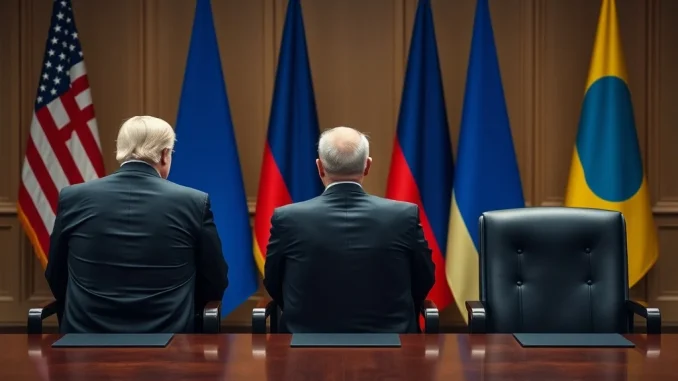
Former President Donald Trump has publicly stated his consideration for arranging distinct meetings with Russian President Vladimir Putin and Ukrainian President Volodymyr Zelenskyy. This announcement, initially reported by Walter Bloomberg, underscores a strategic approach to complex international dynamics. Trump noted the strained relationship between the two Eastern European leaders, suggesting separate discussions could be more productive. He also indicated a potential meeting with President Putin might occur within two weeks. This initiative reflects a focus on direct engagement, a hallmark of President Trump diplomacy during his previous term.
The rationale behind these separate engagements is clear. When leaders have significant disagreements, direct trilateral talks can become counterproductive. By meeting each leader individually, Trump aims to foster a more open dialogue. This method could allow for the exploration of common ground without the immediate tension of a joint session. Such an approach often seeks to build rapport and identify potential pathways for de-escalation or resolution. It also demonstrates a willingness to engage directly with key players in ongoing global conflicts.
Understanding the Rationale Behind Separate Trump Putin Zelenskyy Meetings
The idea of separate Trump Putin Zelenskyy meetings stems from a pragmatic assessment of their current relationship. President Trump observed that Putin and Zelenskyy “do not get along well.” This assessment is widely supported by the ongoing conflict between Russia and Ukraine. Consequently, a direct joint meeting might exacerbate tensions rather than alleviate them. A staggered approach, however, allows for different objectives to be pursued with each leader.
With President Putin, discussions might focus on broader security concerns and pathways to de-escalation. With President Zelenskyy, the emphasis could be on Ukraine’s sovereignty and reconstruction efforts. Furthermore, this strategy could allow Trump to act as a mediator. He could convey messages and explore concessions between the two nations without them being in the same room. This could be a delicate balancing act, requiring careful navigation of each leader’s priorities and grievances. Ultimately, the goal would be to lay groundwork for future, more comprehensive negotiations.
The Geopolitical Landscape: Why US Russia Ukraine Talks are Complex
The prospect of US Russia Ukraine talks, even indirectly, always carries immense geopolitical weight. The ongoing conflict has reshaped international alliances and economic landscapes. Any diplomatic efforts aimed at resolution are therefore watched closely by global powers. The complexity arises from deep-seated historical grievances, competing security interests, and the profound human cost of the conflict.
- Historical Context: The relationship between Russia and Ukraine has been fraught with tension for centuries, escalating significantly in recent decades.
- Security Concerns: Russia views NATO expansion as a direct threat, while Ukraine seeks stronger security guarantees from Western allies.
- Territorial Disputes: Control over key regions remains a primary point of contention, making any peace negotiations incredibly difficult.
- International Sanctions: Extensive sanctions imposed on Russia by Western nations add another layer of complexity to diplomatic discussions.
Navigating these issues requires a nuanced understanding of each nation’s strategic objectives. Moreover, any proposed solutions must consider the wider implications for European and global security. This makes the role of any mediator incredibly challenging, demanding significant diplomatic skill and a clear vision for sustainable peace.
Implications for Global Markets and Geopolitical Stability
Periods of heightened geopolitical tension often lead to market volatility. Investors seek safe-haven assets, and sentiment can shift rapidly. Conversely, diplomatic breakthroughs or even the credible prospect of talks can introduce a degree of stability. This can positively influence market confidence. The potential for Geopolitical stability, even if incremental, can reassure investors across various sectors. This includes the cryptocurrency market, which is increasingly sensitive to macro-economic and geopolitical events.
For instance, a perceived reduction in conflict risk could lead to increased investment appetite. It could also reduce the demand for traditional safe havens like gold. This might then free up capital for riskier assets, including digital currencies. However, the outcome of such high-stakes meetings is never guaranteed. Markets will react to both the anticipation and the actual results of these diplomatic efforts. Therefore, closely monitoring developments is essential for anyone tracking global economic trends and investment opportunities.
President Trump Diplomacy: Navigating International Relations
Throughout his presidency, Donald Trump demonstrated a distinctive approach to foreign policy. He often favored direct negotiations and personal relationships with foreign leaders. This style of President Trump diplomacy sometimes bypassed traditional diplomatic channels. His willingness to engage with leaders considered adversaries by others was a defining characteristic. This approach often generated both praise for its directness and criticism for its perceived unpredictability.
His previous interactions with both Putin and Zelenskyy provide a backdrop for these potential new meetings. During his term, Trump met with Putin multiple times, aiming to improve US-Russia relations. He also engaged with Zelenskyy, notably during the events that led to his first impeachment inquiry. These past interactions suggest a readiness to re-engage with these complex relationships. He seeks to potentially leverage his unique diplomatic style to address the ongoing conflict. This approach underscores a belief in the power of personal diplomacy to unblock stalemates.
Past Precedents and Future Outlook for Trump Foreign Policy
The potential for new meetings aligns with key tenets of Trump foreign policy. These include an emphasis on “America First” and a preference for bilateral negotiations over multilateral frameworks. His past administration often prioritized direct deals. It sought to resolve international disputes through personal engagement at the highest levels. This approach was evident in his dealings with North Korea and other complex geopolitical situations. Such a strategy aims for decisive outcomes, even if it involves unconventional methods.
Looking ahead, any future diplomatic efforts would face significant challenges. The deep mistrust between Russia and Ukraine, coupled with the differing objectives of international actors, makes a quick resolution unlikely. Nevertheless, the very act of considering such high-level discussions signals an ongoing commitment to exploring diplomatic avenues. The world will watch closely to see if these potential separate meetings can pave the way for meaningful progress towards peace and stability in the region. The impact of these discussions could resonate far beyond the immediate parties involved, affecting global politics and economies for years to come.
Frequently Asked Questions (FAQs)
Q1: Why is President Trump considering separate meetings with Putin and Zelenskyy?
President Trump stated he believes Putin and Zelenskyy “do not get along well.” Separate meetings would allow for more focused discussions with each leader individually. This approach aims to avoid the immediate tensions of a joint session and potentially facilitate more productive dialogue on complex issues.
Q2: What are the main challenges in arranging US Russia Ukraine talks?
The primary challenges include deep-seated historical grievances, ongoing territorial disputes, conflicting security interests, and the profound human cost of the conflict. Additionally, international sanctions against Russia and differing geopolitical objectives among global powers complicate any peace efforts.
Q3: How might these potential meetings impact global markets?
Diplomatic efforts aimed at de-escalation or resolution can introduce a degree of market stability and positively influence investor confidence. Conversely, any perceived setbacks could lead to increased volatility. Markets, including cryptocurrencies, are sensitive to geopolitical shifts, so positive diplomatic news could potentially free up capital for riskier assets.
Q4: What defines President Trump’s diplomatic style?
President Trump’s diplomatic style often favors direct negotiations and personal relationships with foreign leaders, sometimes bypassing traditional diplomatic channels. He tends to emphasize bilateral discussions and seeks to resolve international disputes through high-level personal engagement, often described as an “America First” approach.
Q5: Is there a timeline for these proposed Trump Putin Zelenskyy meetings?
President Trump indicated he would “probably meet with Putin within two weeks” of his statement. However, specific dates for a meeting with Zelenskyy were not publicly provided at the time of the initial report.