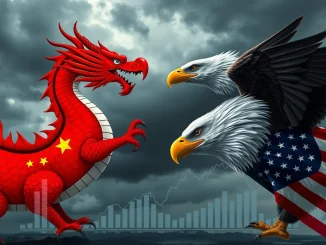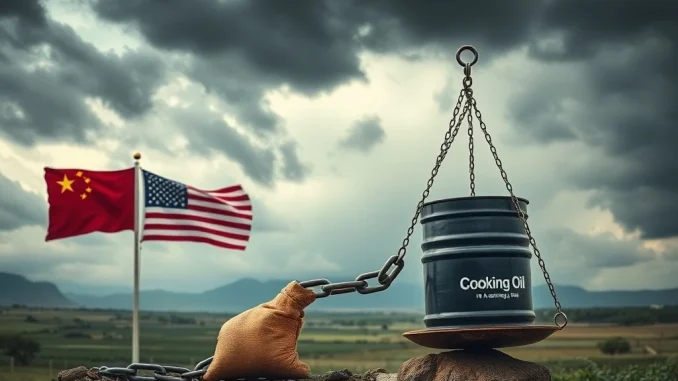
Global economic shifts often ripple through all markets. This includes the dynamic world of cryptocurrency. Recent announcements from former President Donald Trump signal potential new trade tensions. Such developments could impact global supply chains. They might also affect investor sentiment significantly. Markets watch closely for these signals. Therefore, understanding the implications is crucial for many stakeholders.
Trump China Trade: A Looming Economic Showdown?
Former U.S. President Donald Trump recently declared his consideration of a significant halt. This potential move involves the **cooking oil trade** with China. He shared this information on Truth Social. Trump described the action as a response to perceived **economic hostility**. He claims China is intentionally avoiding U.S. soybean purchases. This alleged strategy directly harms American **soybean farmers**. The announcement immediately sparked widespread discussion. Many analysts are now evaluating its potential impact.
This proposed action, if implemented, would mark a notable escalation. It builds upon previous trade disputes between the two economic giants. Trump’s statement underlines a deep-seated frustration. He views China’s trade practices as unfair. Furthermore, he believes they disadvantage American producers. The situation highlights the delicate balance of international commerce. It also shows the political will to challenge existing norms.
Understanding the Roots of the US China Trade War
The potential cooking oil ban is not an isolated event. Instead, it fits into a broader historical context. The **US China trade war** has seen various tariffs and restrictions. These measures began during Trump’s previous administration. They aimed to address trade imbalances. Disputes often centered on intellectual property and market access. China’s agricultural purchasing habits have frequently been a point of contention. These issues remain unresolved for many years.
Previous trade negotiations often involved agricultural products. For instance, China pledged to buy more U.S. farm goods. This happened during the ‘Phase One’ trade deal. However, fulfilling these commitments has been inconsistent. This inconsistency fuels ongoing frustrations. American farmers have faced significant challenges. They have dealt with reduced demand from China. This uncertainty affects their livelihoods. It also impacts long-term planning.
Impact on the Global Cooking Oil Trade
A halt in the **cooking oil trade** could have wide-ranging effects. It would directly impact U.S. exporters. China is a major importer of agricultural products. Therefore, a sudden stop would create a void. Furthermore, global supply chains might face disruption. Other countries could step in to fill the void. This could also lead to price volatility in international markets. Consumers worldwide might eventually feel the impact. Their grocery bills could increase.
Consider these potential consequences:
- U.S. Exporters: They would lose a significant market. This might force them to find new buyers.
- Global Prices: A sudden supply shock could drive up prices. This would affect cooking oils globally.
- Consumer Costs: Higher raw material costs often translate to higher consumer prices.
- Supply Chain Shifts: Other nations might increase production. This would reconfigure trade routes.
The global market for cooking oils is complex. It involves numerous commodities. Palm oil, soybean oil, and sunflower oil are key examples. Any disruption in one area can trigger a domino effect. This makes the situation particularly sensitive. Market stability depends on predictable trade flows.
The Plight of American Soybean Farmers
Trump’s statement specifically highlighted **soybean farmers**. He believes China’s actions are deliberately hurting them. Soybeans are a crucial U.S. agricultural export. China’s demand significantly influences global soybean prices. Reduced purchases directly affect farmer incomes. This situation creates economic uncertainty for many. Many farmers rely heavily on the Chinese market. They have invested heavily based on that demand.
American **soybean farmers** have experienced fluctuating fortunes. They faced hardship during the initial trade war. Tariffs imposed by China severely limited sales. Many farmers received government aid to mitigate losses. However, long-term solutions are necessary. The current threat reintroduces instability. Farmers need stable markets. They also need predictable trade policies. These are essential for their economic viability. Their future depends on consistent demand.
Defining Economic Hostility in International Relations
Trump’s use of the term “**economic hostility**” is important. It frames China’s actions as deliberate aggression. This perception often justifies retaliatory measures. Such rhetoric can escalate trade disputes. It can also sour diplomatic relations between nations. International trade is built on mutual agreements. Accusations of hostility challenge these foundations. This language can have serious diplomatic repercussions.
Economic hostility implies a malicious intent. It suggests that trade actions are not just market-driven. Instead, they are politically motivated. This perspective can make de-escalation difficult. Both sides may feel compelled to respond forcefully. Therefore, the choice of words in international discourse matters greatly. It shapes public opinion and policy decisions. Leaders must weigh their words carefully.
Potential Repercussions and Future Outlook
Should the U.S. proceed with this trade halt, China would likely retaliate. Beijing has historically responded to U.S. trade actions. They often target other American agricultural products. This could further harm U.S. exporters. The cycle of tariffs and counter-tariffs could resume. This scenario would negatively impact global trade. It would also create uncertainty for investors.
Furthermore, such a move could complicate international alliances. U.S. allies might face pressure. They would need to choose sides in a renewed trade conflict. This could disrupt global economic cooperation. The world economy thrives on stability. Trade wars, however, introduce instability. They also undermine confidence. Therefore, the stakes are exceptionally high.
Looking ahead, the situation remains fluid. Trump’s statements often signal potential policy directions. However, they do not always guarantee immediate action. Observers will monitor official announcements. They will also watch for any formal policy proposals. The global community hopes for a diplomatic resolution. A full-blown trade war benefits no one. It only creates economic pain.
Conclusion: Navigating Complex Trade Waters
Donald Trump’s consideration of halting cooking oil trade with China represents a significant development. It underscores persistent tensions in the **Trump China trade** relationship. This potential move highlights the ongoing challenges faced by **soybean farmers**. It also points to the broader implications of **economic hostility**. Global markets, including cryptocurrency, are sensitive to such geopolitical shifts. Therefore, stakeholders must remain informed. They need to understand the evolving landscape. The future of U.S.-China trade relations hangs in a delicate balance. The world watches for the next steps.
Frequently Asked Questions (FAQs)
Q1: Why is Donald Trump considering a halt on cooking oil trade with China?
A1: Donald Trump stated on Truth Social that he is considering this halt. He views it as a response to China’s perceived economic hostility. He claims China is intentionally not buying U.S. soybeans. This action, he believes, harms American soybean farmers.
Q2: What does “economic hostility” mean in this context?
A2: In this context, “economic hostility” refers to actions by one country that are seen as deliberately harmful to another’s economy. Trump interprets China’s reduced soybean purchases as a targeted effort to damage U.S. agriculture, specifically soybean farmers.
Q3: How would a halt in cooking oil trade impact U.S. soybean farmers?
A3: U.S. soybean farmers would likely face significant negative impacts. China is a major buyer of U.S. soybeans. A trade halt would reduce demand. This could lead to lower prices and lost income for farmers. It creates substantial economic uncertainty.
Q4: What are the broader implications for the global economy?
A4: A halt could disrupt global supply chains for cooking oils and agricultural products. It might cause price volatility. Other countries could seek new suppliers or markets. This could also escalate the broader **US China trade war**, impacting international trade relations and investor confidence worldwide.
Q5: Has the U.S. had trade disputes with China before?
A5: Yes, the U.S. and China have a history of trade disputes. During Trump’s previous presidency, a significant **US China trade war** involved tariffs on billions of dollars worth of goods. These disputes often centered on trade imbalances, intellectual property, and market access issues.