Global financial markets often react to geopolitical shifts. Specifically, significant trade policy changes can create ripples across various asset classes. The cryptocurrency market, though distinct, is not immune to these broader economic forces. Therefore, understanding major global economic decisions, like the extension of China tariffs negotiations, is crucial for any investor.
Donald Trump Extends Crucial Trade Negotiations
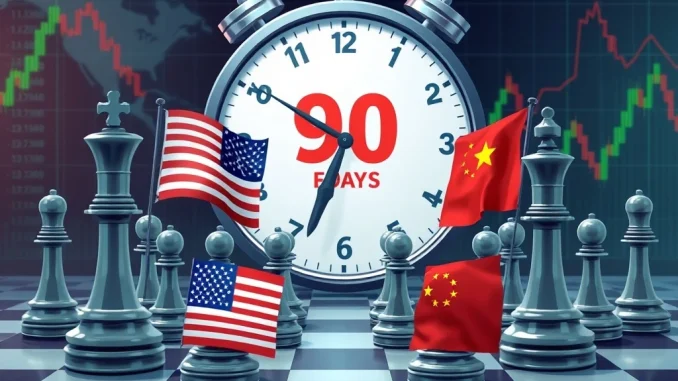
U.S. President Donald Trump has officially extended the deadline for ongoing China tariffs negotiations. This extension grants an additional 90 days for both nations to reach a comprehensive trade agreement. The news emerged from a report by Solid Intel via X, signaling a continuation of high-stakes discussions. This move postpones potential tariff hikes that could have further escalated the trade dispute.
Initially, the deadline was set for March 1, 2019. However, the extension suggests that progress has been made, yet a final deal remains elusive. The White House has not yet released a formal statement detailing the specific reasons. Nevertheless, observers believe both sides require more time to iron out complex issues. This period offers a crucial window for diplomacy and compromise.
Understanding the US-China Trade Landscape
The **US-China trade** relationship has faced significant strain for several years. The Trump administration initiated these trade disputes with the stated goal of addressing perceived unfair trade practices. These practices include intellectual property theft, forced technology transfers, and large trade deficits. As a result, both countries imposed billions of dollars in tariffs on each other’s goods. These tariffs have affected various industries, from agriculture to manufacturing. The global supply chain has also experienced disruptions due to this ongoing friction. Businesses worldwide have felt the impact of this uncertainty.
Key issues at the heart of these discussions include:
- **Intellectual Property Protection:** The U.S. demands stronger safeguards for American companies’ patents and trademarks in China.
- **Forced Technology Transfer:** Concerns exist about Chinese policies requiring foreign companies to share technology to gain market access.
- **Market Access:** The U.S. seeks greater access for its businesses in China’s markets.
- **State Subsidies:** Washington targets China’s extensive state support for its industries, which it views as unfair competition.
- **Currency Manipulation:** Allegations of China manipulating its currency to gain a trade advantage have also been a point of contention.
The Rationale Behind Extending Trade Negotiations
The decision to extend the deadline for trade negotiations likely stems from several factors. Firstly, both sides appear to have made substantial progress on core issues. Reports suggest breakthroughs on intellectual property and currency matters. President Trump himself indicated positive developments in recent weeks. He noted that the talks were ‘very complicated’ but moving forward. Secondly, a complete breakdown in talks would trigger immediate tariff escalations. Such a scenario could significantly harm both economies. It would also send negative signals to the broader global economy. Therefore, extending the deadline prevents an immediate escalation, buying more time for a peaceful resolution. This extension provides a buffer against sudden market shocks.
Furthermore, the extension allows for more detailed technical discussions. Many trade agreements involve intricate legal and economic frameworks. Rushing these processes could lead to poorly constructed deals. A longer timeline enables negotiators to address all nuances thoroughly. This meticulous approach can lead to a more durable and effective agreement. It also allows leaders to build greater trust and rapport. This diplomatic aspect is vital for long-term relations.
Potential Impact on the Global Economy
The ongoing US-China trade dispute has cast a long shadow over the global economy. Businesses worldwide have delayed investment decisions. Supply chains have faced reconfigurations. The uncertainty itself has been a major drag on economic growth. The extension of the deadline offers a temporary reprieve. It removes the immediate threat of new **China tariffs** taking effect. This can provide a brief boost to market sentiment. However, the underlying issues remain unresolved. Therefore, uncertainty will persist until a definitive agreement is reached. Many economists warn that prolonged trade tensions could lead to a global slowdown. This could impact everything from commodity prices to consumer spending.
Consider these potential economic ramifications:
- **Market Stability:** The extension might reduce short-term volatility in stock markets.
- **Business Confidence:** Companies may gain a temporary boost in confidence, potentially leading to more investment.
- **Supply Chain Adjustments:** Businesses will continue to assess and possibly adjust their supply chains.
- **Commodity Prices:** Demand for key commodities like oil and agricultural products could remain sensitive to trade news.
- **Consumer Costs:** Existing tariffs already increase costs for consumers on certain goods. Future tariffs could exacerbate this.
The Road Ahead for Trade Negotiations
The next 90 days will be critical for **trade negotiations** between the U.S. and China. Both nations must demonstrate a genuine commitment to compromise. Key areas of focus will include enforcement mechanisms for any agreed-upon terms. China’s willingness to implement structural reforms will also be under scrutiny. For his part, Donald Trump has repeatedly emphasized the need for a ‘fair’ deal. He seeks a deal that benefits American workers and businesses. Meanwhile, China aims to protect its national interests and economic development model. The stakes are incredibly high for both economic superpowers. The outcome will shape global trade for years to come. Analysts will closely monitor every statement and meeting.
This extension offers a chance to solidify any progress made. It allows for detailed discussions on complex enforcement issues. Both sides have significant incentives to reach an agreement. A successful resolution could revitalize global trade. Conversely, failure could lead to a deeper economic rift. This period will test the diplomatic skills of both negotiating teams. The world watches eagerly for a positive outcome.
Broader Implications for the Global Economy
Beyond the direct impact on the **US-China trade** relationship, the extension carries broader implications for the global economy. Many countries are indirectly affected by the trade dispute. Global supply chains are deeply interconnected. A slowdown in either the U.S. or Chinese economy can ripple across continents. The automotive, technology, and agricultural sectors are particularly vulnerable. Furthermore, the dispute has fueled protectionist sentiments globally. This could hinder the progress of multilateral trade agreements. The stability of the global trading system depends heavily on these two economic giants. A resolution could provide much-needed stability. Conversely, continued tensions could further fragment global trade. This scenario poses significant risks for all nations. Investors should remain vigilant and diversify their portfolios accordingly.
The next 90 days represent a pivotal moment. The world’s two largest economies are at a crossroads. Their decisions will impact billions of people. The path forward remains uncertain. However, the extension itself signals a continued willingness to talk. This commitment to dialogue is a positive sign. It keeps the door open for a comprehensive and mutually beneficial agreement. The hope is that this extended period leads to a lasting resolution, benefiting the entire global economy.
Conclusion: Navigating Continued Uncertainty
The extension of the China tariffs negotiation deadline by Donald Trump offers a temporary reprieve from immediate escalation. While it signals ongoing dialogue and potential progress, it also prolongs the period of uncertainty for **US-China trade** relations and the broader global economy. Businesses and investors must continue to monitor developments closely. The outcome of these critical trade negotiations will undoubtedly shape market sentiment and economic trajectories worldwide. A final resolution remains the ultimate goal, promising greater stability for all.
Frequently Asked Questions (FAQs)
Q1: Why did President Donald Trump extend the China tariff negotiation deadline?
A1: President Donald Trump extended the deadline likely due to substantial progress in the ongoing trade negotiations. Both sides needed more time to resolve complex issues, such as intellectual property rights and currency manipulation. This extension also prevents immediate tariff increases, avoiding further economic disruption.
Q2: What are China tariffs, and how do they impact the US-China trade relationship?
A2: China tariffs are taxes imposed by the U.S. on goods imported from China. Similarly, China has imposed tariffs on U.S. goods. These tariffs aim to pressure China on trade practices deemed unfair. They have significantly impacted the US-China trade relationship by increasing costs for businesses and consumers, disrupting global supply chains, and creating economic uncertainty.
Q3: How might these trade negotiations affect the global economy?
A3: The ongoing trade negotiations, and their outcome, profoundly impact the global economy. Prolonged uncertainty can deter international investment and slow economic growth. A successful agreement could boost global trade and investor confidence. Conversely, a failure could lead to further protectionism and a global economic slowdown.
Q4: What are the key issues being discussed in the US-China trade negotiations?
A4: Key issues in the trade negotiations include intellectual property theft, forced technology transfers, market access for U.S. companies in China, state subsidies to Chinese industries, and allegations of currency manipulation. Both sides are striving to reach a comprehensive agreement addressing these complex economic and structural concerns.
Q5: What is the significance of the 90-day extension?
A5: The 90-day extension is significant because it provides a crucial window for diplomacy and detailed discussions. It postpones the threat of immediate tariff escalations, offering a temporary reprieve for markets and businesses. This period allows negotiators to work towards a more durable and effective agreement, preventing a sudden breakdown in talks.