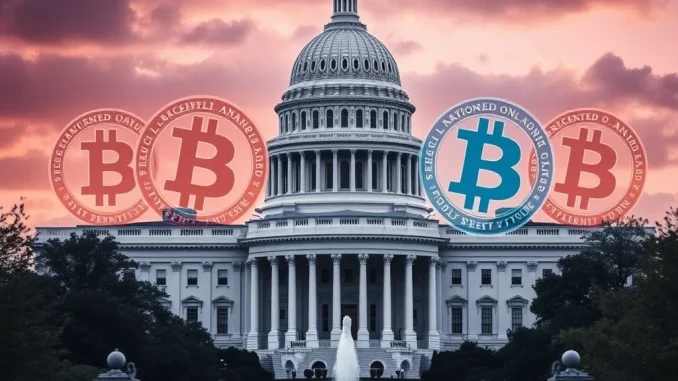
The cryptocurrency world is buzzing with a groundbreaking development: President Donald Trump has issued a sweeping executive order that fundamentally redefines the U.S. government’s approach to its Bitcoin holdings. This isn’t just a minor tweak; it’s a monumental shift that establishes a Strategic Bitcoin Reserve, effectively halting all U.S. government sales of the digital asset. For anyone tracking the pulse of digital finance, this move signals a new era for how nations might integrate cryptocurrencies into their core economic strategies.
What Does the Strategic Bitcoin Reserve Mean for the U.S.?
At the heart of this new policy is the formalization of a U.S. Strategic Bitcoin reserve. Announced from Washington D.C., the executive order mandates that all government-owned Bitcoin, whether acquired through criminal forfeiture or civil asset seizures, will now be designated as a non-saleable reserve asset. This is a significant departure from previous practices where forfeited crypto might eventually be auctioned off.
Official Oversight: The National Economic Council and Treasury Department are now tasked with overseeing these burgeoning holdings, ensuring they align with the administration’s broader vision for “responsible digital asset growth.”
Long-Term Vision: The White House has articulated a clear, long-term commitment, stating, “Digital assets are the future, and our Nation is going to own it.” This emphasizes fostering “MASSIVE Investment” and “Big Innovation” within the sector.
Shift in Asset Treatment: This aggregation of Bitcoin into a sovereign reserve could signal a profound strategic shift in how digital assets are perceived and treated within U.S. economic policy, elevating them to a status akin to traditional strategic reserves.
How Does Trump’s Bitcoin Stance Shape Market Dynamics?
The immediate repercussions of President Trump’s executive order are most evident in market dynamics. By prohibiting federal Bitcoin sales, the administration removes a potential source of liquidity from the crypto market. This could have several key effects:
Potential for Amplified Volatility: With a constrained supply, especially if the government holds a significant, undisclosed amount, the policy could amplify price volatility. Less supply available for sale from a major holder typically means prices are more susceptible to demand-side pressures.
Influence on Asset Valuation: Analysts are already noting that this constrained supply could influence asset valuation. However, the exact scale of this effect remains unclear, primarily due to the absence of disclosed data on the U.S. government’s current Bitcoin holdings. This opacity has sparked uncertainty among market participants.
Signaling a Strategic Shift: Beyond immediate price impacts, the move is seen by some as a strong signal of the U.S. government’s strategic embrace of Bitcoin, potentially encouraging institutional and sovereign adoption globally. This decisive step by President Trump Bitcoin policy could set a precedent.
Navigating the Nexus: US Bitcoin Policy and Private Interests
Critics and observers have been quick to highlight the administration’s broader pro-crypto agenda, which extends beyond regulatory frameworks and into areas that blur the lines between public policy and private gain. This is a crucial aspect of the current US Bitcoin policy debate.
The Trump Organization, for instance, has reportedly leveraged this policy environment to advance personal and commercial interests. This includes the launch of the $TRUMP meme coin via World Liberty Financial, a platform tied to the Trump family. The token’s value surged following promises of exclusive event access for top holders, generating substantial fees. Additionally, the platform secured a significant deposit from a UAE-backed venture fund, raising questions about the alignment of foreign capital with U.S. digital asset priorities.
Financial disclosures from Trump revealing substantial proceeds from crypto token sales through World Liberty Financial complicate narratives of impartial regulatory reform. Ethicists argue that the administration’s relaxed stance on crypto regulations, especially when compared to Biden-era restrictions, creates a conflict of interest. This is particularly salient as the Trump Organization pursues international partnerships, such as a newly announced Qatari golf course backed by a sovereign wealth fund, even as the White House asserts no direct dealings with foreign governments.
Fostering Digital Asset Growth: Innovation vs. Stability
The administration frames its approach as a catalyst for innovation, aiming to accelerate digital asset growth within the U.S. While easing crypto restrictions can indeed foster new technologies and investment, it has also prompted debates over market stability and regulatory oversight.
For example, JPMorgan’s recent decision to halt onboarding for Gemini, a major crypto exchange, has been linked by some to broader policy criticisms, though no direct connection to Trump’s specific actions has been definitively established. Meanwhile, the broader crypto market faces mixed signals, with a recent $1 billion drop in market capitalization attributed partly to regulatory uncertainty and rising U.S. money supply. The challenge lies in balancing the desire for innovation with the need for robust market stability and consumer protection.
The Future of Crypto Regulation: Transparency and Accountability
Trump’s policy underscores a strategic repositioning of the U.S. in the global digital asset arena. By institutionalizing Bitcoin as a sovereign reserve, the administration aims to solidify its leadership in an evolving financial ecosystem. However, the lack of transparency around federal Bitcoin holdings—such as the exact quantity of reserves and acquisition timelines—leaves significant room for speculation. This ambiguity may influence future crypto regulation innovation, as the government explores frameworks to manage its growing crypto portfolio while balancing market expectations.
The policy’s long-term implications remain subject to political and economic variables. While it positions the U.S. as a key player in digital asset development, the conflation of public and private interests raises valid concerns about accountability. As the administration advances its agenda, the interplay between regulatory reform, market dynamics, and ethical considerations will likely remain central to debates over the future of digital finance.
In conclusion, President Trump’s executive order establishing a Strategic Bitcoin Reserve marks a pivotal moment for the cryptocurrency landscape. It signifies a strong governmental endorsement of Bitcoin as a strategic asset, with potential far-reaching implications for market supply, valuation, and global digital asset policy. While promising significant innovation and investment, the policy also raises critical questions regarding transparency, conflicts of interest, and the delicate balance required for sustainable digital asset growth. As the U.S. navigates this bold new frontier, the world will be watching closely to see how this strategic repositioning unfolds and shapes the future of finance.
Frequently Asked Questions (FAQs)
Q1: What is the U.S. Strategic Bitcoin Reserve?
The U.S. Strategic Bitcoin Reserve is a newly established policy by President Trump’s executive order, designating all U.S. government-owned Bitcoin (primarily from forfeitures) as a non-saleable reserve asset, similar to traditional strategic reserves.
Q2: How will this policy impact Bitcoin’s market price?
By halting federal Bitcoin sales, the policy removes a potential source of supply from the market, which could reduce liquidity and potentially amplify price volatility. The exact impact depends on the undisclosed quantity of Bitcoin the government holds.
Q3: What are the ethical concerns raised by this policy?
Ethical concerns arise from the perceived conflation of public policy and private gain, particularly regarding the Trump Organization’s involvement with the $TRUMP meme coin and foreign investments, leading to questions about conflicts of interest and impartial regulatory reform.
Q4: Does this policy mean the U.S. government is endorsing Bitcoin?
Yes, by institutionalizing Bitcoin as a sovereign reserve, the administration signals a strong strategic repositioning of the U.S. in the global digital asset arena, aiming to solidify its leadership in the evolving financial ecosystem.
Q5: What is the long-term vision for digital assets under this administration?
The administration’s long-term vision emphasizes fostering “MASSIVE Investment” and “Big Innovation” in the digital asset sector, with the goal that “Digital assets are the future, and our Nation is going to own it.”
Q6: Will there be more transparency regarding the government’s Bitcoin holdings?
Currently, the policy has been criticized for a lack of transparency regarding the exact quantity of federal Bitcoin reserves and acquisition timelines. This ambiguity leaves room for speculation and may influence future regulatory innovation as the government manages its crypto portfolio.