The world of digital assets just witnessed a groundbreaking moment as TRON Inc. officially debuted on the Nasdaq stock exchange. This isn’t just another listing; it’s a strategic maneuver that signals a new era for blockchain companies aiming for mainstream institutional credibility. For anyone invested in the future of cryptocurrencies and their integration into traditional finance, this move by TRON Inc. is certainly one to watch closely.
TRON Inc.’s Historic Nasdaq Debut: A New Chapter Unfolds
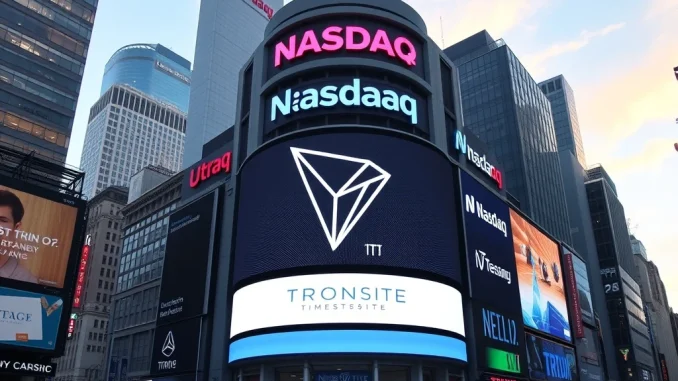
On July 24, 2025, TRON Inc. marked a pivotal milestone, celebrating its Nasdaq debut following a significant $100 million reverse merger with SRM Entertainment. This strategic rebranding saw the company’s ticker transition from “SRM” to “TRON” on July 17, 2025, clearly aligning its corporate identity with its foundational blockchain technology. The excitement was palpable at Nasdaq’s MarketSite in Times Square, where a ceremonial opening bell ringing took place, led by none other than Justin Sun, the visionary founder of the TRON blockchain, now serving as a strategic advisor to the company.
This move isn’t merely about a name change; it’s a profound strategic shift. CEO Rich Miller emphasized that this step is crucial for enhancing institutional credibility within the digital assets space, while simultaneously building substantial shareholder value through deeper blockchain integration. It’s a clear signal that TRON Inc. is committed to bridging the gap between decentralized innovation and established financial markets.
Strategic TRX Allocation: Bolstering Confidence and Value
A cornerstone of TRON Inc.’s Nasdaq strategy is the announcement of a massive $210 million allocation of its native TRX tokens into corporate treasury reserves. This bold move positions TRON Inc. as the single largest public holder of TRX, underscoring a deep commitment to the token’s long-term viability and stability. But what does this mean for the ecosystem and investors?
- Value Stabilization: By holding a significant portion of TRX, the company aims to reduce volatility and provide a more stable foundation for the token’s value, acting as a strategic reserve.
- Investor Confidence: This allocation signals immense confidence in the future of the TRON blockchain ecosystem, reassuring investors about the company’s long-term vision and commitment.
- Reduced Dilution Risks: Holding tokens in treasury can help mitigate dilution risks for existing holders, as it demonstrates a strategic approach to tokenomics.
- Utility Reinforcement: It reinforces TRX’s utility not just as a transactional asset, but also as a critical reserve asset, akin to how traditional companies hold fiat currencies or gold reserves.
Justin Sun described this milestone as “a historic moment for the entire blockchain industry,” highlighting the growing trend of integrating crypto assets into traditional finance. This treasury strategy is a testament to TRON Inc.’s belief in the hybrid financial model.
Bridging Blockchain and Traditional Finance: A Hybrid Future
TRON Inc.’s journey from SRM Entertainment to its current identity underscores its ambition to serve as a vital bridge between decentralized and traditional finance. By aligning its corporate name directly with its native token, the company is explicitly signaling a commitment to hybrid financial models that prioritize tokenomics stability and utility.
This strategic alignment is crucial in an evolving financial landscape where the lines between traditional and decentralized systems are increasingly blurring. The Nasdaq listing has significantly amplified TRON Inc.’s market influence, particularly in key areas like DeFi applications and the massive USDT flows on the Tron network. Analysts are keenly observing how institutional accumulation patterns in crypto markets might respond to such corporate strategies, which could have a ripple effect on short-term token dynamics across the broader market.
The company’s approach aims to attract institutional capital by leveraging its public listing, while simultaneously reinforcing TRX’s pivotal role in blockchain-powered treasury holdings. This innovative hybrid approach could very well set a precedent, encouraging other crypto-native firms to explore similar strategies, thereby further integrating the two financial worlds.
Market Impact and Future Outlook for TRX
The implications of TRON Inc.’s Nasdaq debut extend beyond mere corporate branding. The strategic allocation of TRX tokens into the company’s treasury is expected to have a tangible impact on the token’s market dynamics. Institutional interest, often sparked by such major corporate moves, could lead to increased accumulation of TRX, influencing its price and trading volume.
Market observers are closely monitoring several factors:
- Regulatory Developments: The evolving regulatory landscape for digital assets will play a critical role in TRON Inc.’s ability to execute its long-term roadmap. Clarity and favorable regulations will be key.
- Execution of Roadmap: The company’s ability to deliver on its stated goals for integrating blockchain technology with global merchandise and digital entertainment will be paramount to sustained success.
- Transparency and Adaptability: Maintaining investor confidence will hinge on transparent reporting and the company’s strategic adaptability to market changes and technological advancements.
While historical trends suggest that reverse mergers can trigger initial price and volume spikes, long-term success ultimately depends on sustained innovation and a clear regulatory environment. Justin Sun’s continued advisory role and the robust treasury strategy add significant credibility to TRON Inc.’s ambitious vision.
The Power of Reverse Mergers in the Blockchain Space
TRON Inc.’s use of a reverse merger to achieve its Nasdaq listing is a significant trend worth noting in the evolving crypto and blockchain landscape. A reverse merger allows a private company to become publicly traded by merging with an existing public company. This method can often be faster and less expensive than a traditional IPO, making it an attractive route for tech and crypto firms looking to access public capital markets quickly.
For the blockchain industry, reverse mergers offer several benefits:
- Faster Public Access: Allows companies to bypass the lengthy and complex traditional IPO process.
- Increased Visibility: Listing on a major exchange like Nasdaq significantly boosts a company’s profile and legitimacy in the eyes of institutional investors.
- Access to Capital: Provides opportunities for fundraising through public markets, which can fuel further innovation and expansion.
- Enhanced Credibility: A public listing adds a layer of regulatory oversight and transparency, which can build greater trust among a broader investor base, especially crucial for a nascent industry like crypto.
However, challenges exist, including potential scrutiny from regulators and the need for rigorous financial reporting. TRON Inc.’s success will provide a valuable case study for other crypto-native companies considering similar paths.
In conclusion, TRON Inc.’s Nasdaq debut is more than just a corporate event; it’s a powerful statement about the increasing maturity and institutional acceptance of digital assets. By leveraging a reverse merger and strategically allocating TRX to its treasury, TRON Inc. is actively shaping a future where blockchain innovation and traditional finance seamlessly converge. This hybrid approach not only aims to build shareholder value but also reinforces the long-term viability and utility of cryptocurrencies like TRX within a regulated, public framework. The journey has just begun, and the crypto world will be watching closely as TRON Inc. navigates this exciting new chapter.
Frequently Asked Questions (FAQs)
1. What is the significance of TRON Inc. debuting on Nasdaq?
The Nasdaq debut signifies a major step towards institutional credibility for a blockchain-focused entity. It allows TRON Inc. to tap into traditional capital markets, enhance its public profile, and potentially attract a wider range of institutional investors, blurring the lines between decentralized and traditional finance.
2. How does the $210 million TRX allocation impact the TRON ecosystem?
The $210 million TRX allocation to TRON Inc.’s corporate treasury positions the company as the largest public holder of TRX. This move aims to stabilize the token’s value, signal strong confidence in the TRON blockchain’s long-term viability, reduce dilution risks, and reinforce TRX’s utility as a strategic reserve asset, boosting investor trust.
3. What was the role of the reverse merger in this Nasdaq listing?
TRON Inc. went public via a $100 million reverse merger with SRM Entertainment. A reverse merger allows a private company to become publicly traded by merging with an existing public company, often a faster and less complex route than a traditional Initial Public Offering (IPO).
4. What is Justin Sun’s current involvement with TRON Inc.?
Justin Sun, the founder of the TRON blockchain, now serves as a strategic advisor to TRON Inc. He was instrumental in the Nasdaq debut, participating in the ceremonial opening bell ringing, and continues to guide the company’s strategic vision for integrating crypto assets into traditional finance.
5. How might this Nasdaq listing affect the broader cryptocurrency market?
TRON Inc.’s Nasdaq listing and strategic TRX allocation could encourage other crypto-native firms to explore similar public listing strategies. This trend could accelerate the integration of digital assets into traditional financial systems, potentially leading to increased institutional investment, greater market maturity, and a broader acceptance of cryptocurrencies as legitimate assets.