The world of digital assets just witnessed a groundbreaking event that could reshape how we perceive the intersection of blockchain technology and traditional finance. On July 24, 2025, Tron Inc. made its highly anticipated debut on the Nasdaq Stock Exchange. This isn’t just another company going public; it’s a pivotal moment for the entire crypto ecosystem, signaling a new era of mainstream adoption and institutional validation. The immediate aftermath? A remarkable TRX volume spike, demonstrating the market’s enthusiastic response.
Tron’s Historic Nasdaq Debut: A New Era for Blockchain Finance
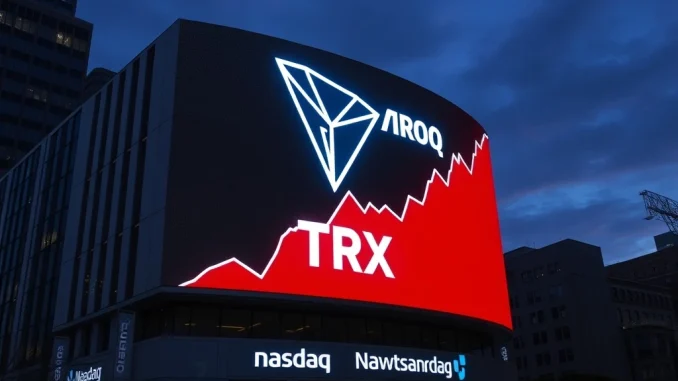
The Tron Nasdaq listing was far from a quiet affair. It marked a significant milestone for the blockchain giant, as Tron Inc. (Nasdaq: TRON) officially began trading on the Nasdaq Stock Exchange. This wasn’t a typical IPO; Tron entered the public market through a strategic $100 million reverse merger with SRM Entertainment. This move positions Tron as a formidable blockchain-driven entertainment and finance entity, bridging the gap between innovative decentralized technology and established financial markets.
The excitement surrounding the debut was palpable, especially with founder and CEO Justin Sun himself ringing the iconic opening bell in New York City’s Times Square. This ceremonial act wasn’t just for show; it underscored Tron’s ambitious evolution into a publicly traded company committed to integrating cutting-edge blockchain technology with traditional market structures. For many, this event is a clear indicator that blockchain is no longer a niche interest but a serious contender in the global financial landscape.
Financial analysts are taking note. Donald Lee, a prominent analyst, commented, “This positions Tron uniquely to capitalize on emerging digital opportunities.” Indeed, the reverse merger aligns perfectly with broader industry trends that seek to merge the disruptive power of blockchain innovation with the stability and reach of mainstream finance. It’s a testament to the growing maturity of the crypto space and its increasing appeal to institutional investors.
The Immediate Impact: A Remarkable TRX Volume Spike
The market’s reaction to the Nasdaq listing was swift and decisive. Following the debut, Tron’s native token, TRX, experienced an impressive TRX volume spike, surging by a staggering 30%. This translated into a trading volume of $1.64 billion, a clear signal of heightened market activity and growing investor confidence. Such a significant increase in volume often precedes or accompanies major price movements, and TRX was no exception.
In the wake of the listing, TRX climbed to a price of 0.31 USD. This represented a substantial 16.03% gain over the preceding 60 days, further solidifying its bullish momentum. With a market capitalization reaching an impressive $29.83 billion, TRX proudly secured its position as the ninth-largest cryptocurrency by market cap. This ascent highlights the validation Tron has received from both retail and institutional investors, who are increasingly recognizing the network’s utility and potential.
Here’s a quick snapshot of TRX’s performance around the listing:
- Volume Surge: 30% increase
- Total Trading Volume: $1.64 billion
- TRX Price Post-Listing: $0.31 USD
- 60-Day Price Gain: 16.03%
- Market Capitalization: $29.83 billion
- Cryptocurrency Ranking: 9th largest by market cap
Why This Listing Matters: Institutional Interest and the Future of Tron Crypto
Beyond the immediate price and volume movements, the Tron Nasdaq listing carries profound implications for the broader cryptocurrency market. It serves as a powerful validation for blockchain technology as a whole, demonstrating that decentralized networks can indeed integrate with traditional financial systems. This public listing opens doors to a new class of investors who might have previously shied away from the perceived volatility and regulatory uncertainty of the crypto space.
The influx of institutional capital is a key narrative here. The significant increase in TRX trading volume, coupled with the fact that the Tron network processed $2.9 billion in USDT transactions over seven days (with 70% directed to Binance), suggests potential institutional accumulation. Large-scale USDT movements often indicate significant trading or investment activity by major players, hinting at growing confidence in Tron’s infrastructure and its role in the stablecoin ecosystem.
For the long-term prospects of Tron crypto, this listing is a game-changer. It enhances visibility, credibility, and accessibility, making it easier for traditional financial institutions to engage with the Tron network. This increased exposure could lead to more partnerships, wider adoption of Tron-based applications, and further development within its ecosystem. As Justin Sun articulated, the Nasdaq listing is “a major step for our community,” underscoring its importance not just for the company, but for its entire decentralized user base and developer community.
Navigating the Currents: Challenges and Resilience in the Cryptocurrency Market
While the Nasdaq listing marks a triumphant moment, it’s crucial to acknowledge that the cryptocurrency market remains dynamic and subject to various challenges. The week prior to the listing, the Tron network’s Total Value Locked (TVL) experienced a decline of $136 million. This dip mirrored broader market volatility, reminding us that even established projects are not immune to market fluctuations and sentiment shifts. It highlights the constant ebb and flow inherent in the digital asset space.
However, the Tron ecosystem has consistently demonstrated remarkable resilience. Despite the TVL decline, the network continues to hold a substantial $80 billion in stablecoins, a testament to its robust infrastructure for facilitating stable value transfers. Furthermore, recent weeks saw $25.7 million in net TRX inflows, indicating that despite some outflows, more capital is entering the TRX ecosystem than leaving it. Futures open interest also increased by 19%, suggesting that traders anticipate heightened price volatility and are positioning themselves accordingly, often a sign of increased market engagement.
Looking ahead, regulatory scrutiny is an undeniable factor. With its elevated institutional visibility post-Nasdaq listing, Tron will likely face increased oversight from regulators worldwide. This is a double-edged sword: while it brings more legitimacy, it also necessitates careful navigation of evolving legal frameworks. However, the continued growth of decentralized finance (DeFi) within the Tron network and the broader crypto landscape may drive further adoption, as users seek more permissionless and transparent financial solutions.
Looking Ahead: What’s Next for Tron?
The Tron Nasdaq listing has undoubtedly provided a significant capital boost and an unprecedented level of visibility. However, the company’s ability to sustain this momentum will hinge on several critical factors:
- Ecosystem Development: Continued innovation and expansion of decentralized applications (dApps), DeFi protocols, and other services on the Tron network will be crucial for retaining and attracting users.
- Macroeconomic Conditions: The broader economic climate, including inflation, interest rates, and global liquidity, will continue to influence the overall sentiment and investment in the crypto market.
- Execution Risks: Balancing ambitious growth plans with effective execution in a volatile market will be paramount. Managing operational challenges and delivering on promises will build long-term trust.
- Regulatory Landscape: Adapting to and proactively engaging with evolving global regulations will be key to ensuring sustained growth and avoiding potential pitfalls.
The reverse merger has undeniably opened a new chapter for Tron, placing it firmly in the spotlight of mainstream finance. The journey ahead for Tron crypto will be watched closely by investors, developers, and enthusiasts alike, as it strives to fulfill its vision of a decentralized internet and financial system.
The Tron Nasdaq listing represents more than just a stock market debut; it’s a powerful statement about the increasing maturity and integration of blockchain technology into the global financial fabric. The resulting TRX volume spike, driven by growing institutional interest and the strategic vision of Justin Sun, underscores the profound impact this move has had. While challenges in the ever-evolving cryptocurrency market persist, Tron’s resilience and strategic positioning suggest a compelling future. This landmark event not only validates Tron’s journey but also paves the way for greater acceptance and innovation within the broader blockchain and digital asset industries.
Frequently Asked Questions (FAQs)
1. What is the significance of Tron Inc. listing on Nasdaq?
The Tron Inc. Nasdaq listing is significant because it marks a major step for a blockchain-driven entity to enter traditional financial markets. It provides enhanced visibility, credibility, and accessibility for institutional investors, potentially accelerating mainstream adoption of blockchain technology and cryptocurrency.
2. How did the Nasdaq listing impact TRX trading volume?
Following the Nasdaq listing, TRX experienced a substantial 30% volume spike, reaching $1.64 billion in trading volume. This surge indicates significant market interest and increased liquidity for the Tron native token.
3. Who is Justin Sun and what was his role in the Nasdaq listing?
Justin Sun is the founder and CEO of Tron. He led the company’s debut on Nasdaq, participating in the iconic bell-ringing ceremony in New York City’s Times Square, symbolizing Tron’s strategic pivot into a publicly traded entity focused on integrating blockchain with traditional markets.
4. What does the listing mean for the future of blockchain finance?
The Tron Nasdaq listing signals a growing trend of merging blockchain innovation with mainstream finance. It validates the potential of blockchain technology to operate within regulated financial frameworks, potentially attracting more institutional capital and fostering further development in the broader blockchain finance sector.
5. Were there any challenges for Tron leading up to the listing?
Yes, the week prior to the listing, the Tron network’s Total Value Locked (TVL) declined by $136 million, mirroring broader market volatility. However, the ecosystem demonstrated resilience with significant stablecoin holdings and net TRX inflows.
6. What is Tron’s current market position after the listing?
After the listing, Tron’s native token, TRX, climbed to a 0.31 USD price, with a market capitalization of $29.83 billion, securing its position as the ninth-largest cryptocurrency by market cap.