The world of cryptocurrency is no stranger to dramatic headlines, but few events bridge the gap between decentralized innovation and traditional finance quite like a Nasdaq bell-ringing ceremony. On July 24, 2025, Tron founder Justin Sun stepped onto that iconic stage, signaling a bold move for the blockchain platform. Was this a genuine stride towards mainstream adoption, or merely a symbolic gesture masking underlying challenges? This moment has ignited a crucial conversation about Tron’s strategic direction and the broader trajectory of blockchain integration.
Why Did Justin Sun Ring the Nasdaq Bell?
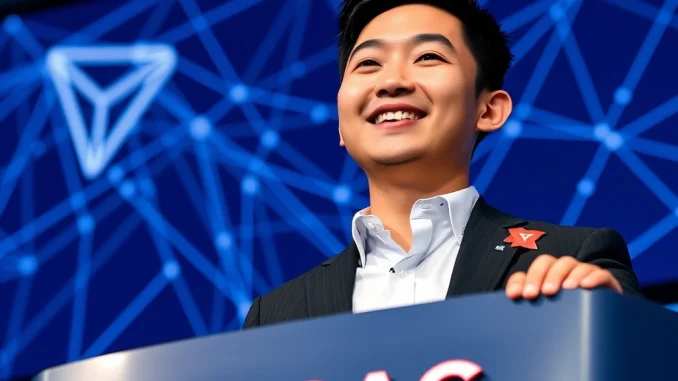
Justin Sun, the enigmatic founder of Tron Inc., marked a significant milestone by ringing the Nasdaq opening bell. This wasn’t just a photo opportunity; it was a deliberate strategic move to highlight Tron’s dual approach: advancing decentralized technology while actively pursuing corporate growth within established financial structures. The event, publicly announced earlier in the month, aimed to project an image of stability and institutional credibility for Tron in a highly competitive crypto landscape.
- Signal Legitimacy: Aligning with Nasdaq, a pillar of traditional finance, helps legitimize Tron in the eyes of institutional and retail investors who might be wary of the volatile crypto market.
- Attract Investment: High visibility on a global stage is designed to draw broader interest, potentially leading to increased capital inflow.
- Reframing Narrative: The ceremony served to pivot Tron’s narrative, emphasizing a hybrid model that blends decentralized technology with corporate governance. This contrasts with purely open-source protocols that prioritize decentralization above all else.
The Symbolic Weight of the Nasdaq Ceremony
The Nasdaq bell-ringing tradition is typically reserved for publicly traded companies and startups aiming to cement their place in mainstream finance. For Tron, this event provided an unparalleled opportunity to signal its ambition to bridge blockchain innovation with established financial systems. While analysts suggest such high-profile events can boost confidence, their direct impact on market performance remains speculative.
The ceremony drew mixed reactions. Some in the crypto community, including social media accounts like @venomxbt, characterized it as a “clown world” moment, reflecting polarized perceptions of high-profile crypto figures and events. This skepticism highlights the ongoing tension between crypto’s decentralized ethos and its increasing attempts to integrate with traditional financial systems.
Navigating the Crypto TVL Decline: A Critical Challenge for Tron
Crucially, the Nasdaq ceremony coincided with ongoing discussions about Tron’s strategic direction amidst a reported decline in its Total Value Locked (Crypto TVL). TVL, a key metric representing the total value of assets staked or locked within a decentralized finance (DeFi) protocol, has raised questions about the platform’s long-term sustainability.
What does TVL decline signify?
- Reduced User Engagement: A lower TVL can indicate fewer users interacting with DeFi applications on the Tron network.
- Decreased Liquidity: Less locked value means less liquidity available for trading, lending, and other DeFi activities.
- Investor Confidence: A sustained decline can erode investor confidence, suggesting a lack of growth or perceived utility.
While the Nasdaq event aimed to project strength, the underlying Crypto TVL figures present a tangible challenge that cannot be overlooked. For investors, the ceremony’s symbolic value raises critical questions about Tron’s ability to translate public relations efforts into measurable growth metrics.
The Hybrid Model: Blockchain Integration and Corporate Strategy
Tron’s decision to align with Nasdaq underscores its embrace of a “hybrid model” – combining the decentralized nature of Blockchain with elements of corporate governance and traditional financial partnerships. This approach reflects a broader industry trend where crypto firms increasingly seek legitimacy through established avenues to navigate regulatory scrutiny and competitive pressures.
| Feature | Tron’s Hybrid Model | Pure Decentralized Protocol |
|---|---|---|
| Governance | Blends corporate strategy with community input | Primarily community-driven via DAOs |
| Financial Alignment | Actively seeks traditional finance partnerships (e.g., Nasdaq) | Focuses on self-sustaining, permissionless ecosystems |
| Marketing/PR | High-profile events, mainstream media outreach | Organic growth, community advocacy |
| Perceived Stability | Aims for institutional credibility | Relies on network effects and technical robustness |
Analysts emphasize that Tron’s success in this hybrid model hinges on its capacity to balance innovation with corporate stability, a challenge that remains unproven despite the Nasdaq milestone.
What’s Next for Tron? Balancing Ambition with Reality
The Nasdaq bell-ringing ceremony, while a media-focused event, reflects broader industry trends where Blockchain projects increasingly seek legitimacy through traditional financial partnerships. Tron Inc.’s approach aligns with a growing trend of crypto firms adopting hybrid strategies to navigate regulatory scrutiny and competitive pressures.
However, the absence of concrete data on user growth, developer activity, or token utility post-ceremony leaves the long-term implications of the event uncertain. The platform’s stock (TRX.X) has experienced fluctuating trading volumes, influenced by broader market conditions and regulatory developments. Addressing underlying technical and operational challenges—such as the TVL decline—will be crucial to validating Tron’s long-term viability. The event’s true impact will depend on the platform’s ability to deliver on its strategic vision, particularly in addressing ecosystem sustainability and investor confidence.
Justin Sun’s ringing of the Nasdaq bell for Tron was undeniably a powerful symbolic gesture, a visible declaration of blockchain’s relentless march towards mainstream integration. It showcased Tron’s ambition to bridge two distinct worlds: the revolutionary, decentralized spirit of crypto and the established, regulated landscape of traditional finance. Yet, beneath the fanfare, critical questions linger, particularly regarding the platform’s Total Value Locked and the tangible impact of such high-profile events on genuine ecosystem growth. While the ceremony undoubtedly bolstered Tron’s public image, its true legacy will be forged not on a trading floor, but in its ability to translate symbolic victories into sustainable innovation, robust utility, and enduring investor confidence. The journey for Tron, like the broader crypto space, is far from over, and its path forward will be closely watched.
Frequently Asked Questions (FAQs)
1. What was the significance of Justin Sun ringing the Nasdaq bell for Tron?
It was a symbolic gesture to highlight Tron’s integration into traditional financial markets, signaling stability, institutional credibility, and its dual strategy of advancing decentralized technology alongside corporate growth.
2. What is Total Value Locked (TVL) and why is its decline a concern for Tron?
TVL represents the total value of assets locked within a DeFi protocol. A decline in Tron’s TVL suggests reduced user engagement, decreased liquidity, and can raise questions about the platform’s long-term sustainability and investor confidence.
3. What is Tron’s “hybrid model” and how does it compare to other crypto projects?
Tron’s hybrid model combines decentralized blockchain technology with elements of corporate governance and traditional financial partnerships. This contrasts with purely open-source protocols that prioritize decentralization above centralized business strategies, aiming for broader mainstream legitimacy.
4. How did the crypto community react to the Nasdaq bell-ringing event?
Reactions were mixed. While some saw it as a positive step towards mainstream adoption, others expressed skepticism, characterizing it as a “clown world” moment, reflecting polarized views on high-profile crypto figures and their alignment with traditional finance.
5. What are the long-term implications of this event for Tron?
The long-term implications are uncertain. While the event boosted Tron’s public image and signaled its presence in traditional finance, its true impact will depend on its ability to address underlying challenges like TVL decline, demonstrate measurable user growth, developer activity, and deliver on its strategic vision for ecosystem sustainability and investor confidence.