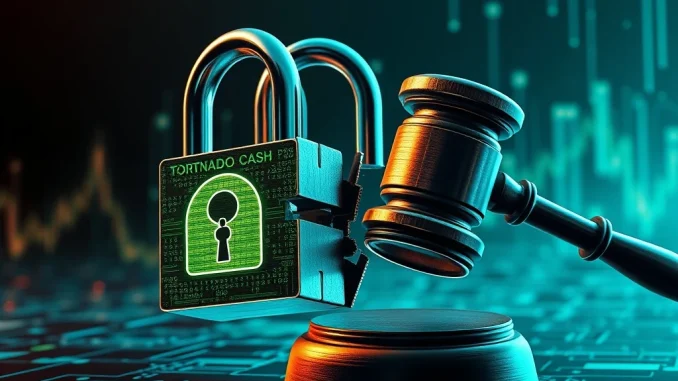
The crypto world is abuzz with a development that could fundamentally reshape how venture capital interacts with decentralized technologies. The U.S. Department of Justice (DoJ) is reportedly weighing criminal charges against prominent venture capital firm Dragonfly VC, stemming from its early investment in Tornado Cash, an Ethereum-based privacy mixer. This isn’t just another legal skirmish; it’s a potential watershed moment signaling a dramatic shift in regulatory strategy and raising critical questions about investor liability in the digital asset space.
Unpacking the DoJ Charges Against Dragonfly VC
For years, regulatory bodies have primarily focused their enforcement efforts on the developers or direct users of platforms deemed to facilitate illicit activities. Think of the crackdowns on darknet marketplaces or the arrests of individuals tied to crypto scams. However, the potential DoJ charges against Dragonfly VC represent a significant departure from this established pattern. Dragonfly, a well-respected name in the venture capital landscape, invested in Tornado Cash back in early 2020. Now, the DoJ appears poised to extend accountability beyond direct operational involvement, suggesting that simply funding a project could carry criminal implications.
This isn’t a light matter. Haseeb Qureshi, co-founder of Dragonfly, has already publicly stated the firm’s intent to vigorously defend itself, highlighting the complex legal and ethical considerations of prosecuting investors for supporting privacy-enhancing technologies. The case gained significant traction during a U.S. vs. Roman Storm hearing, where Judge Katherine Failla specifically brought Dragonfly’s role within the Tornado Cash ecosystem into focus. This spotlight indicates a serious consideration by authorities to establish a new precedent for how venture capital firms are viewed in the context of their portfolio companies’ downstream uses.
The Ripple Effect on Crypto Regulation and Innovation
The news of potential DoJ charges has sent a palpable chill through the crypto industry. Many prominent figures, including investors like Balaji Srinavasan and Paradigm’s Matt Huang, have voiced concerns that criminalizing investment in privacy tools could severely stifle technological progress. Jake Chervinsky, a respected crypto legal analyst, has gone so far as to describe these potential charges as a ‘dangerous precedent.’
Why is this such a big deal for crypto regulation?
- Deterrence of Investment: Venture capital thrives on innovation and risk-taking. If investing in privacy-preserving projects, even those with legitimate uses, becomes a criminal liability, VCs might simply avoid the sector altogether.
- Impact on Privacy Tech: Privacy tools are crucial for many legitimate reasons, from protecting whistleblowers to safeguarding personal financial data. A crackdown on their funding could impede the development of essential technologies.
- Uncertainty: The lack of clear guidelines creates immense uncertainty, making it difficult for investors and developers to navigate the legal landscape without fear of unforeseen consequences.
This aligns with broader fears that U.S. crypto investment, especially in sectors prioritizing anonymity, may face heightened regulatory risk, potentially undermining the sector’s growth trajectory and pushing innovation offshore.
Understanding Investor Liability in the Decentralized World
The core of the Dragonfly case revolves around a novel and contentious question: to what extent can investors be held accountable for how their funded technologies are ultimately utilized? Historically, investors are generally shielded from the day-to-day operational liabilities of their portfolio companies, provided they are not actively involved in illicit activities.
However, the DoJ’s evolving stance suggests a shift towards a more expansive view of investor liability. This approach raises several complex questions:
- Due Diligence Expectations: What level of due diligence will be expected from venture firms before investing in protocols? Is it enough to assess the technology’s stated purpose, or must they anticipate and prevent all potential misuse?
- Foresight vs. Retrospect: Can investors be held responsible for actions taken by users years after their initial investment, especially when the technology itself is designed to be decentralized and permissionless?
- The ‘Tool’ Argument: Many in crypto argue that privacy mixers like Tornado Cash are simply tools, akin to a browser or a VPN. Should the creator or funder of a tool be liable for its misuse by third parties?
This case introduces a new dimension to crypto accountability, moving beyond operational misconduct (like in the Binance and FTX cases) to the very act of funding a controversial crypto protocol. It’s a significant challenge to the traditional understanding of venture capital risk.
Tornado Cash: A Catalyst for Policy Change?
At the heart of this regulatory storm is Tornado Cash itself. This Ethereum-based crypto mixer gained notoriety for its ability to obscure the origins of cryptocurrency transactions, enhancing user privacy. While privacy advocates champion such tools as essential for digital freedom, regulators have increasingly viewed them as enablers for illicit activities, particularly money laundering by bad actors like North Korean hackers.
Tornado Cash was famously sanctioned by the U.S. Treasury in 2022. However, in a surprising turn of events, those sanctions were lifted in March 2025 following a change in administration. Despite the lifting of sanctions, the developers behind Tornado Cash remain under investigation, underscoring the ongoing regulatory scrutiny.
The DoJ’s renewed focus on investors like Dragonfly, even after sanctions were lifted on the protocol itself, signals a broader crackdown. This isn’t just about a single mixer; it’s about setting a precedent for how governments worldwide will approach privacy-centric crypto projects. The outcome of the Dragonfly investigation could significantly influence global crypto policies, particularly in jurisdictions grappling with the delicate balance between fostering innovation and ensuring robust oversight. This case could indeed be a major catalyst, forcing clearer legal frameworks for the entire sector.
In conclusion, the potential DoJ charges against Dragonfly VC for its Tornado Cash investment mark a truly pivotal moment in the evolution of crypto regulation. By extending the scope of investor liability to include investors, the U.S. government is sending a strong signal that it intends to hold all participants in the crypto ecosystem accountable. While the pursuit of illicit activity is paramount, this aggressive stance risks deterring legitimate capital from privacy-focused technologies, which are often essential for maintaining user freedoms and fostering genuine innovation. The outcome of this case will undoubtedly shape the future trajectory of venture capital investment in crypto and underscore the urgent need for clear, balanced legal frameworks that support both technological advancement and regulatory compliance.
Frequently Asked Questions (FAQs)
Q1: What is Tornado Cash, and why is it controversial?
A1: Tornado Cash is an Ethereum-based privacy mixer that allows users to obscure the origins and destinations of their cryptocurrency transactions, enhancing anonymity. It’s controversial because while it serves legitimate privacy needs, it has also been used by malicious actors, including North Korean hackers, to launder illicit funds, leading to its sanctioning by the U.S. Treasury in 2022 (though sanctions were later lifted in March 2025).
Q2: Why is the DoJ considering charges against Dragonfly VC, an investor, rather than just developers or users?
A2: This marks a significant shift in regulatory strategy. Historically, the DoJ has targeted developers or direct users involved in illicit activities. The potential charges against Dragonfly VC suggest an expansion of liability to include investors who funded controversial crypto protocols, raising questions about due diligence expectations and the extent of accountability for downstream use of funded technologies.
Q3: What are the potential implications of this case for the broader crypto industry?
A3: The case could set a dangerous precedent, potentially deterring venture capital investment in privacy-preserving technologies and other innovative but legally ambiguous crypto projects. It creates uncertainty for investors and developers, raising concerns about a “chilling effect” on innovation and the potential for U.S. crypto investment to be stifled, possibly pushing development offshore.
Q4: Have there been similar cases where investors were held liable for portfolio companies’ actions in the crypto space?
A4: While the DoJ has pursued cases against crypto platforms for operational misconduct (like Binance and FTX), holding investors criminally liable for their funding of a protocol, especially years after the investment, introduces a novel dimension. This case is distinct in its focus on investor accountability for the type of technology funded, rather than direct operational involvement in illicit activities.
Q5: How does this case relate to the balance between privacy rights and regulatory compliance?
A5: The case highlights the ongoing tension between privacy advocates, who argue that anonymity tools are crucial for user freedoms, and regulators, who contend that such tools enable illicit activities. The outcome will likely influence how governments worldwide balance fostering innovation in privacy-enhancing technologies with the need for robust oversight and anti-money laundering measures.