In a groundbreaking move set to redefine its market trajectory, Toncoin (TON) has announced a monumental partnership with Kingsway Capital Partners. This collaboration establishes a formidable $400 million treasury initiative, marking a pivotal moment for the cryptocurrency’s ecosystem. This isn’t just another investment; it’s a strategic play designed to bridge the gap between the vibrant crypto world and traditional finance, paving the way for unprecedented institutional adoption of TON.
What Does This Kingsway Capital Partnership Mean for Toncoin?
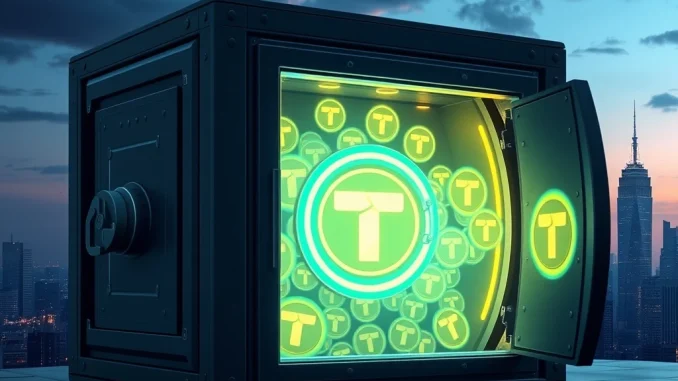
The core of this initiative revolves around a Private Investment in Public Equity (PIPE) structure. In simple terms, institutional investors, alongside Kingsway Capital and its undisclosed partners, will inject capital into a newly formed treasury company. This company will then hold TON as a reserve asset, effectively creating a stable, institutionally-backed foundation for the cryptocurrency. This strategic financial model is gaining traction across the crypto sector, where corporate treasuries are increasingly seen as vital tools for stabilizing asset values and fostering broader institutional engagement.
Key aspects of this partnership include:
Capital Injection: A significant $400 million target, demonstrating substantial confidence from traditional financial players.
Reserve Asset Status: Designating TON as a reserve asset aims to solidify its position as a legitimate and stable digital asset within traditional finance frameworks.
PIPE Structure: This mechanism allows large-scale institutional investors to participate, bringing in significant capital and expertise.
Strategic Alignment: The partnership signifies a deliberate effort to attract traditional investors seeking exposure to crypto-native assets, blending crypto innovation with conventional capital-raising.
How Will This Boost TON’s Institutional Adoption?
The timing of this announcement is no coincidence. It closely follows the highly anticipated rollout of Telegram’s integrated TON Wallet to 87 million U.S. users. This dual approach – expanding retail accessibility through Telegram’s massive platform while simultaneously securing robust institutional backing via the new treasury – positions TON uniquely to capture demand from both ends of the market spectrum.
Analysts suggest that the PIPE structure could significantly enhance TON’s liquidity and price stability. If the treasury adopts long-term holding strategies, it could act as a buffer against market volatility, providing a more predictable environment for large-scale investors. This commitment to stability is crucial for attracting the cautious capital of institutional funds, which prioritize security and predictability over speculative gains.
The Dual Approach: Retail Reach Meets Institutional Strength
The synergy between Telegram’s wallet integration and this institutional treasury initiative is powerful:
| Aspect | Retail Strategy (Telegram Wallet) | Institutional Strategy (Kingsway Treasury) |
|---|---|---|
| Primary Goal | Mass adoption, ease of use for everyday users | Price stability, liquidity, traditional finance integration |
| Target Audience | Telegram’s 87M+ U.S. users, global retail | Hedge funds, asset managers, corporations |
| Mechanism | Direct wallet integration, seamless crypto experience | PIPE structure, reserve asset holdings |
| Impact on TON | Increased utility, network effect, user base growth | Enhanced credibility, reduced volatility, larger capital inflows |
This comprehensive strategy aims to solidify TON’s foundation, moving it beyond a mere altcoin into a more mature, institutionally-recognized asset.
Navigating the Future: Potential and Challenges for the Crypto Treasury
While the $400 million target represents a substantial capital inflow and a vote of confidence, the initiative’s success hinges on several factors. Market confidence in TON’s utility, coupled with the treasury’s operational transparency, will be paramount. Crypto’s inherent volatility remains a risk, and while the treasury aims to mitigate this, it cannot entirely eliminate it.
The lack of detailed metrics, such as specific token allocation or explicit governance frameworks for the treasury company, leaves some room for speculation. However, the Ton Foundation has affirmed no immediate changes to TON’s core protocol, focusing instead on expanding its ecosystem and utility. This initiative underscores a strategic alignment between the Ton Foundation and influential institutional investors, with the potential to significantly bolster TON’s competitive standing in the altcoin landscape.
This move is a clear signal that the Ton Foundation is committed to long-term growth and stability, recognizing the importance of attracting traditional capital. By establishing a robust crypto treasury, they are not just raising funds; they are building a bridge to a future where digital assets are seamlessly integrated into global financial systems.
A Bold Step Towards a More Mature Crypto Market
The partnership between Toncoin and Kingsway Capital is more than just a financial transaction; it’s a strategic declaration. By targeting significant institutional capital and establishing TON as a reserve asset, the Ton Foundation is making a bold statement about its long-term vision and commitment to stability. This initiative, combined with the expansive reach of Telegram’s integrated wallet, positions Toncoin for a future where it can truly capture both retail and institutional demand. While challenges like market volatility and the need for transparency persist, this proactive approach sets a new benchmark for how digital assets can mature and gain broader acceptance in the global financial arena. It’s an exciting time for Toncoin, signaling a potential new era of growth and stability.
Frequently Asked Questions (FAQs)
1. What is the Toncoin and Kingsway Capital partnership about?
The partnership involves the Toncoin Foundation and Kingsway Capital Partners establishing a $400 million treasury initiative. This treasury will hold TON as a reserve asset, funded by institutional investors through a Private Investment in Public Equity (PIPE) structure, aiming to boost institutional adoption and market stability for Toncoin.
2. How does this initiative promote institutional adoption for TON?
By designating TON as a reserve asset and utilizing a PIPE structure, the initiative directly attracts traditional institutional investors. This legitimizes TON within conventional finance, potentially increasing its liquidity and price stability, which are crucial factors for large-scale institutional investment.
3. What is a PIPE structure in this context?
A PIPE (Private Investment in Public Equity) structure allows institutional investors to privately invest in a company (in this case, the newly formed treasury company) that will hold publicly traded assets (TON). It’s a way for large investors to inject capital without going through public markets directly, often leading to more favorable terms for the issuer.
4. How does this partnership relate to Telegram’s TON Wallet launch?
The partnership’s timing coincides with the rollout of Telegram’s integrated TON Wallet to U.S. users. This creates a dual strategy: the wallet expands retail accessibility and user base, while the Kingsway Capital partnership secures institutional backing, positioning TON to capture demand from both retail and institutional markets simultaneously.
5. What are the potential benefits of a crypto treasury for Toncoin?
A crypto treasury holding TON as a reserve asset can enhance liquidity, reduce price volatility through strategic long-term holdings, and build trust among traditional investors. It acts as a stabilizing force, providing a more predictable environment for the asset and potentially attracting significant capital inflows.
6. Are there any risks or challenges associated with this initiative?
Yes, while promising, the initiative faces challenges such as crypto’s inherent market volatility, the need for transparent operational frameworks for the treasury company, and ongoing regulatory clarity. Its ultimate success will depend on sustained market confidence and the effective management of the treasury’s assets.