The global landscape is increasingly interconnected, and geopolitical tremors can send ripples far beyond their immediate borders. While our focus often remains on financial markets and digital assets, understanding the broader context of the Thailand Cambodia conflict is crucial. The recent escalation along the Thailand-Cambodia border serves as a stark reminder of how quickly regional tensions can ignite, impacting stability and potentially influencing investment climates, even for those keenly observing the crypto space.
Understanding the Escalating Thailand Cambodia Conflict
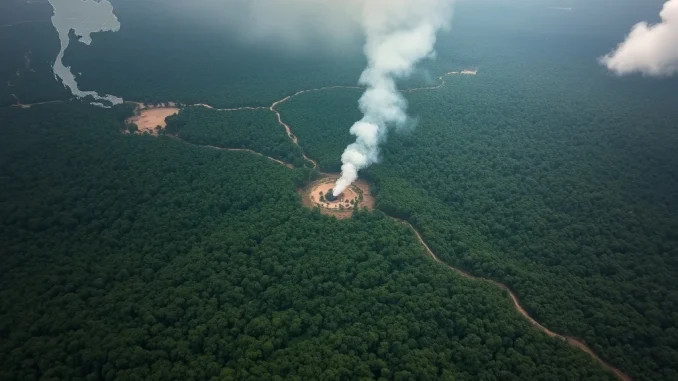
The serene veneer of Southeast Asia was shattered on July 24, 2025, as a long-simmering Thailand Cambodia conflict erupted into a deadly exchange of air strikes and artillery fire. This wasn’t a minor skirmish; reports confirmed at least 11 civilian fatalities, including students tragically caught in a rocket attack near a petrol station in Thailand’s Sisaket province. The conflict saw Thai F-16 jets targeting Cambodian military positions after Cambodian forces allegedly opened fire near the border, while Cambodia vehemently accused Thailand of unprovoked aggression, invoking international law for self-defense. The initial spark reportedly occurred around 7:35 am local time, with allegations of Cambodian forces firing rockets and artillery into Thai territory following a border skirmish near ancient temples in Surin and Oddar Meanchey provinces. Thai officials claimed Cambodian soldiers approached a Thai outpost with rocket-propelled grenade launchers, prompting immediate retaliation.
The Volatile Emerald Triangle: A Decades-Old Border Dispute
At the heart of this renewed violence lies the historically contested Emerald Triangle region. This strategic area, where the borders of Thailand, Cambodia, and Laos converge, has been a flashpoint for over 15 years, characterized by sporadic clashes and unresolved territorial claims. The latest border dispute underscores the deep-seated historical grievances and the inherent fragility of peace in this culturally and strategically significant zone. Both nations have traded harsh accusations: Thailand labeled Cambodia “inhumane and war-hungry,” while Cambodia condemned Thailand’s “incursions” and sought an urgent meeting of the UN Security Council to address the violence.
Unraveling the Diplomatic Breakdown and Regional Diplomacy
The military escalation was preceded by a significant diplomatic deterioration. Thailand’s decision to expel Cambodia’s ambassador and recall its envoy earlier on July 24, 2025, following a landmine attack that injured Thai military personnel, set the stage. Cambodia swiftly retaliated by downgrading diplomatic ties, retaining only a single diplomat in Phnom Penh and expelling Thai envoys. This breakdown was further complicated by domestic political turmoil in Thailand, with Prime Minister Paetongtarn Shinawatra facing an ethics probe and a leaked diplomatic conversation between her and Cambodia’s ex-leader Hun Sen adding to the strain. The inability of regional diplomacy to de-escalate the situation highlights the complex interplay of internal politics and international relations, raising concerns about the effectiveness of existing frameworks.
Implications for Southeast Asia Stability
The current crisis poses significant questions for Southeast Asia stability. Regional bodies and allies have been quick to react. ASEAN chair Malaysia, through Prime Minister Anwar Ibrahim, urged immediate dialogue, emphasizing the need for peaceful resolution. China, a close ally of Cambodia, also voiced concerns, warning against further violence and advising its citizens to avoid the conflict zone. Thailand’s embassy in Phnom Penh issued a travel advisory, urging its nationals to evacuate Cambodia, a clear indicator of growing regional instability. Analysts are closely watching how ASEAN will navigate this crisis, as its role in mediating such bilateral hostilities remains largely untested. The potential for broader spillover effects, impacting trade, tourism, and even regional security alliances, cannot be underestimated.
The recent military clashes in the Emerald Triangle serve as a grim reminder of the persistent challenges to peace and regional diplomacy in Southeast Asia. The escalating Thailand Cambodia conflict, rooted in a decades-old border dispute, has resulted in tragic loss of life and a severe breakdown in diplomatic relations. While the immediate focus remains on de-escalation and humanitarian concerns, the broader implications for Southeast Asia stability are profound. This situation underscores the critical need for robust international mechanisms and concerted efforts from regional powers to foster lasting peace and prevent such devastating events from recurring. The world watches closely, hoping for a swift and peaceful resolution to this urgent crisis.
Frequently Asked Questions (FAQs)
What is the Emerald Triangle?
The Emerald Triangle is a historically contested border region where Thailand, Cambodia, and Laos intersect. It has been a flashpoint for territorial disputes and sporadic clashes for over 15 years due to its strategic and cultural significance.
What caused the recent escalation between Thailand and Cambodia?
The latest escalation on July 24, 2025, was triggered by a border skirmish and allegations of Cambodian forces firing rockets and artillery into Thai territory. This followed a diplomatic breakdown where Thailand expelled Cambodia’s ambassador, and Cambodia retaliated by downgrading ties.
How many casualties were reported in the recent conflict?
At least 11 civilians were reported dead, including students injured in a rocket attack in Thailand’s Sisaket province.
What has been the international reaction to the conflict?
Regional actors like ASEAN chair Malaysia and China have urged de-escalation and dialogue. The conflict has also led to calls for an urgent UN Security Council meeting by Cambodia. Thailand has issued a travel advisory for its nationals to evacuate Cambodia.
What are the broader implications of this conflict for Southeast Asia?
The conflict highlights the fragility of regional diplomacy and poses risks to Southeast Asia stability. Analysts are concerned about potential broader spillover effects, and the crisis tests ASEAN’s role in mediating bilateral hostilities.
Is this conflict related to cryptocurrency or financial markets?
While this specific conflict is geopolitical, major regional instabilities can indirectly impact global financial markets, including cryptocurrency, by creating uncertainty, affecting trade routes, or influencing investor sentiment. However, there is no direct link to cryptocurrency in this news event.