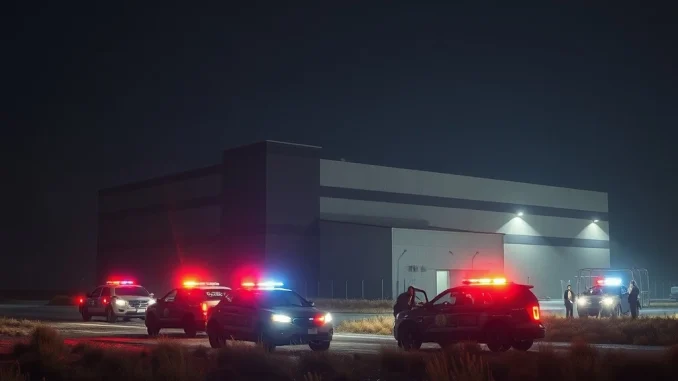
A significant event has unfolded in the heart of Texas, sending ripples through the cryptocurrency sector. Recently, **US authorities** executed a raid on a prominent **Texas Bitcoin mine**, leading to the apprehension of numerous **Chinese workers**. This operation highlights growing scrutiny on **crypto mining operations** within the United States, particularly concerning national security and immigration compliance. The incident has immediately captured the attention of industry observers and regulators alike, raising crucial questions about the future of foreign involvement in domestic digital asset infrastructure.
US Authorities Intensify Scrutiny on Texas Bitcoin Mine
On-site investigations at the Lonestar Dream Bitcoin mining facility in Texas marked a critical turning point. Sources indicate that US Immigration and Customs Enforcement (ICE) spearheaded this decisive operation. Collaborating agencies included the Federal Bureau of Investigation (FBI), Homeland Security Investigations (HSI), and the Texas Department of Public Safety (DPS). This multi-agency effort underscores the seriousness of the investigation. Approximately 12 to 13 **Chinese workers** were reportedly arrested during the raid. Significantly, many of these individuals possessed expired visas, indicating potential immigration violations. This development raises immediate concerns about the legal status of foreign personnel in sensitive technological sectors.
The primary target of this comprehensive raid was an ASIC repair center. This facility, operated by ADW Tech, functions as a direct affiliate of Bitmain, a global leader in Bitcoin mining hardware manufacturing. ASIC repair centers are vital for maintaining the operational efficiency of large-scale **crypto mining operations**. They handle complex repairs of specialized hardware, ensuring continuous functionality. The involvement of such a critical component of the mining ecosystem signals a broader focus by US authorities. Moreover, this incident follows a pattern of previous actions. For instance, US authorities have previously seized Chinese-made **Bitcoin mining rigs** at various ports of entry across the country. These earlier seizures often stemmed from concerns regarding national security, supply chain integrity, or adherence to import regulations.
The Broader Context: Why Texas and Why Now?
Texas has emerged as a global hub for **Bitcoin mining**. Its appeal largely stems from abundant, affordable energy resources and a favorable regulatory environment. The state boasts a deregulated energy market and significant renewable energy capacity, making it attractive for energy-intensive **crypto mining operations**. However, this rapid growth also attracts increased attention from federal and state agencies. The recent raid signifies a potential shift in how these operations are viewed. Authorities are increasingly scrutinizing foreign ownership, labor practices, and the supply chain for critical mining infrastructure. This heightened vigilance reflects a broader national strategy to secure critical infrastructure and enforce immigration laws.
The presence of **Chinese workers** at a **Texas Bitcoin mine** also brings to light complex geopolitical considerations. The United States and China have an intricate relationship, especially concerning technology and national security. Therefore, any foreign involvement in critical digital infrastructure can trigger scrutiny. The specific focus on an ASIC repair center, a key component in maintaining mining equipment, is particularly telling. It suggests that authorities are examining not just the mining itself but also the underlying support systems. This approach ensures a comprehensive overview of potential vulnerabilities. Furthermore, the issue of expired visas for a significant number of individuals points to a clear legal infraction. This makes the raid a matter of both national security interest and immigration law enforcement.
Implications for Crypto Mining Operations and Foreign Investment
This incident carries substantial implications for the broader **crypto mining operations** landscape in the US. Firstly, it sends a strong message regarding compliance with immigration laws. Any entity employing foreign nationals must ensure all workers possess valid documentation. Secondly, it may lead to increased due diligence for foreign investors and operators in the US crypto sector. Companies might face more stringent background checks and operational audits. This could potentially slow down new investments or expansions. However, it also aims to foster a more secure and compliant industry environment. The enforcement actions are not arbitrary; instead, they reflect established legal frameworks.
The raid could also impact the supply chain for **Bitcoin mining rigs** and related services. If companies like ADW Tech face stricter scrutiny or operational disruptions, it could affect the availability and cost of repair services. Consequently, this might compel mining firms to diversify their repair partners or invest more in domestic repair capabilities. Moreover, the incident could encourage a greater emphasis on local talent development within the US. This would reduce reliance on foreign expertise for critical functions. Ultimately, the goal is to enhance the resilience and security of the US **Bitcoin mining** industry. Such measures are crucial for long-term stability.
Legal Ramifications and Industry Response to the Texas Bitcoin Mine Raid
The arrested **Chinese workers** will undoubtedly face legal proceedings related to their immigration status. This could range from deportation to more severe penalties depending on individual circumstances and any additional charges. The operating companies, Lonestar Dream and ADW Tech, may also face fines or other penalties for employing individuals without proper authorization. These legal ramifications serve as a stark reminder of the importance of strict adherence to US labor and immigration laws. The integrity of the legal system is paramount in such cases.
The cryptocurrency industry is closely monitoring the situation. Many industry leaders advocate for clear, consistent regulations to avoid such incidents in the future. They argue that transparent guidelines help businesses operate within legal boundaries while fostering innovation. This incident may prompt a renewed call for collaboration between government agencies and industry stakeholders. Such cooperation could establish best practices for foreign engagement in **crypto mining operations**. Ultimately, the industry seeks to balance growth with regulatory compliance. This ensures a stable and predictable operating environment for all participants.
Future Outlook for Bitcoin Mining Rigs and National Security
The focus on an ASIC repair center and the seizure of **Bitcoin mining rigs** at ports highlight a growing concern over the origins and security of hardware. In an era of heightened geopolitical tensions, the supply chain for critical technology is a national security priority. Authorities aim to prevent potential vulnerabilities that could arise from compromised hardware or foreign influence. This means that future imports of mining equipment might face even more rigorous inspections. Furthermore, there could be an increased push for domestic manufacturing or sourcing of mining components. This would further insulate the US **crypto mining operations** from external risks. This strategic shift reflects a broader governmental focus on securing technological independence.
This incident serves as a crucial case study for the evolving regulatory landscape surrounding digital assets. It underscores the need for **US authorities** to balance economic opportunity with national security imperatives. For companies involved in **Bitcoin mining**, particularly those with international ties, a proactive approach to compliance is now more critical than ever. This includes thorough vetting of employees and rigorous adherence to all federal and state regulations. As the digital economy continues to expand, such enforcement actions will likely become more frequent. They ensure that all participants operate within the established legal and security frameworks. The Lonestar Dream raid, therefore, marks a significant moment in the ongoing narrative of cryptocurrency regulation and national security.
FAQs About the Texas Bitcoin Mine Raid
1. What exactly happened at the Texas Bitcoin mine?
US authorities, including ICE, FBI, HSI, and DPS, conducted a raid at the Lonestar Dream Bitcoin mining facility in Texas. They arrested 12-13 Chinese nationals, many of whom had expired visas. The raid targeted an ASIC repair center operated by ADW Tech, an affiliate of Bitmain.
2. Why did US authorities raid the facility?
The raid was primarily driven by concerns over immigration compliance, specifically the expired visas of the arrested Chinese workers. It also aligns with broader US efforts to scrutinize foreign involvement in critical technological infrastructure, including **crypto mining operations**, due to national security considerations.
3. What are ASIC repair centers and why are they important?
ASIC (Application-Specific Integrated Circuit) repair centers specialize in fixing the complex hardware used for Bitcoin mining. They are crucial for maintaining the operational efficiency and longevity of large-scale **Bitcoin mining rigs**, ensuring continuous mining operations.
4. How does this raid relate to previous seizures of Bitcoin mining rigs?
This raid is part of an ongoing pattern. US authorities have previously seized Chinese-made **Bitcoin mining rigs** at ports of entry, often citing national security concerns, supply chain integrity, or import regulation violations. The current raid extends this scrutiny to operational facilities within the US.
5. What are the potential consequences for the arrested Chinese workers and the companies involved?
The arrested individuals will likely face legal proceedings related to immigration violations, potentially leading to deportation. The companies, Lonestar Dream and ADW Tech, could face fines, operational restrictions, or other penalties for employing undocumented workers and for any other non-compliance issues identified during the investigation.
6. What does this mean for the future of crypto mining in Texas and the US?
The incident suggests increased scrutiny on **crypto mining operations**, especially those with significant foreign involvement. It will likely prompt companies to enhance their compliance with immigration and national security regulations, potentially leading to more domestic sourcing and stricter vetting processes for employees and partners. This aims to strengthen the security and resilience of the US crypto infrastructure.