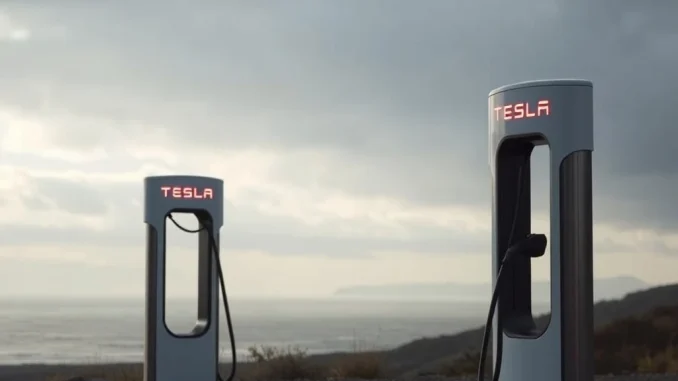
In the dynamic world of technology and investment, where market sentiment can shift as quickly as blockchain transactions, even established giants face formidable headwinds. Just as crypto markets react to regulatory changes and innovation cycles, the automotive sector, particularly the electric vehicle (EV) space, is navigating its own turbulent waters. Recent reports highlight a significant downturn for Tesla, with its Tesla EV sales in California experiencing a sharp decline. This mirrors the broader volatility investors in disruptive technologies, including cryptocurrencies, often encounter.
Tesla Inc. reported a substantial drop in vehicle registrations in California during the second quarter of 2025. This marks the seventh consecutive quarterly downturn in the state, which remains the largest U.S. market for electric vehicles and a crucial indicator of industry trends. Data from the California New Car Dealers Association (CNCDA) showed registrations fell to 41,138 units in Q2 2025, down from 52,119 in Q2 2024. Other sources documented declines ranging from 18.3% to 21.1% during the same period. While the broader U.S. California EV market expanded in the first half of 2025, Tesla’s share of zero-emission vehicle registrations slipped to 18.2%, down from 22% a year earlier. This sustained sales slump raises questions about Tesla’s competitive standing in the Golden State.
Why Are Tesla’s California EV Sales Plummeting?
Several factors contribute to the significant decline in Tesla registrations. Analysts and industry observers point to waning consumer enthusiasm for Tesla’s product lineup and a shifting regulatory landscape. Here are some key reasons:
- Absence of New Models: Tesla has not introduced a new vehicle since the Cybertruck’s 2023 debut. The updated Model Y, despite its recent availability, failed to stimulate demand. The Cybertruck itself, a polarizing model, has seen only 11,000 units sold year-to-date, according to Cox Automotive.
- Expiration of Tax Credits: A significant factor is the expiration of a $7,500 federal EV tax credit for domestically manufactured EVs in September 2025. This incentive was a key driver for California buyers. To counteract this, Tesla offered promotions like free supercharging for Model 3 buyers and complimentary Full Self-Driving feature transfers ahead of the deadline, but these appear insufficient.
The Shifting California EV Market Landscape
While Tesla faces headwinds, the overall California EV market continues to grow, albeit with increased competition. This dynamic puts pressure on Tesla to innovate and adapt.
- Increased Competition: The EV sector is maturing, with traditional automakers and new EV startups offering more competitive pricing and product diversity. Consumers now have a wider array of choices, making it harder for any single brand to dominate.
- Rise of Hybrid Vehicles: Hybrid vehicles are gaining traction as consumers seek alternatives that offer both electric capabilities and the reassurance of gasoline engines, further complicating the pure-EV market landscape.
Understanding the Elon Musk Impact on Tesla Registrations
Beyond market dynamics, political factors and the public persona of CEO Elon Musk also play a role in the downturn of Tesla registrations. California, a predominantly liberal state, has become a focal point for anti-Musk activism, including the ‘Tesla Takedown’ protest movement. Critics attribute part of the sales decline to buyer discomfort with Elon Musk’s public political stances.
Activists plan to rally at Tesla’s retro-themed diner in West Hollywood on July 26, decrying what they view as Musk’s influence on the state’s climate and cultural priorities. Organizers of the protest cited declining sales, weak earnings reports, and broader public discontent with Musk’s political activities as driving factors. This illustrates how leadership and brand perception, much like in the decentralized world of crypto, can significantly sway public opinion and market performance.
Beyond Sales: Tesla’s Financial Headwinds and Future Bets
The sales downturn occurs amid broader financial challenges for Tesla. Global vehicle deliveries fell 13.5% year-over-year in Q2 2025, marking a second consecutive quarterly decline. The company also faces the end of its regulatory credit program, which has generated over $10 billion in revenue since 2014—nearly a third of its total profit. Musk has called these credits vital to Tesla’s survival, particularly in 2019, but the program ends on September 30, 2025.
Analysts at William Blair questioned the sustainability of Tesla’s credit-driven revenue model, while Reuters warned that aggressive discounts and promotions have yet to yield meaningful sales gains. Tesla’s Q2 earnings report, slated for release after the July 31 trading session, is expected to reflect these pressures. While the company’s global production hit 410,000 units in the quarter, the decline in Tesla EV sales within the California market could weigh heavily on investor sentiment.
Despite these challenges, Tesla is pivoting toward AI and autonomous driving initiatives, including its Robotaxi project, to rekindle investor confidence. However, analysts caution that such efforts may not offset near-term sales pressures unless paired with strategic pricing adjustments and product diversification. The company’s ability to regain traction in California—its largest U.S. market—will depend on addressing regional regulatory shifts and evolving consumer preferences.
Conclusion: Navigating a New Era for Tesla
The significant drop in Tesla registrations in California for Q2 2025 signals a pivotal moment for the EV giant. The convergence of expiring EV tax credit incentives, a lack of new models, intensified competition in the California EV market, and the palpable Elon Musk impact on consumer sentiment has created a complex challenge. While Tesla’s long-term vision in AI and autonomous driving remains ambitious, its immediate success hinges on its ability to reinvigorate its core automotive business. Regaining momentum in key markets like California will require strategic pricing, product innovation, and perhaps a reevaluation of how public perception influences sales. The road ahead for Tesla, much like the broader EV industry, promises continued evolution and fierce competition.
Frequently Asked Questions (FAQs)
Q1: What was the percentage drop in Tesla’s California EV registrations in Q2 2025?
Tesla’s California EV registrations dropped by 21.1% in Q2 2025 compared to the same period in 2024, marking the seventh consecutive quarterly decline in the state.
Q2: What are the main reasons cited for the decline in Tesla EV sales?
Key factors include the expiration of the $7,500 federal EV tax credit, the absence of new Tesla models since the Cybertruck’s 2023 debut, increased competition from other automakers, and the impact of Elon Musk’s public political stances on consumer sentiment.
Q3: How has the broader California EV market performed compared to Tesla’s performance?
While Tesla’s registrations declined, the broader U.S. EV market in California actually expanded in the first half of 2025. Tesla’s share of zero-emission vehicle registrations in California slipped to 18.2% from 22% a year earlier, indicating growing competition.
Q4: What is the significance of the expiring regulatory credit program for Tesla?
Tesla’s regulatory credit program, which has generated over $10 billion in revenue since 2014 (nearly a third of its total profit), is set to end on September 30, 2025. This cessation removes a significant source of profit that Elon Musk previously called vital to the company’s survival.
Q5: How is Tesla attempting to counter the sales decline and market pressures?
Tesla has offered promotions like free supercharging and Full Self-Driving feature transfers. The company is also pivoting its focus towards AI and autonomous driving initiatives, such as the Robotaxi project, to reignite investor confidence and long-term growth.
Q6: What role does Elon Musk’s public image play in Tesla’s sales challenges?
Elon Musk’s public political stances have led to anti-Musk activism in California, a predominantly liberal state. Critics and protest movements like ‘Tesla Takedown’ attribute part of the sales decline to buyer discomfort with his public image and influence, impacting consumer loyalty and brand perception.