The world of decentralized finance (DeFi) often promises high returns, yet it also carries significant risks. Recently, Suilend, a prominent crypto lending platform operating on the Sui blockchain, faced a critical challenge. It swiftly moved to suspend all lending services for the IKA token. This decision came after a period of extreme volatility, highlighting the inherent dangers in rapidly fluctuating digital assets.
Suilend’s Immediate Response to Extreme Volatility
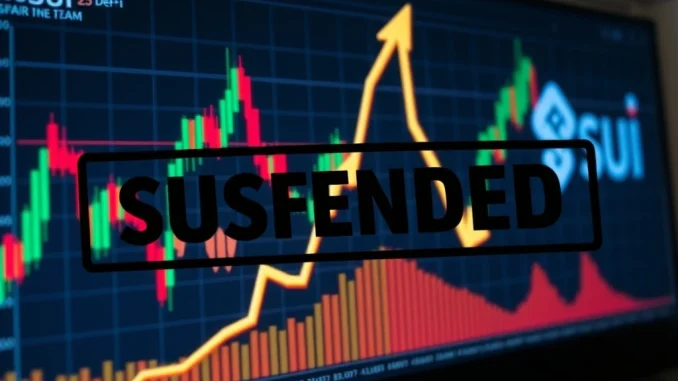
Early this morning, the IKA token experienced an unprecedented price surge. Its value skyrocketed from just $0.04 to $0.47 within a very short timeframe. This rapid increase occurred in a matter of hours. Such dramatic shifts can quickly destabilize even well-designed lending protocols. Consequently, some user positions were liquidated at abnormally high prices. This led to substantial financial losses across the platform. Suilend promptly reported a total loss of $379,000. This amount was directly attributable to this sudden market event. Importantly, these losses were borne by users who had initially deposited IKA tokens into the protocol. This situation caused a 6% reduction across all IKA deposits on the platform. Suilend quickly acted to protect its remaining users and stabilize the protocol. Their immediate response aimed to prevent further damage and maintain system integrity. This proactive step underscores the challenges of managing liquidity in highly volatile markets.
Understanding IKA Token and Sui Blockchain Dynamics
To grasp the full impact of this incident, we must understand the underlying components. Suilend operates within the vibrant Sui blockchain ecosystem. It functions as a non-custodial crypto lending protocol. Here, users can deposit various cryptocurrencies to earn interest. Conversely, others can borrow against their collateral. The IKA token represents a specific, relatively newer asset within this ecosystem. Its recent price action demonstrates the speculative nature often found in emerging digital assets. The Sui blockchain itself boasts impressive technical specifications. It aims for high throughput and low latency. However, even robust infrastructure cannot fully insulate against market-driven extreme volatility. This incident serves as a stark reminder for all participants. Vigilance regarding asset-specific risks remains paramount in the fast-paced DeFi landscape. Moreover, the reliance on external market data for liquidations highlights potential vulnerabilities.
The Broader Implications for Crypto Lending
This event on Suilend carries significant implications for the wider crypto lending sector. Decentralized finance protocols inherently rely on several critical elements:
- Accurate Price Feeds: Oracles must provide real-time, reliable price data.
- Efficient Liquidation Mechanisms: Protocols need to handle liquidations smoothly.
- Robust Risk Management: Systems must anticipate and respond to market shocks.
When an asset like the IKA token experiences extreme volatility, these systems are severely tested. Oracles, which provide price data, can sometimes lag behind rapid market movements. This can lead to liquidations occurring at unfavorable or ‘abnormally high’ prices. Such occurrences erode user trust in the platform and the broader DeFi ecosystem. They also highlight the pressing need for more sophisticated and resilient risk management frameworks. Platforms must continuously evolve. They need to anticipate and mitigate these rapid market movements effectively. Ultimately, the stability and long-term viability of the entire DeFi space depend on addressing these challenges. Users, therefore, must conduct thorough due diligence before participating in any crypto lending protocol.
Protecting Users: Suilend’s Path Forward
Following the immediate suspension, Suilend faces the crucial task of restoring confidence among its user base. The platform must now implement robust measures to prevent similar incidents in the future. Potential strategies could include:
- Adjusting Collateral Ratios: Implementing more conservative loan-to-value ratios for volatile assets.
- Enhancing Oracle Integration: Diversifying oracle sources or improving their responsiveness.
- Stricter Listing Criteria: Applying more rigorous checks for new, potentially volatile assets.
- Implementing Circuit Breakers: Automatic pauses in trading or lending under extreme conditions.
The 6% reduction in IKA token deposits underscores the direct and tangible impact on users. Transparency will be absolutely key in the recovery process. Suilend must communicate clearly and openly with its community. They need to explain the steps being taken to enhance security and stability. Rebuilding trust after such an event is a challenging but essential endeavor. The long-term health of the Sui blockchain DeFi ecosystem depends on it. Continuous improvement in risk management practices is not merely an option; it is a necessity for all platforms operating in this dynamic space. This incident serves as a powerful lesson for the entire industry.
The suspension of IKA token lending by Suilend is a stark reminder of DeFi’s inherent risks. While crypto lending offers innovative financial opportunities, extreme volatility can lead to rapid and significant losses. This incident on the Sui blockchain underscores the critical need for robust risk management, transparent communication, and continuous vigilance from both platforms and users. As the DeFi sector matures, learning from such events will be paramount for fostering a more secure and sustainable environment.
Frequently Asked Questions (FAQs)
Q1: What exactly happened with Suilend and the IKA token?
A1: Suilend, a crypto lending platform on the Sui blockchain, suspended all lending for the IKA token. This followed an extreme volatility event where IKA’s price surged from $0.04 to $0.47. This rapid spike caused some user positions to be liquidated at abnormally high prices, resulting in a total loss of $379,000 for IKA depositors.
Q2: How were Suilend users affected by this incident?
A2: Users who had deposited IKA tokens into Suilend bore the brunt of the losses. The platform reported a 6% reduction in all IKA deposits. This means the value of their deposited IKA was directly reduced to cover the protocol’s shortfall caused by the volatile price action.
Q3: Why did Suilend suspend IKA lending services?
A3: Suilend suspended services primarily due to the extreme volatility of the IKA token. The rapid and unexpected price surge led to liquidations at unsustainable prices. This posed a significant risk to the protocol’s stability and its users’ funds. The suspension was a protective measure.
Q4: What is the Sui blockchain’s role in this event?
A4: Suilend operates on the Sui blockchain. While Sui provides the underlying infrastructure, the incident highlights that even robust blockchains cannot prevent asset-specific market volatility. The issue was with the IKA token‘s price action and Suilend‘s protocol’s response to it, rather than a vulnerability in the Sui network itself.
Q5: What measures might Suilend take to prevent similar incidents?
A5: Suilend is expected to implement enhanced risk management strategies. These could include adjusting collateral ratios, improving oracle integration for more accurate price feeds, or setting stricter listing criteria for new assets. Implementing circuit breakers during periods of extreme volatility might also be considered to protect crypto lending participants.
Q6: Is crypto lending on platforms like Suilend always risky?
A6: All crypto lending carries inherent risks, especially in decentralized finance. Market volatility, smart contract vulnerabilities, and oracle failures are common concerns. Users should always research thoroughly, understand the risks involved, and only invest what they can afford to lose. This Suilend incident serves as a clear example of such risks.